10 Bizarre Things That Happen If Humans Develop a New Sense
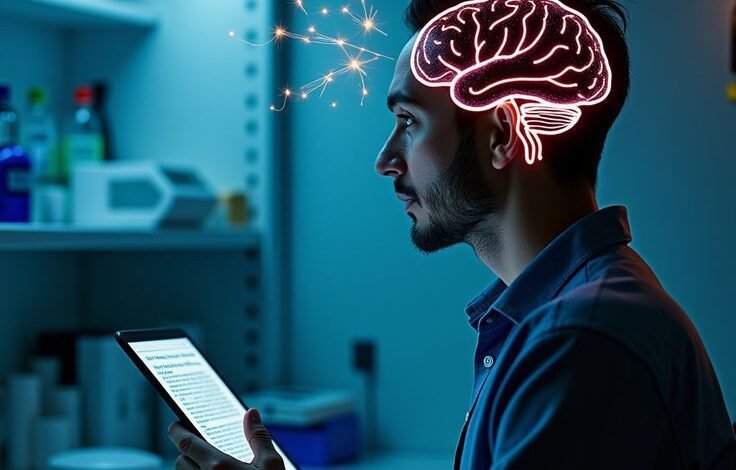
Humans already have somewhere between 9 and 21 distinct senses — not just five. Scientists count things like proprioception (knowing where your limbs are), thermoception (sensing temperature), and interoception (feeling your own heartbeat) as full sensory systems. We’ve been undercounting ourselves for centuries.
The moment humans develop a new sense, reality itself would need a software update — and your brain would be the one frantically downloading it at 3am. Think about that for a second. Every single thing you know about the world around you is filtered through a handful of biological instruments that evolution cobbled together over millions of years. Add one new instrument, and the entire symphony changes.
We assume our perception of reality is complete. It isn’t. Mantis shrimp see 16 color receptors compared to our measly three. Sharks detect electrical fields. Migratory birds navigate by sensing Earth’s magnetic field. The universe is absolutely drowning in information our bodies cannot access — yet.
But what if that changed? What if tomorrow, through genetic mutation, bioengineering, or some cosmic accident, a new sense bootstrapped itself into the human nervous system? What would actually happen — biologically, psychologically, socially, and existentially? Buckle up. The answer is delightfully strange.
🎯 Key Takeaways
- The human brain is remarkably plastic — it can rewire itself to process entirely new types of sensory input, as proven by experiments with sensory substitution devices.
- A new sense would likely overwhelm the nervous system initially, causing something similar to sensory overload disorder before the brain adapted.
- Language would fundamentally break — we’d have no words for new sensory experiences, forcing entirely new vocabulary and possibly new grammar structures.
- Social hierarchies and politics would shift dramatically if a new sense was unevenly distributed across the population.
- Our concept of reality itself — what philosophers call our “umwelt” — would be permanently and irreversibly expanded.
What Actually Happens When Humans Develop a New Sense
Your Brain Would Go Through Sensory Chaos First
Here’s the uncomfortable truth: the moment humans develop a new sense, the first experience wouldn’t be wonder. It would be something closer to madness. Your brain is a prediction machine. It builds a model of reality based on the signals it receives, and it has spent your entire lifetime fine-tuning that model. Throw in a new data stream — say, the ability to detect magnetic fields or ultraviolet radiation — and that model violently crashes.
We have actual evidence for this. Researchers studying people who are born blind and later gain sight have found that the experience is often terrifying, not joyful. The brain doesn’t know how to interpret visual data without years of practice. Distances feel wrong. Faces look monstrous. Depth perception is completely absent. The same phenomenon would apply to any brand new sense — except you’d have a fully operational brain simultaneously screaming in confusion while trying to process something it has no framework for.
Neurologically, this is called sensory integration disorder on a catastrophic scale. The sensory cortex would need to carve out new real estate in the brain, potentially borrowing space from existing sensory or cognitive functions. This is where neuroplasticity becomes the hero of the story — the brain’s staggering ability to physically rewire neural pathways in response to new demands. It’s the same mechanism that allows blind people to “see” through sound using echolocation. Given time, the brain adapts. But the transition period? Brutal.
Think of it like suddenly hearing color or smelling numbers — a phenomenon that already exists in humans with synesthesia, where sensory signals get crossed. A new sense would essentially be forced synesthesia on a species-wide level, until the neural dust settled.

The Neuroplasticity Factor
The good news is that neuroplasticity is genuinely extraordinary. Studies with tactile-visual substitution devices — gadgets that convert camera images into patterns of vibration on the skin — have shown that humans can learn to “see” through touch in as little as a few hours. The brain doesn’t care what channel information arrives on. It cares about patterns. Give it enough time and enough pattern, and it builds a map. Extra human senses tapped into this same mechanism would eventually become second nature — quite literally.
How Sensory Perception Evolution Has Already Been Changing Us
Here’s something that should keep you awake longer than it will: human sensory perception evolution hasn’t stopped. It’s happening right now, just slowly enough that we don’t notice it. The human sense of smell has been quietly degrading for roughly 23 million years as we shifted from ground-sniffing mammals to upright visual predators. Meanwhile, our color vision sharpened because spotting ripe red fruit against green leaves was a better survival strategy than smelling it from a distance. Evolution is constantly trading one sensory advantage for another based on what the environment rewards.
Which means the question isn’t really if human senses will change. It’s how and when. BBC Future has explored extensively how emerging biotechnology and genetic editing tools like CRISPR are putting the pace of sensory evolution under human control for the first time in history. We’re no longer waiting for random mutation and natural selection. We can, theoretically, engineer new receptor types and introduce them into the nervous system deliberately.
Some scientists are already working on exactly this. Neuralink and similar neural interface projects aren’t just about controlling computers with your mind — they’re about feeding new data types directly into the brain. One researcher, David Eagleman at Stanford, built a vibrating vest that translates audio signals into touch patterns, effectively giving deaf people a new way to perceive sound through their skin. Participants eventually reported that the vibrations stopped feeling like vibrations and started feeling like sound. Their brains had genuinely created a new sensory channel.
Sixth sense abilities once reserved for science fiction are, in this light, a matter of engineering patience rather than biological impossibility. The brain has the slots. We just need to build the hardware.
[INLINE_IMAGE]
🤔 Wait, Really? There’s a man named Neil Harbisson who was born completely colorblind and now has an antenna implanted in his skull that converts colors into musical frequencies he hears through bone conduction. He doesn’t just detect color — he perceives ultraviolet and infrared, wavelengths completely invisible to normal human eyes. He identifies as a cyborg and is legally recognized as one by his passport photo, which includes his antenna. He’s arguably the first human to genuinely have an extra sense.
What New Sixth Sense Abilities Would Break About Human Society
Language Would Shatter and Rebuild Itself
Language is essentially a compression algorithm for sensory experience. Every word you know for a color, a sound, a texture — it exists because a community of humans shared that sensory experience and needed a symbol for it. The word “blue” only means something because we both have roughly the same cones in our eyes producing roughly the same signal when we look at the sky.
Now imagine humans develop a new sense — let’s say magnetoreception, the ability to feel the Earth’s magnetic field like migratory birds do. What word do you use for that? There isn’t one. There has never been one in the history of human language, in any language, because no human has ever needed to describe that experience to another human. The sensory perception evolution of language would have to scramble to catch up.
Linguists call this the lexical gap problem — the absence of a word for a concept that exists. But this would be more extreme than any lexical gap in recorded history. You’d essentially be inventing vocabulary for colors that don’t exist in the visible spectrum. New words, new metaphors, new poetry — and a generation of people who grew up before the new sense emerged who would be linguistically stranded, unable to fully understand what their children were describing.
Politics, Power, and the Inequality of Perception
Here’s where it gets genuinely dark. If a new sense emerged unevenly — through genetic mutation that only some people carried, or through expensive biotech implants only the wealthy could afford — you’d have the ultimate social divide. Not rich versus poor. Not one culture versus another. But people who literally perceive a different reality than everyone else.
History is full of examples of how sensory difference creates hierarchy. Being colorblind has excluded people from certain jobs and military service. Deaf communities have built entire rich cultures around a different sensory world, and the tension between that culture and the hearing world has been politically charged for decades. Now multiply that by a sense that has no historical precedent. Extra human senses distributed unequally would make every existing social tension look like a minor disagreement.
The Philosophy of a Bigger Reality: Umwelt, Perception, and What We’re Missing
There’s a beautiful German word — umwelt — coined by biologist Jakob von Uexküll in 1909. It means the specific slice of reality that a given organism can perceive and interact with. A tick’s umwelt is basically three things: warmth, the smell of butyric acid from mammal skin, and touch. That’s its entire experienced universe. Our umwelt is dramatically richer, but it is still a tiny, tiny sliver of what’s actually out there.
When humans develop a new sense, the umwelt expands. And here’s the philosophically terrifying part: every time the umwelt expands, you realize how much was always there that you simply couldn’t access. Imagine learning for the first time that there was a color you’d been unable to see your entire life, and it had been painted on every surface you’d ever looked at. That’s what adding a sense would feel like — not discovering something new, but finally noticing something ancient that was always present and always invisible to you.
This connects directly to the concept of cognitive evolution. Human cognition isn’t just about raw processing power — it’s about the quality and variety of inputs. Philosophers from Immanuel Kant to Thomas Nagel have argued that the structure of consciousness itself is shaped by the senses available to the perceiving creature. Nagel’s famous essay “What Is It Like to Be a Bat?” asks whether humans could ever truly understand echolocation-based perception — not just intellectually, but experientially. His answer was essentially no. A new sense wouldn’t just add data. It would change the shape of consciousness itself.
The sensory cortex would need to expand or reorganize, memory systems would encode new types of experiences, and emotional responses would form around entirely new sensory triggers. You’d develop nostalgia for magnetic field patterns. You’d have a favorite ultraviolet frequency. You’d find certain electrical field signatures deeply unsettling in the same irrational, gut-level way that certain sounds already make your skin crawl. The inner life would become a stranger, richer, weirder place.
Frequently Asked Questions
Could humans develop a new sense through genetic engineering?
Theoretically, yes. Scientists have already inserted genes for ultraviolet-sensitive photoreceptors — borrowed from mantis shrimp and other animals — into mammalian cells in lab settings. The receptor works. The challenge is connecting it to the nervous system in a way the brain can interpret. Neuroplasticity research suggests the brain would adapt to new receptor input if given consistent, patterned signals — making genetic engineering of new senses a question of engineering complexity, not biological impossibility.
What would be the most useful new sense for humans to have?
Most neuroscientists and bioengineers point to magnetoreception — the ability to sense Earth’s magnetic field — as the most immediately practical new sense. It would give humans an internal GPS with no battery required. Electroreception, the ability to detect electrical fields the way sharks do, would be a close second, with applications in detecting hidden electronics, reading emotional states through bioelectric signals, or sensing approaching thunderstorms before they’re visible or audible.
Do any humans already have extra sensory abilities?
In limited ways, yes. Some people with synesthesia effectively experience additional sensory dimensions — associating numbers with colors or sounds with textures in ways that produce genuine, consistent perceptual experiences beyond what most people have. Neil Harbisson, the cyborg artist mentioned above, perceives ultraviolet and infrared through a skull-implanted antenna. Some blind individuals develop measurable echolocation ability. These are small expansions of the human umwelt, but they’re real and they work.
Would a new sense change how we experience emotions?
Almost certainly. Emotions are deeply tied to sensory input — the smell of rain triggering nostalgia, the sound of a minor chord producing sadness. These associations are built through experience. A new sense would generate entirely new emotional associations from scratch. Certain magnetic field patterns might become comforting. Certain electrical frequencies might feel threatening. Over generations, these responses would stabilize into universal emotional reactions, likely influencing art, music, architecture, and cultural ritual in entirely unpredictable ways.
How long would it take the brain to adapt to a new sense?
Based on sensory substitution research, basic functional adaptation can occur within days to weeks. David Eagleman’s tactile-audio vest showed meaningful adaptation within hours of continuous use. Full integration — where the new sense feels as natural and automatic as existing ones — likely takes months to years of consistent exposure. Children born with the new sense would adapt far more completely than adults, due to higher neuroplasticity during developmental windows. Within two or three generations, it would feel as normal as seeing color.
✅ The Bottom Line
If humans develop a new sense, the short-term result is chaos — sensory overload, linguistic collapse, and a brain frantically rewiring itself to make sense of a suddenly stranger world. The long-term result is something far more interesting: a permanently expanded reality, new emotions, new language, new art, and a species that can no longer claim its perception of the universe is complete. We’re already partway there through technology and neuroplasticity research. The real question isn’t whether it’s possible — it’s whether we’re ready for what comes with it.
Final Thoughts
The possibility that humans develop a new sense isn’t locked safely in science fiction anymore — it’s sitting in biotech labs and neural interface startups, inching closer to reality every year. And when you follow the question all the way down, past the neuroscience and the philosophy and the politics, you end up at something genuinely humbling: the universe is extraordinarily generous with information, and we’ve been refusing most of it. A new sense wouldn’t just change what we perceive. It would change who we are. So here’s the question worth losing sleep over — if you could choose one new sense to add to the human experience, what would you pick, and are you sure you could handle what you’d find?