Ocean vs Space: Which Is More Dangerous and Mysterious?
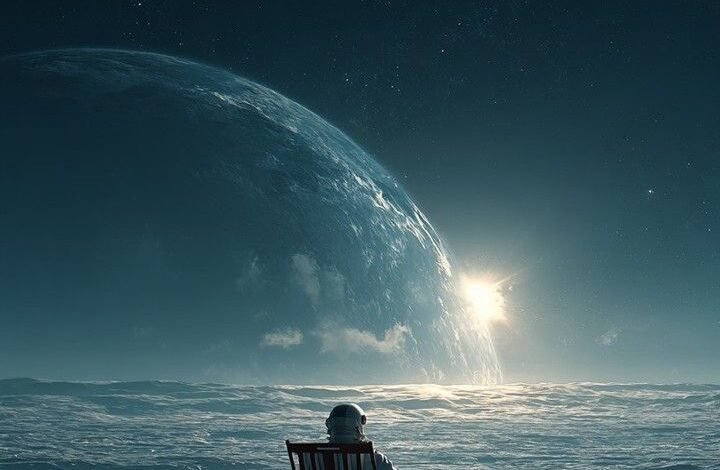
The comparison of Ocean vs Space is one of those rare questions that feels simple at first, but becomes deeper the more you think about it. Both represent extremes that humans are not naturally built to survive in, both remain largely unexplored, and both continue to challenge even the most advanced scientific technology. Yet, there is something almost paradoxical about this comparison: the ocean is right here on Earth, covering more than 70 percent of the planet, and still, we know surprisingly little about it, while space, which is unimaginably far away, has been mapped, observed, and studied in ways that make it feel more familiar.
When we explore the idea of Ocean vs Space, we are not just comparing two environments. We are comparing two different types of unknown. One is physically close but hidden under layers of pressure and darkness. The other is distant, vast, and infinite. Understanding which is more dangerous and which is more mysterious requires going beyond surface-level facts and looking at how humans interact with both environments, how science approaches them, and where our knowledge still falls short.
Contents
- 1 Ocean vs Space: The Reality of Human Survival
- 2 Ocean vs Space: Understanding Pressure and Environment
- 3 Ocean vs Space: The Scale of Mystery
- 4 Ocean vs Space: Why the Ocean Remains Less Explored
- 5 Ocean vs Space: Why Space Feels More Explored
- 6 Ocean vs Space: The Psychological Impact
- 7 Ocean vs Space: Scientific Discoveries and Importance
- 8 Ocean vs Space: Final Answer
- 9 Ocean vs Space FAQs
Ocean vs Space: The Reality of Human Survival
To understand the Ocean vs Space debate properly, we need to start with the basic question of survival. Neither the deep ocean nor outer space is naturally habitable for humans, but the way they threaten life is fundamentally different.
In the ocean, danger increases progressively. At shallow depths, humans can survive for limited periods with minimal equipment. As depth increases, pressure becomes the defining factor. Water is dense, and every meter below the surface adds more force to the human body. At extreme depths such as the Mariana Trench, pressure exceeds 1,000 times what we experience at sea level. This level of pressure is not something the human body can resist, and even specially designed equipment must be engineered to withstand it.
At the same time, the ocean still supports life. It contains ecosystems, food chains, and biological systems that function under extreme conditions. This makes the ocean a hostile environment for humans, but not a lifeless one.
You can explore how little of the ocean we truly understand here:
NOAA Ocean Exploration Overview
Space, by contrast, offers no gradual adjustment. It is instantly lethal. There is no oxygen, no atmospheric pressure, and no protection from radiation. The human body cannot function in a vacuum, and exposure even for a few seconds leads to severe consequences. Temperature in space fluctuates between extreme heat and extreme cold depending on exposure to sunlight. Unlike the ocean, which at least contains a stable environment in some regions, space is fundamentally incompatible with human life.
NASA outlines these challenges clearly:
NASA Human Spaceflight Risks Explained
In the Ocean vs Space comparison, space is clearly more dangerous in immediate terms. The ocean allows limited interaction, while space does not forgive even the smallest mistake.
Ocean vs Space: Understanding Pressure and Environment
One of the most important differences in the Ocean vs Space comparison lies in pressure. The ocean represents the extreme of high pressure, while space represents the complete absence of it.
Underwater, pressure compresses everything. It affects not only the human body but also equipment, communication systems, and movement. The deeper you go, the less margin for error exists. This makes exploration extremely difficult and expensive.
In space, the problem is reversed. Instead of being crushed, the body is exposed to a vacuum. Without pressure, gases inside the body expand, and basic biological functions become impossible. This contrast highlights how both environments are equally extreme, but in opposite ways.
From a scientific perspective, these differences are what make the Ocean vs Space debate so fascinating. They represent two ends of the same spectrum, where human survival requires completely different technological solutions.
Ocean vs Space: The Scale of Mystery
When discussing mystery in the Ocean vs Space comparison, scale becomes the defining factor. Space is vast beyond human comprehension. It contains billions of galaxies, each with billions of stars. The observable universe itself is only a fraction of what may exist. Concepts such as dark matter and dark energy suggest that most of the universe is made up of things we do not yet understand.
However, the ocean presents a different kind of mystery. It is not infinite, but it is deeply unexplored. Scientists estimate that more than 80 percent of the ocean has not been fully mapped or studied. This means that entire ecosystems may exist without human knowledge. New species are discovered regularly, and some of them exhibit characteristics that challenge our understanding of biology.
You can read more about how much of the ocean remains unknown here:
NOAA Ocean Service Facts
And explore the mysteries of the universe here:
NASA Universe Exploration
In the Ocean vs Space debate, space is more mysterious in terms of scale, but the ocean is more mysterious in terms of proximity. It is part of our planet, yet still largely hidden from us.
Ocean vs Space: Why the Ocean Remains Less Explored
One of the most surprising truths in the Ocean vs Space comparison is that exploring the ocean is, in many ways, more difficult than exploring space. This idea challenges common assumptions, but it becomes clearer when we examine the conditions involved.
The ocean is opaque. Light does not penetrate deeply, which means that visual observation is limited. Communication underwater is also more difficult than in space because radio waves do not travel well through water. This requires alternative methods that are often less efficient.
Additionally, pressure increases rapidly with depth, making it harder to design equipment that can survive long-term exposure. Every descent into the deep ocean requires careful engineering, and failures can be catastrophic.
These challenges explain why, despite being located on Earth, the ocean remains one of the least explored frontiers.

Ocean vs Space: Why Space Feels More Explored
In contrast, space often feels more explored because of how we observe it. Telescopes, satellites, and remote sensing technologies allow scientists to study distant objects without physically traveling to them. This creates the impression that we know more about space than we actually do.
In reality, human exploration of space is still limited to relatively small distances. Most of what we know comes from observation rather than direct interaction. This distinction is important in the Ocean vs Space comparison. Space is easier to observe, while the ocean is harder to access.
This difference shapes how knowledge is developed in each field. Ocean exploration relies heavily on physical missions, while space exploration often relies on indirect data.
Ocean vs Space: The Psychological Impact
Another interesting dimension of the Ocean vs Space comparison is the psychological effect each environment has on humans. The ocean, especially at depth, creates a sense of isolation and confinement. Darkness, pressure, and the unknown surroundings can be mentally challenging.
Space introduces a different type of psychological stress. The vastness, silence, and distance from Earth can create a feeling of disconnection. Astronauts often describe space as both beautiful and overwhelming.
These psychological factors add another layer to the discussion of danger and mystery. They remind us that exploration is not only a physical challenge but also a mental one.
Ocean vs Space: Scientific Discoveries and Importance
Both environments play a crucial role in advancing scientific knowledge. The ocean helps us understand climate systems, marine biology, and the origins of life. Many scientists believe that life on Earth began in the ocean, making it essential for understanding our own existence.
Space exploration, on the other hand, helps us understand the universe, the formation of planets, and the possibility of life beyond Earth. It also drives technological innovation that impacts everyday life.
The Ocean vs Space comparison is not about choosing one over the other. It is about recognizing that both are essential to human progress, each offering unique insights into different aspects of science.
Ocean vs Space: Final Answer
When we bring everything together in the Ocean vs Space debate, the conclusion becomes clearer. Space is more dangerous because it offers no possibility of survival without complete protection. The ocean, while extremely dangerous at depth, still allows limited human interaction under controlled conditions.
In terms of mystery, space remains the greater unknown due to its infinite scale and the unanswered questions surrounding the universe. However, the ocean remains deeply mysterious in a more immediate sense, as much of it is still unexplored despite being part of our own planet.
The most important insight from the Ocean vs Space comparison is not which one is more extreme, but how little we still understand about both. Whether looking up at the sky or down into the depths, humanity is still exploring the edges of its knowledge.
Ocean vs Space FAQs
Ocean vs Space: Which is more dangerous for humans?
Space is more dangerous because it lacks oxygen, exposes humans to radiation, and creates immediate life-threatening conditions. The ocean becomes dangerous mainly at depth, where pressure and environmental conditions exceed human limits.
Ocean vs Space: Why is the ocean still largely unexplored?
The ocean is difficult to explore due to high pressure, darkness, and communication challenges. Unlike space, it requires direct physical exploration, which is more complex and resource-intensive.
Ocean vs Space: Which one is more mysterious?
Space is more mysterious overall because of its infinite size and unknown components such as dark matter. However, the ocean is more mysterious in a practical sense because much of it remains unexplored.
Ocean vs Space: Is there life in both environments?
The ocean is full of diverse life forms, many of which are still being discovered. Space has no confirmed life, although scientists continue to search for evidence.
Ocean vs Space: Why is this comparison important?
The Ocean vs Space comparison highlights the limits of human exploration and emphasizes the importance of continued scientific research in both environments.