6 Surprising Reasons Animal Hibernation Works This Way
/strong> During animal hibernation, a black bear’s heart rate drops from a normal 40–50 beats per minute to just 8 beats per minute — and it doesn’t eat, drink, urinate, or defecate for up to 7 months straight. Its body essentially becomes a closed-loop survival machine.
Animal hibernation is one of nature’s most dramatic disappearing acts — a biological magic trick where a living creature essentially presses pause on existing for months at a time.
But here’s what most people get wrong: hibernation isn’t just a really long nap. It’s a radical, carefully engineered physiological transformation that took millions of years to evolve. Some animals drop their body temperature to just above freezing. Some stop breathing for minutes at a time. Some lose 40% of their body weight and wake up like nothing happened.
Why do some animals do this while others tough out the winter? Why does a groundhog check out in November while a deer just grows a thicker coat? The answer involves ancient survival math, evolutionary trade-offs, and some genuinely jaw-dropping biochemistry.
Pull up a chair. It’s 3am, it’s cold outside, and we’re about to figure out why some animals are completely unconscious right now — and why that’s actually brilliant.
🎯 Key Takeaways
- Animal hibernation is a controlled metabolic shutdown, not just deep sleep — body temperatures can drop to near-freezing levels.
- The core trigger is an energy crisis: when calories become harder to find than they are to burn, hibernation becomes the only logical option.
- True hibernation and torpor are different things — bears actually experience a lighter version called torpor, not true hibernation.
- Some animals, like the Arctic ground squirrel, can cool their body temperature below 32°F (0°C) without freezing — a biological feat scientists still don’t fully understand.
- Not all hibernation happens in winter — some animals hibernate in summer (called estivation) to survive heat and drought instead.
What Animal Hibernation Actually Is (It’s Weirder Than You Think)
The Body on Pause
Most people picture animal hibernation as a cozy bear snoozing in a cave. That image is charming, but it massively undersells the strangeness of what’s actually happening at a biological level.
True hibernation is a state of drastically reduced metabolic activity. An animal’s core body temperature falls, sometimes to within a degree or two of the surrounding environment. Heart rate and breathing slow to almost imperceptible levels. Brain activity dims. The digestive system shuts down. The animal isn’t really “sleeping” — it’s hovering in a suspended state that’s closer to being barely alive than being asleep.
Consider the little brown bat. During animal hibernation, its heart rate falls from 1,000 beats per minute (yes, one thousand) to just 25. It may take one breath every two hours. Its body temperature matches the cold cave wall it’s clinging to. If you picked it up, it would feel cold and stiff — not like a sleeping animal, but like something approaching inert.
The Difference Between True Hibernators and Everyone Else
Not every animal that “hibernates” is doing the same thing. Scientists actually draw sharp distinctions between true hibernators (like ground squirrels, hedgehogs, and dormice) and animals that enter torpor — a lighter, more flexible version of the same strategy.
Bears are the most famous example of the torpor camp. Despite their reputation as the kings of hibernation, bears are technically light-sleepers by hibernation standards. Their body temperature only drops by about 10°F, and they can wake up relatively quickly if disturbed. A true hibernating woodchuck, by contrast, would take hours to rouse itself from its near-frozen state.
The distinction matters because it reveals something fascinating: hibernation exists on a spectrum. It’s not a binary switch but a dialed-down continuum of metabolic suppression, tuned differently for every species based on their size, environment, and evolutionary history. Winter survival strategies aren’t one-size-fits-all — they’re bespoke biological solutions.
The Real Reason Winter Survival Strategies Include Hibernation
Here’s the cold, hard math of winter: food gets scarce, temperatures drop, and staying warm burns an enormous number of calories. For a small mammal, the energy equation tips catastrophically fast.
A shrew, for example, must eat nearly its own body weight in food every single day just to maintain its frantically fast metabolism. In summer, that’s manageable. In winter, when insects vanish and the ground freezes solid? It becomes a death sentence — unless that shrew can find a way to stop needing so many calories so urgently. Enter hibernation.
The core logic is brutal and beautiful: if you can slash your metabolic rate by 95–99%, you can survive on the fat reserves you stored in autumn, without eating a single bite for months. You essentially become a slow-burning biological candle instead of a roaring bonfire.
This is why animal hibernation evolved primarily in species that can’t migrate (they’re too small, too slow, or too tied to a territory) and can’t easily find food in winter (insect-eaters, seed-specialists, and fruit-dependent animals are especially vulnerable). As Wikipedia Science broadly categorizes it, hibernation is an adaptive survival behavior shaped by millions of years of evolutionary pressure.
It’s also worth noting that not every animal that faces winter needs to hibernate. Deer, ravens, foxes — these animals have winter survival strategies that rely on adaptability: broader diets, thicker fur, behavioral changes. Hibernation is for animals whose specific niche collapses entirely in winter. When your food source doesn’t just shrink but disappears, you either hibernate, migrate, or die. Those are pretty much the only options on the table.
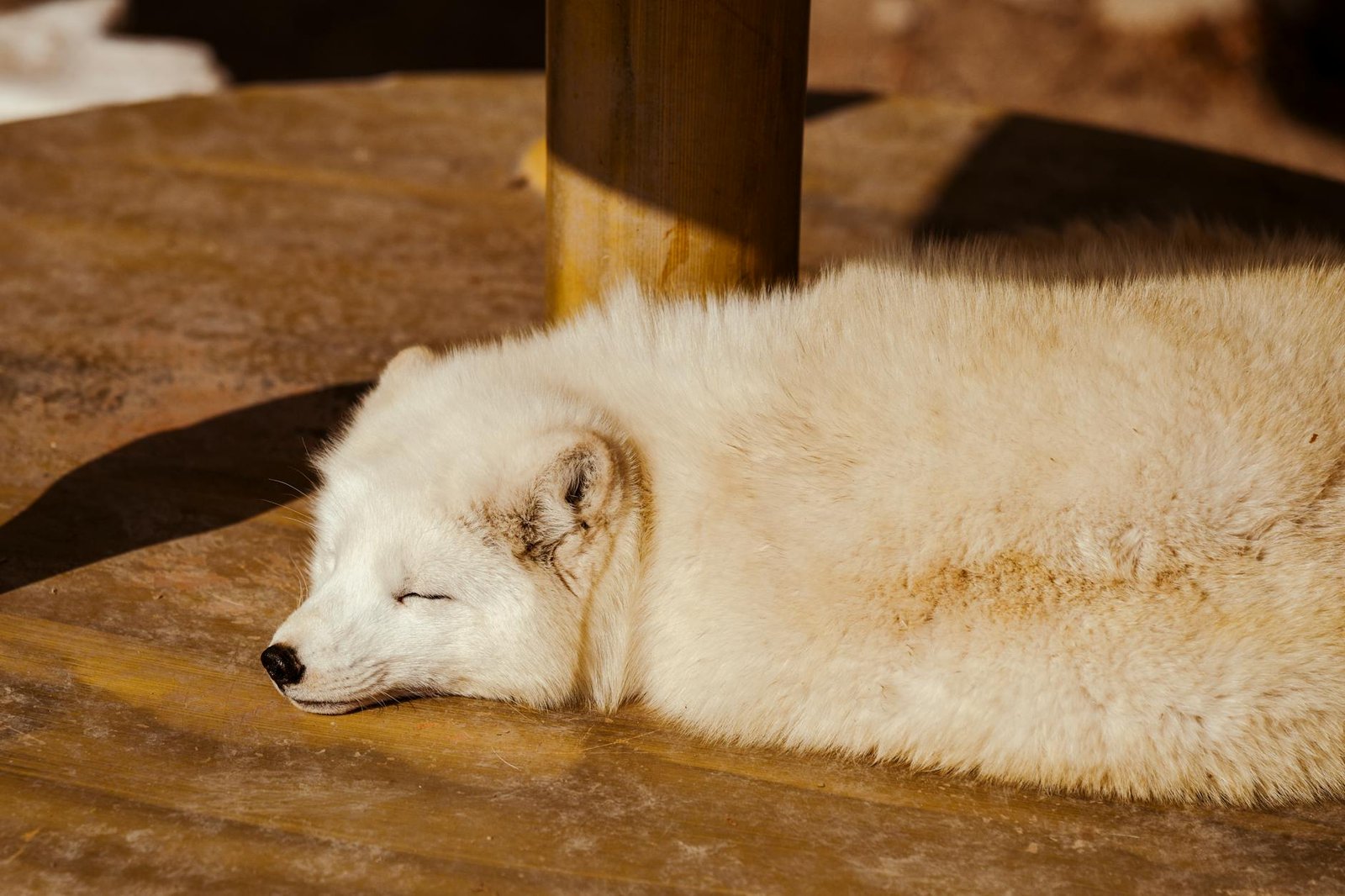
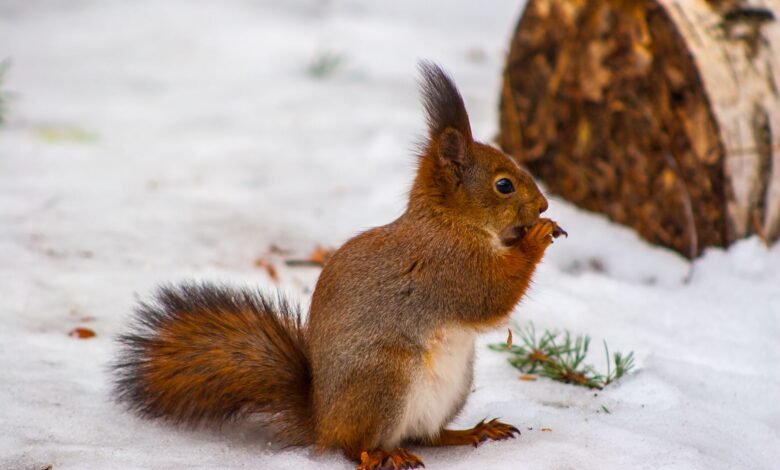
The Arctic ground squirrel achieves something that should be physically impossible: it supercools its body to -2.9°C (about 27°F) — below the freezing point of water — without its blood or tissues turning to ice. Scientists believe special proteins and a carefully managed lack of nucleation sites prevent ice crystals from forming. It is, by any reasonable measure, a living anti-freeze experiment.
How Hibernating Animals Prepare — The Fat-Loading Science
Hyperphagia: The Pre-Hibernation Eating Frenzy
Before animal hibernation begins, most species go through a phase called hyperphagia — a biologically driven, almost compulsive eating binge that can last weeks or months. A black bear entering hyperphagia will consume up to 20,000 calories per day. That’s roughly the equivalent of 57 Big Macs. Daily. For weeks.
This isn’t gluttony. It’s engineering. The animal is quite literally building its fuel tank. All those calories get stored as fat — particularly a type called brown adipose tissue, which is metabolically special. Unlike regular white fat, brown fat generates heat directly when it’s metabolized, warming the animal from the inside as it slowly burns through its reserves during dormancy.
The fat reserves have to be precisely calibrated. Too little, and the animal starves before spring. Too much, and it might not fit into its burrow, or it wastes energy it spent all summer collecting food to produce. Evolution has tuned these animals to be extraordinary judges of “enough.”
What Triggers the Big Sleep?
The trigger for animal hibernation isn’t simply “it got cold.” Temperature is a cue, but the primary driver is photoperiod — the shortening of daylight hours as the year progresses. Specialized photoreceptors in the brain detect this shift and begin orchestrating a cascade of hormonal changes months before winter arrives.
Melatonin levels rise with longer nights, signaling the body to begin preparing. Thyroid hormones shift. Insulin sensitivity changes to facilitate fat storage rather than burning. The animal’s internal chemistry gradually reshapes itself from a “burn fuel efficiently” mode into a “hoard everything” mode.
By the time the first hard frost arrives, many hibernating animals are already halfway through their preparation. The cold doesn’t cause hibernation — it just signals that the window for preparation is closing. This is also why animals in captivity, kept at warm temperatures with artificial light, can still show signs of preparing for torpor. The light cycle matters more than the thermometer.
The Bizarre Biology of a Hibernating Body
If you could take a live feed of what’s happening inside a hibernating animal, you’d be equal parts amazed and unsettled. The metabolic rate — the measure of how fast the body burns energy — drops by as much as 99% in true hibernators. Every system dials down to the absolute minimum needed to maintain life.
The kidneys stop producing urine almost entirely. This is remarkable because, for most mammals, going even a few days without urinating leads to toxic waste buildup in the blood. Hibernating animals essentially recycle their nitrogen waste, converting it back into usable amino acids. Scientists studying this process are actively investigating it as a potential model for treating kidney disease in humans.
The immune system doesn’t completely shut down — that would be suicidal, leaving the sleeping animal defenseless against parasites and infections. Instead, it shifts into a low-power maintenance mode, keeping basic defenses active while dramatically reducing the energy cost of running a full immune response.
Perhaps most astonishing is what happens to muscle and bone. A human confined to bed for seven months would emerge with catastrophic muscle atrophy and bone density loss. Hibernating bears do not experience this. Their bodies produce special compounds that prevent muscle breakdown and maintain bone density throughout dormancy. Researchers studying this phenomenon believe it could unlock treatments for osteoporosis and the muscle wasting that affects bedridden patients and astronauts on long missions.
The hibernating animals body temperature regulation is especially mind-bending in small true hibernators. A ground squirrel’s core temperature might hover around 2°C for weeks, then spontaneously spike back to 37°C for a day or two — arousal bouts that scientists believe may serve to allow the brain to consolidate memories, clear waste products, or reset immune function — before crashing back down into deep torpor. These animals wake up, briefly, multiple times over winter. Nobody fully knows why. It’s one of hibernation’s great unsolved mysteries.
Frequently Asked Questions
Do all animals that hibernate have the same body temperature drop?
Not at all. Animal hibernation covers a wide spectrum. Small true hibernators like ground squirrels and hedgehogs can drop their core temperature to near-freezing — sometimes below 32°F in extreme cases. Bears, on the other hand, only drop about 10°F from their normal temperature. The depth of temperature reduction generally correlates with body size: smaller animals cool down further and save proportionally more energy by doing so.
How do hibernating animals know when to wake up in spring?
The same mechanism that told them to go to sleep — photoperiod. As days lengthen past a critical threshold, the brain’s internal clock detects the change and begins reversing the hormonal cascade that initiated dormancy. Rising external temperatures help too, warming the burrow and accelerating the metabolic restart. Most animals emerge within a predictable window each spring, driven more by light cycles than by temperature alone.
Is torpor vs hibernation a real scientific distinction?
Yes, and it matters. True hibernation involves a prolonged, deep metabolic shutdown from which the animal cannot quickly rouse — it may take hours to fully awaken. Torpor is a shorter, lighter, more reversible state. Daily torpor — used by hummingbirds every single night to survive — lasts only hours. The key difference is depth and duration. Bears enter torpor; Arctic ground squirrels enter true hibernation. The word “hibernation” is often used loosely to describe both.
Do any animals hibernate in summer instead of winter?
Absolutely — it’s called estivation, and it’s essentially hibernation’s hot-weather cousin. Lungfish in Africa and South America seal themselves in mud cocoons during droughts and can remain dormant for years waiting for rain. Certain snails, desert tortoises, and some amphibians also estivate to survive extreme heat and dehydration. The biology is remarkably similar to winter hibernation — same metabolic suppression, same fat-burning strategy — just triggered by heat and dryness instead of cold.
Why don’t humans hibernate?
Largely because we evolved in environments where staying active year-round was more advantageous than shutting down. Hibernation requires very specific evolutionary trade-offs — the ability to build massive fat reserves quickly, dramatically restructured kidney function, specialized brown fat, and a metabolic dial that can turn down to near-zero. Humans never developed these adaptations. That said, researchers studying animal hibernation are actively investigating whether induced hibernation-like states might one day be used for long-distance space travel or emergency medicine.
✅ The Bottom Line
Animal hibernation isn’t lazy — it’s one of the most sophisticated survival strategies evolution has ever produced. It’s a precisely engineered metabolic shutdown triggered by light cycles, powered by carefully stored fat, and full of biological tricks that human medicine is only beginning to understand. Some animals survive winter by toughing it out; hibernating animals survive by becoming, for a few months, barely alive at all — and that distinction is nothing short of extraordinary.
Final Thoughts
Animal hibernation sits at that rare intersection of “completely obvious in hindsight” and “genuinely mind-bending the more you look at it.” Of course some animals check out when the food runs out — but the sheer elegance of how they do it, the anti-freeze blood, the recycled kidney waste, the self-preserved muscles, the light-sensitive brain clocks — that’s not obvious at all. That’s millions of years of ruthless biological refinement. Next time winter rolls in and you want to pull the blankets over your head until March, just know: evolution already tried that, and it worked spectacularly. What do you think — does knowing the real science of hibernation make you wish humans had evolved the same trick?