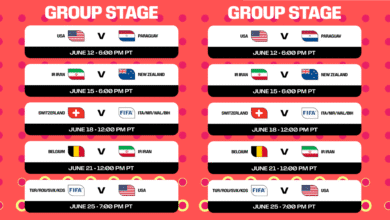
7 Weird Things Nobody Tells You About the World Cup Schedule (But Should)
The world cup schedule dropped and everyone lost their minds — and honestly, fair enough. But while most people were busy screenshotting kickoff times and arguing about group draws, a few genuinely bizarre things were hiding in plain sight inside that schedule. Things that change how you watch the tournament. Things that make you question whether FIFA is running a football competition or producing a Netflix series.
We’re going to get into all of it. But first — the weird question this whole article is built around.
The Weird Question Nobody Asked (But Should Have)
Was the 2026 World Cup schedule secretly designed so that the two best teams on earth cannot meet until the very last game?
Yes. Completely on purpose. Spain, ranked number one in the world, and Argentina, the reigning champions ranked number two, were placed in opposite bracket pathways at the draw. If both teams win their groups, keep winning, and make it all the way — they physically cannot face each other until the final on July 19. FIFA engineered it that way deliberately. The greatest possible match in world football is being saved for the last possible moment, like the season finale of a show you’ve been watching for a month.
That’s not a coincidence. That’s a schedule doing storytelling.
First, the Basics — What Is the 2026 World Cup Schedule?
The 2026 FIFA World Cup runs from June 11 to July 19, 2026, across three countries — the United States, Canada, and Mexico. It is the first World Cup ever co-hosted by three nations simultaneously. There are 16 host cities, 104 total matches, and 38 days of football from the opening whistle to the final.
The tournament opened on June 11 at Estadio Azteca in Mexico City, where Mexico beat South Africa 2–0. The following day, the United States opened their campaign at SoFi Stadium in Los Angeles, beating Paraguay 4–1.
The final will be played on July 19 at MetLife Stadium in East Rutherford, New Jersey — just outside New York City — at 3pm Eastern Time.
The Full Schedule Breakdown
| Phase | Dates | Number of Matches |
|---|---|---|
| Group Stage | June 11 – June 27 | 72 matches |
| Round of 32 | June 28 – July 2 | 16 matches |
| Round of 16 | July 4 – July 6 | 8 matches |
| Quarter-Finals | July 9 – July 10 | 4 matches |
| Semi-Finals | July 14 – July 15 | 2 matches |
| Third-Place Match | July 18 | 1 match |
| Final | July 19 | 1 match |
7 Things About the World Cup Schedule That Are Actually Weird
1. The Best Teams Were Mathematically Kept Apart
Spain, Argentina, France, and England — the top four ranked teams in the tournament — were all placed in separate bracket pathways at the draw. This was intentional. FIFA designed the 2026 format so that if all four win their groups and keep advancing, none of them can meet until the semi-finals at the absolute earliest. Spain and Argentina specifically cannot meet before the final. The schedule is built to protect the biggest possible matchups for the biggest possible moments.
2. There Are Now 104 Matches. One Hundred and Four.
Previous World Cups had 64 matches. The 2026 edition has 104. That’s 40 extra games — almost another entire tournament worth of football added on top. Spread across 38 days, that means some days have three or four matches running simultaneously in different cities across different timezones. For fans trying to watch everything, it is genuinely overwhelming in the best possible way.
3. A Round of 32 Now Exists and People Are Still Confused
Old format: Group Stage → Round of 16. Simple. New format: Group Stage → Round of 32 → Round of 16. The expanded 48-team tournament needed an extra knockout round to make the bracket work, so FIFA inserted a Round of 32 between June 28 and July 2. Many football fans still don’t fully know this exists. If you’ve been confused about why there seem to be more games than usual in the early knockout stage, this is why.
4. Four Countries Are Playing Their First World Cup Ever
The bigger 48-team field opened the door for Cabo Verde, Curaçao, Jordan, and Uzbekistan — all making their World Cup debuts. Curaçao is a Caribbean island with a population of around 150,000 people. They are at the World Cup. Their matches are inside that same schedule alongside Brazil, Germany, and France. That is remarkable and it barely got mentioned in the coverage.
5. Italy Didn’t Qualify — and That’s Never Happened Before (Almost)
Every former World Cup champion is at this tournament except Italy. The Azzurri failed to qualify, which means the country that has reached the World Cup final seven times in history simply has no games in the schedule. No slot. No fixture. Just absence. For a tournament that bills itself as the greatest sporting event on earth, having Italy missing is like a blockbuster film with one of its main cast members written out between sequels.
6. One Stadium Is Hosting Its Third World Cup
Estadio Azteca in Mexico City hosted World Cup matches in 1970, in 1986, and now in 2026. No other stadium in football history has done this three times. It is 60 years old. It hosted the iconic Hand of God match. It hosted the opening game of this tournament. And it is still going. Some buildings just refuse to step aside.
7. Brazil vs Morocco Happened in New Jersey
Group C threw up one of the tournament’s most-watched early fixtures — Brazil against Morocco — and it was played at MetLife Stadium in New Jersey. Two of the most globally supported non-European football nations, one match, held in the New York metro area. It sounds like the setup to a joke. It was actually just the world cup schedule doing what it does in 2026 — putting the most attractive games in front of the biggest possible audiences, geography be damned.
Where to Follow Every Game
If you want the full fixture list with live kickoff times and results:
- FIFA’s official schedule at fifa.com has every match, venue, and result updated in real time
- CBS Sports covers all 104 games with Eastern Time kickoffs and group standings
- NBC Sports has the full bracket view with streaming information for every match on Peacock and Telemundo
Frequently Asked Questions
When does the 2026 World Cup start and end?
It runs from June 11 to July 19, 2026. Opening match was Mexico vs South Africa in Mexico City. The final is July 19 at MetLife Stadium in New Jersey.
How many teams are in the 2026 World Cup?
48 teams — up from 32 at every previous World Cup. This is the first edition with the expanded format.
How many matches are in the World Cup schedule total?
104 matches across 38 days. The previous record was 64 matches.
Which countries are hosting the 2026 World Cup?
The United States, Canada, and Mexico are co-hosting — the first three-nation hosting arrangement in World Cup history.
Why can’t Spain and Argentina play before the final?
FIFA placed the two highest-ranked teams in opposite bracket pathways at the draw. If both win their respective sides of the bracket, the earliest they can meet is the final on July 19.
What is the Round of 32?
A new knockout round inserted between the Group Stage and the Round of 16. It runs from June 28 to July 2 with 16 matches. It exists because the tournament expanded from 32 to 48 teams.
Where is the World Cup final being played?
MetLife Stadium in East Rutherford, New Jersey, on July 19, 2026 at 3pm ET.
One Last Thing
Most people look at the world cup schedule and see a list of games. Times, dates, venues. Something to check when they want to know if their team is playing tonight.
But the schedule is actually the shape of the whole story. Who plays who, when, where, and in what order — all of it is a decision. FIFA decided Spain and Argentina get saved for last. FIFA decided Curaçao gets a seat at the table. FIFA decided a 60-year-old stadium in Mexico City opens the whole thing.
Every line in that schedule is a choice. And when you start reading it that way, it gets a lot more interesting than a fixture list has any right to be.
The final is July 19. Everything between now and then is the build-up.