6 Strange Reasons the Concept of a Soul Terrifies Us
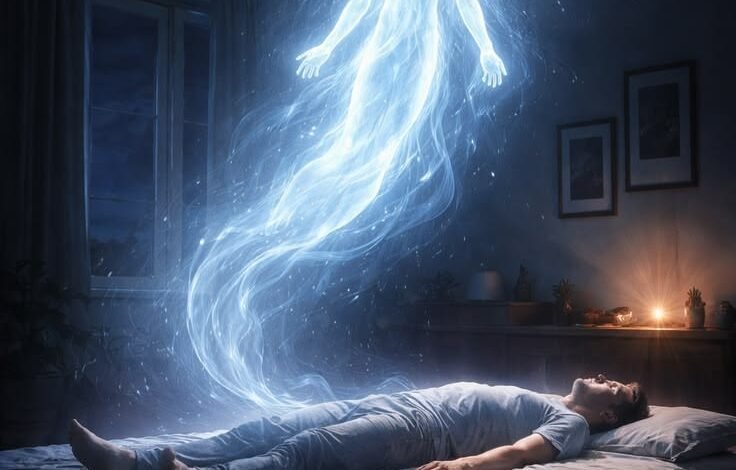
A 2023 Pew Research survey found that roughly 72% of Americans believe in a soul — yet fewer than 40% say they feel confident they know what happens to it after death. That gap between belief and certainty is exactly where the terror lives.
The concept of a soul might be the single most emotionally contradictory idea the human mind has ever produced — simultaneously the most comforting thought you can think and the most quietly horrifying one. It whispers that you matter, that something of you persists, that love doesn’t just evaporate when a body stops working. And then, in the very next breath, it asks: but what exactly are you, and what happens to that thing forever?
That word — forever — is where comfort curdles into dread so fast it gives you philosophical whiplash.
We invented religion, philosophy, neuroscience, and poetry largely to wrestle with this one question. And at 3am, lying in the dark, the question has a way of sitting on your chest like something with weight. Not quite fear. Not quite wonder. Something that feels uncomfortably like both at the same time.
So let’s actually pull this thing apart and figure out why the concept of a soul does this to us — and why it might be doing it on purpose.
🎯 Key Takeaways
- The concept of a soul is comforting because it promises continuity of identity beyond physical death.
- It becomes terrifying precisely because that continuity is infinite — and infinity is something the human brain genuinely cannot process.
- Neuroscience has never located the soul, but it has found the brain regions that make us feel like we have one.
- The terror isn’t just about dying — it’s about the unsettling possibility that “you” might persist in ways you can’t control or predict.
- Across cultures, every single recorded human civilization has had a concept of the soul — suggesting this idea is hardwired, not taught.
Why the Concept of a Soul Feels Like a Warm Blanket (That Might Be on Fire)
The Comfort Part Is Real — and It’s Biological
Let’s start with why the concept of a soul feels so good, because it genuinely does. When someone you love dies, the idea that some essential version of them continues — somewhere, somehow — is not just philosophically interesting. It is psychologically load-bearing. Grief researchers have found that people who believe in some form of soul survival report significantly lower rates of complicated grief and prolonged depression following bereavement. The belief does actual measurable work in the human nervous system.
This makes evolutionary sense. Soul and consciousness have been philosophically intertwined for thousands of years, but the comfort function of soul belief is older than philosophy. It’s older than writing. Neanderthals, who went extinct roughly 40,000 years ago, appear to have buried their dead with flowers and tools — implying they believed something persisted that would need those objects. That’s not theology. That’s instinct dressed up as ritual.
The comfort the concept of a soul provides has a specific psychological name: terror management. In the 1980s, psychologists Jeff Greenberg, Sheldon Solomon, and Tom Pyszczynski developed Terror Management Theory, which argues that much of human culture — art, religion, achievement, legacy — exists as a buffer against the raw awareness of mortality. The soul is arguably the most elegant terror management tool ever developed because it doesn’t just buffer against death. It reverses it entirely.
You’re not going to die. You’re going to transition. What a sentence. No wonder we’ve been clinging to it for 40,000 years.
Identity Is the Actual Comfort
Here’s the subtle thing most people miss: the comfort of the concept of a soul isn’t really about surviving death. It’s about surviving death as yourself. Generic survival isn’t comforting. If you told someone their atoms would be recycled into a mountain after death, they’d be vaguely interested and not at all consoled. What the soul promises is that the specific, irreplaceable pattern of you — your memories, your relationships, your sense of humor, your love for particular people — that that thing persists. Immortality and identity are inseparable in how humans actually experience the concept, which is why the fear follows so close behind the comfort.
The Fear of the Afterlife Isn’t What You Think It Is
Here’s where it gets genuinely strange. Most people assume the terrifying part of the soul concept is simple: death is scary, and the soul forces you to think about death. But that’s too easy. The terror is actually more specific — and weirder — than that.
The first layer of terror is infinity itself. The soul, in most traditions, is immortal. Eternal. It exists outside of time or beyond it. And here’s the thing about eternity that your brain absolutely refuses to properly process: it includes every possible horrible experience you could imagine, plus an infinite amount of time you haven’t imagined yet. Even if paradise is perfect for a trillion years, immortality and identity become philosophically nightmarish when you try to follow the thought to its logical end. Will you still be you after a billion years of heaven? After ten billion? At what point does endless existence stop being a gift and become something else entirely?
Philosopher David Benatar has written about this, and the philosopher Bernard Williams famously argued in his essay “The Makadropulos Case” that immortality would ultimately be tedious to the point of horror — that the very things that make identity meaningful require mortality. Without an end, nothing has stakes. Without stakes, nothing matters. The soul promises to save you from death and may, if Williams is right, deliver you into something worse.
The second layer of terror is accountability. Most soul traditions come bundled with the idea of judgment — that the soul carries a moral record. This is extraordinarily effective at producing ethical behavior in communities. It is also extraordinarily effective at producing existential dread at 3am. As National Geographic has explored in its coverage of near-death experiences and afterlife beliefs across cultures, nearly every tradition that includes a soul also includes some version of consequence — your soul goes somewhere based on what you did here. The comfort comes with terms and conditions.
The third layer is the one nobody talks about at dinner: the fear of the afterlife isn’t fear of punishment. It’s fear of continuation without consent. You didn’t choose to exist. Most soul traditions say you also won’t choose what comes next. You are, apparently, along for a ride that started before you were born and ends — well. It doesn’t end. That loss of control is deeply unsettling to a species that spends enormous energy trying to feel in charge of its own story.

The ancient Egyptians believed you had not one soul but five separate components — including the Ba (personality), the Ka (life force), and the Akh (immortal self). The terrifying implication? After death, these five parts could potentially separate, and if your name was erased from all monuments, your soul could cease to exist entirely. Pharaohs literally had their enemies’ names chiseled off walls as a form of soul assassination.
What Neuroscience Accidentally Found While Looking for the Soul
Your Brain Generates the Experience of Having One
Here’s where the rabbit hole gets particularly dizzying. Neuroscience never set out to disprove the soul — it mostly set out to map how the brain creates subjective experience. But along the way, researchers found something that cuts right to the heart of why soul and consciousness feel so entangled, and why the concept of a soul carries such emotional weight.
The parietal lobe — specifically a region called the temporoparietal junction (TPJ) — appears to be responsible for generating your sense of having a unified self that exists slightly separate from your body. When this region is stimulated electrically during surgery, patients report out-of-body experiences. When it’s disrupted by certain types of strokes or seizures, people report feeling like they are watching themselves from outside. Self-awareness and the experience of being a soul inhabiting a body may, in a very literal sense, be something your brain is doing on your behalf, without your knowledge or permission.
This doesn’t necessarily disprove the soul — the relationship between brain activity and consciousness remains one of the genuinely unsolved problems in science, known formally as the “hard problem of consciousness.” What it does do is make the question stickier and more personal. Because if your brain is generating the feeling of being a soul, then the concept of a soul isn’t something you learned or accepted. It’s something you feel from the inside every moment you’re awake. That’s why dismissing it intellectually never quite works. You can tell yourself the soul is a comforting fiction, and then continue experiencing yourself as an irreducible, non-physical something — because the TPJ doesn’t care about your philosophical conclusions.
Near-Death Experiences and the Evidence Problem
Near-death experiences (NDEs) add another layer of productive confusion. Approximately 17% of people who have been clinically dead and resuscitated report some form of NDE — tunnel of light, sense of leaving the body, encounters with deceased relatives, overwhelming peace. These experiences are cross-cultural, consistent in structure, and deeply transformative for those who have them. Most people who have NDEs lose their fear of death entirely. They also, interestingly, often report a persistent metaphysical existence of some kind feels more real to them than the physical world. The experience of the soul — whatever generates it — has a way of feeling more real than almost anything else.
The Dual Nature of Immortality and Identity — Why Both Feelings Are Correct
Here’s the thing about the emotional contradiction at the heart of the concept of a soul: you are not confused. Both feelings are completely rational responses to the same idea, and experiencing them simultaneously is actually the intellectually honest position.
The comfort is real because the soul addresses the most fundamental human terror — that consciousness, relationship, meaning, and love are temporary accidents that will dissolve into nothing. If the soul is real, none of that is lost. Every person you have ever loved still exists somewhere. Every moment of beauty you’ve experienced has been witnessed by something that persists. That is not a small comfort. That is an enormous one.
The terror is also real because the soul raises questions that have no comfortable answers. What exactly persists? Is it the version of you at your best, or the whole messy archive? Do you retain the pain you accumulated in life, or is it wiped clean? If it’s wiped clean, are you still you? Existential dread isn’t a failure of faith — it’s a reasonable response to the fact that the soul concept, if true, has staggering implications that no tradition has fully resolved.
There’s also the deeply weird implication of spiritual belief taken seriously: if souls are real and persist, then the world is absolutely saturated with them. Every person who has ever lived — roughly 108 billion humans — has a soul somewhere. The intimacy and individuality that make the concept comforting suddenly scale up into something vast and incomprehensible. The soul that was supposed to make you feel special and permanent suddenly exists in a cosmos so full of souls that the concept of individual significance gets philosophically dizzy.
The ancient Greek philosopher Heraclitus said you cannot step into the same river twice, because the water is always changing. Identity, even in life, is already a kind of fiction we tell ourselves for continuity. The soul concept takes that fiction and extends it into infinity. No wonder it feels like both a hug and a trapdoor.
Frequently Asked Questions
Why does the concept of a soul make some people feel comfort while others feel pure dread?
The difference often comes down to how a person relates to uncertainty and eternity. People who find the concept of a soul comforting tend to focus on the continuity and love it implies. People who find it terrifying tend to follow the idea to its logical extremes — infinite existence, judgment, loss of control. Both responses are completely rational. The soul concept is genuinely double-edged, and your emotional response depends largely on which edge you’re holding.
Has science found any evidence that souls exist?
Neuroscience has found that the experience of having a soul — a unified self that feels separate from the physical body — is generated by specific brain regions, particularly the temporoparietal junction. Whether that experience points to something real beyond the brain remains genuinely unknown. The hard problem of consciousness — why physical brain activity produces subjective experience at all — is unsolved. Honest scientists say there’s no evidence for souls, but also no complete explanation for consciousness without one.
Why does every human culture have a concept of the soul?
The universality of soul belief across every recorded human civilization — including prehistoric ones — suggests the concept is not simply cultural transmission. It appears to be a feature of human cognitive architecture. Our brains are wired to attribute agency to objects, to imagine invisible others, and to experience the self as something separate from the physical body. These cognitive tendencies reliably produce soul-like concepts regardless of culture, suggesting soul belief may be a byproduct of the same mental tools that made us smart enough to survive.
What is terror management theory and how does it relate to the soul?
Terror Management Theory, developed in the 1980s by psychologists Greenberg, Solomon, and Pyszczynski, proposes that much of human culture and behavior is motivated by the need to manage anxiety about death. The soul concept is arguably the most powerful terror management tool ever developed because it doesn’t just reduce death anxiety — it eliminates death conceptually. Studies show that reminding people of their mortality increases the strength of their soul-related beliefs, strongly suggesting the two are psychologically linked.
Is the fear of the afterlife the same as fear of death?
Not exactly — and the difference is important. Fear of death is typically about the loss of experience, relationships, and self. Fear of the afterlife is actually fear of what happens after that loss — judgment, infinite duration, continuation without consent. Some people who have made peace with dying still find the idea of an eternal soul deeply unsettling because eternity itself is cognitively overwhelming. The two fears share an address but they’re different tenants, and treating them as the same thing is why so many people feel confused about their own emotions on the subject.
✅ The Bottom Line
The concept of a soul is emotionally contradictory by design — it promises the most comforting thing imaginable (you persist, love persists, meaning persists) while simultaneously raising the most terrifying implications (you persist forever, you face judgment, you never truly stop). Neuroscience has found the brain regions that generate the feeling of having a soul, but hasn’t come close to solving whether that feeling points to something real. Every human civilization that has ever existed developed a soul concept independently — which means this question isn’t going away, and at 3am, it was never going to let you sleep anyway.
Final Thoughts
The concept of a soul is one of those ideas that reveals something important about you by the way it makes you feel. If it comforts you, that says something about where you place your hope. If it terrifies you, that says something about how seriously you’re actually taking the implications. And if it does both simultaneously — which, honestly, is the only intellectually consistent response — then you’re sitting exactly where the most interesting human thinking has always happened: in the gap between what we desperately want to be true and what we genuinely cannot know. So here’s the question worth losing sleep over: if you could know for certain whether your soul was immortal, would you actually want to?