8 Bizarre Things That Happen to Dead Stars in Space
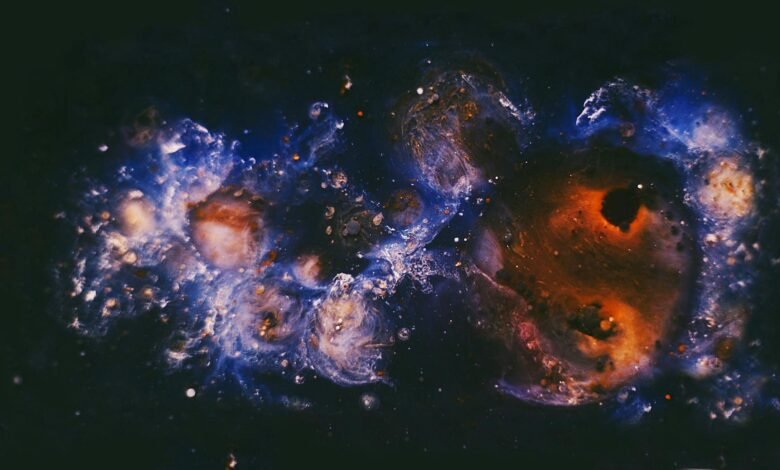
A neutron star — one of the most common dead stars in space — packs more mass than our entire Sun into a sphere roughly 12 miles across. A single teaspoon of neutron star material would weigh about 10 million tons on Earth.
Dead stars in space are not the quiet, cold graveyards you might imagine — they are some of the most violent, bizarre, and genuinely terrifying objects in the entire universe. When a star dies, it doesn’t just switch off like a light bulb. It goes out with a drama that makes every Hollywood explosion look embarrassingly small.
Here’s the unsettling part: the star you’re looking at right now might already be dead. Light takes so long to travel across the universe that many of the stars dotting your night sky burned out thousands — or even millions — of years ago. You’re staring at ghosts.
So what actually happens after a star dies? The answer depends entirely on how massive it was in life. And the range of outcomes stretches from hauntingly beautiful to cosmically apocalyptic. Let’s walk through it.
🎯 Key Takeaways
- Dead stars in space have multiple possible fates — all determined by the star’s original mass.
- Stars like our Sun will eventually become white dwarf stars — dense, cooling embers roughly the size of Earth.
- Massive stars explode as supernovas, briefly outshining entire galaxies of hundreds of billions of stars.
- Neutron stars are so dense that their surface gravity is 200 billion times stronger than Earth’s.
- The heaviest stellar remnants collapse into black holes — regions of spacetime where not even light escapes.
What Actually Happens to Dead Stars in Space?
The Life Cycle That Ends in Spectacular Chaos
Every star is essentially a controlled thermonuclear explosion lasting millions to billions of years. Gravity pulls hydrogen inward while nuclear fusion pushes energy outward — and for most of a star’s life, these two forces are locked in a perfect, delicate balance. The moment the fuel runs out, that balance shatters, and things get weird fast.
For small to medium-sized stars — anything up to about eight times the mass of our Sun — the process is relatively gentle by cosmic standards. The outer layers puff outward into a red giant, sometimes swallowing nearby planets whole. Our own Sun will do exactly this in about 5 billion years, expanding to engulf Mercury, Venus, and possibly Earth.
After the red giant phase, the outer shell drifts off into space forming a glowing cloud called a planetary nebula — one of the most visually stunning objects in astronomy. What’s left behind is a white dwarf star: a dense, hot, slowly cooling core no larger than our planet.
But for stars heavier than about eight solar masses? The ending is catastrophic. These stellar remnants don’t fade gently. They collapse and then explode in a supernova so powerful it can briefly outshine 200 billion stars simultaneously. The universe, it turns out, does not do subtle.
Stellar Remnants: The Incredible Afterlives Stars Leave Behind
The term stellar remnants covers everything a star leaves in its wake — and the variety is genuinely staggering. Think of it as the universe’s version of an estate sale, except everything left behind is either deadly, invisible, or capable of tearing spacetime itself.
White dwarf stars are probably the most common stellar remnants in the Milky Way. There are estimated to be around 10 billion white dwarfs in our galaxy alone. These are the cooling cores of stars that ran out of fuel — still incredibly hot (up to 100,000°C when newly formed) but no longer generating energy through fusion. Over trillions of years, a white dwarf slowly radiates its heat into space. Theoretically, after enough time passes, it becomes a cold, dark object called a black dwarf. Here’s the catch: the universe is only about 13.8 billion years old, and it takes far longer than that for a white dwarf to fully cool. No black dwarf has ever been observed — because none exist yet. Every white dwarf ever formed is still glowing.
According to National Geographic, the universe is still young enough that its stellar graveyard is almost entirely populated by objects still radiating enormous heat — meaning the truly cold, dark phase of dead stars in space is something the cosmos hasn’t even reached yet.
Then there are the more extreme stellar remnants. When a massive star explodes as a supernova, the outer layers are blasted into space at up to 10% the speed of light. What remains at the center is compressed so violently that protons and electrons are literally crushed together into neutrons — giving us the neutron star. And if the original star was massive enough, even that neutron core cannot hold, and it collapses further into a black hole.
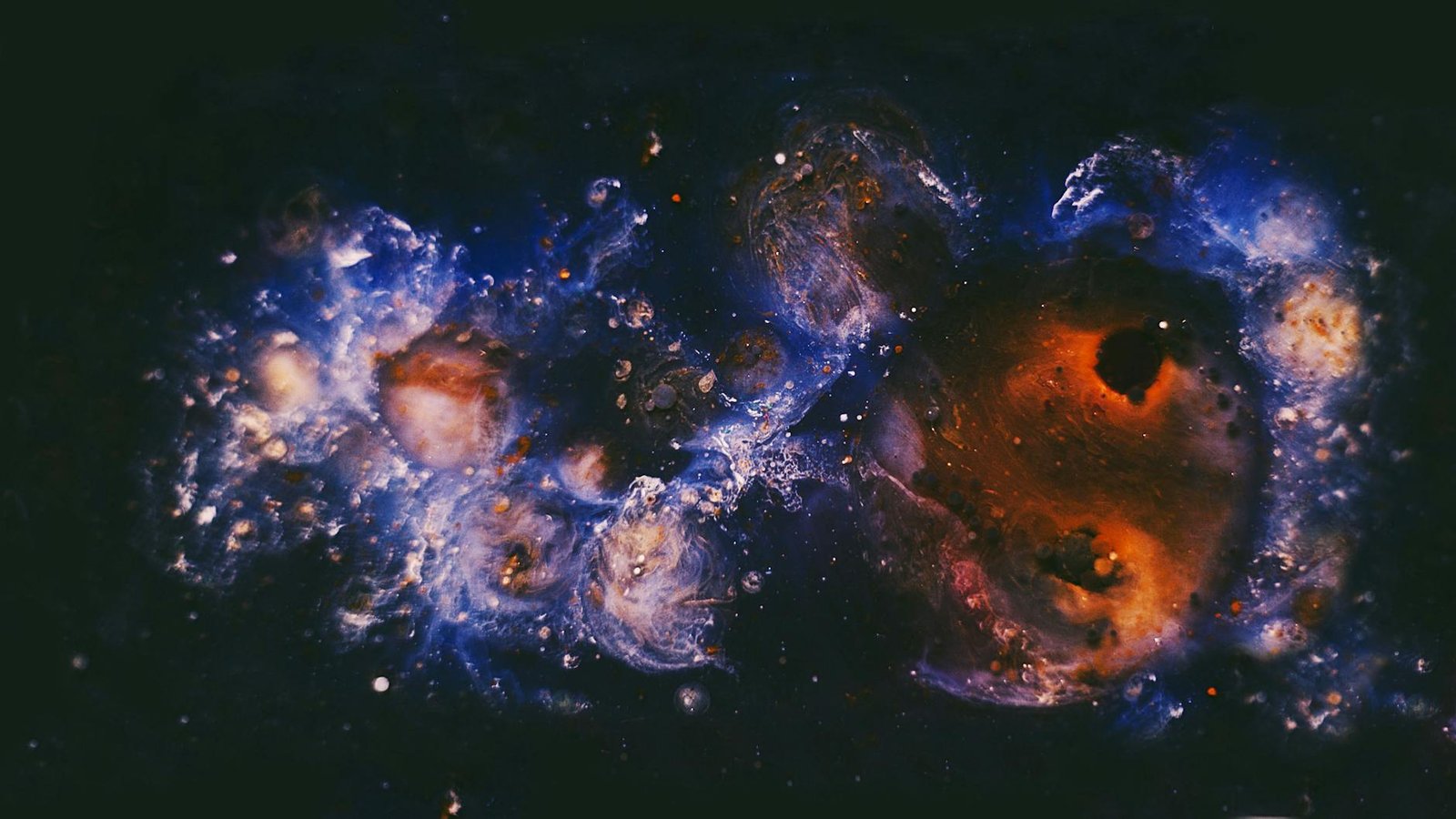
🤔 Wait, Really? Some neutron stars spin so fast they rotate up to 716 times per second. These are called millisecond pulsars. If you stood on one — which you absolutely could not survive — you’d be moving faster than 25% of the speed of light just from the rotation alone.
Neutron Stars: The Densest Dead Stars in Space That Aren’t Black Holes
Where Physics Goes to Break Itself
Neutron stars deserve their own chapter in any discussion of dead stars in space because they are genuinely one of the strangest objects the universe has ever produced. They are the densest things we can actually observe — black holes are technically denser, but we can’t directly observe their interiors. A neutron star is about as dense as you can get while still being a “thing” rather than an invisible gravitational anomaly.
Here’s something that should keep you up: neutron stars have a solid crust made of exotic atomic nuclei packed into a crystal lattice. Beneath that crust is a fluid of pure neutrons. And deeper still, at the core, physicists genuinely aren’t sure what exists — it may be a state of matter that has never been recreated in any laboratory on Earth. Some theorists suggest it could be a soup of quarks, the fundamental particles that make up protons and neutrons, existing freely in a phase called quark-gluon plasma.
The magnetic fields around neutron stars are equally ridiculous. A typical neutron star has a magnetic field roughly one trillion times stronger than Earth’s. A special subtype called a magnetar pushes this even further — magnetar fields are so powerful that if one got within about 1,000 kilometers of Earth, it would scramble the iron in your blood and pull the fillings from your teeth from that distance.
Pulsars — rotating neutron stars that beam electromagnetic radiation outward like a cosmic lighthouse — are so precise in their timing that astronomers have used them as natural clocks to test general relativity. When we first detected pulsars in 1967, the signal was so regular and artificial-seeming that the scientists briefly joked they might have discovered alien communications. They nicknamed the signal LGM-1: Little Green Men.
Black Holes, Cosmic Dust, and the Surprisingly Generous Legacy of Dying Stars
Black holes are probably the most famous outcome of stellar evolution — and the most misunderstood. When the most massive stars die in supernova explosions and the remaining core exceeds about three solar masses, nothing in physics can stop the collapse. The result is a singularity: a point of infinite density wrapped in an event horizon, the boundary beyond which escape becomes impossible.
Black hole formation doesn’t happen in slow motion. The collapse of a stellar core into a black hole takes less than a second. One moment there’s a neutron star trying to form. The next, it’s gone — swallowed by its own gravity. The outer supernova explosion continues, blasting material into space, while the black hole sits silently at the center, invisible but warping everything around it.
But here’s the part of stellar death that rarely gets talked about: dying stars are also the reason you exist. When stars explode as supernovas, they scatter the heavy elements forged in their cores — carbon, oxygen, iron, calcium, gold — across the galaxy as cosmic dust. These elements seed new solar systems and eventually find their way into planets, oceans, and living creatures. Every calcium atom in your bones was processed inside a star that died before our Sun was born.
The nebulae created by dead stars — both the gentle planetary nebulae from smaller stars and the violent supernova remnants from massive ones — become the nurseries where new stars form. Gravity slowly pulls the scattered gas and cosmic dust together, heats it up, and ignites a new generation of stellar fusion. Dead stars in space are not endings. They are, in a very literal sense, the raw materials for everything that comes next.
The Crab Nebula is a perfect example. It’s the remnant of a supernova observed by Chinese astronomers in 1054 AD — they recorded it as a “guest star” visible in daylight for 23 days. At its center sits a pulsar spinning 30 times per second, blasting radiation into the surrounding cloud. That cloud is still expanding at 1,500 kilometers per second today, nearly a thousand years later.
Frequently Asked Questions
What are the main types of dead stars in space?
The main types of dead stars in space are white dwarf stars, neutron stars, and black holes. Which type forms depends almost entirely on the original mass of the star. Low to medium mass stars become white dwarfs. Stars between roughly 8 and 20 solar masses typically become neutron stars after a supernova. Stars above about 20 solar masses generally collapse into black holes, though exact thresholds depend on the star’s composition and rotation.
Can dead stars ever come back to life?
In a sense, yes — but not in the way you’d imagine. A white dwarf star in a binary system can siphon material from a companion star. If it accumulates enough mass, it can trigger a thermonuclear explosion on its surface called a nova — temporarily blazing bright again. In extreme cases, if enough mass accumulates, it can trigger a Type Ia supernova, completely destroying the white dwarf in one final, spectacular detonation.
How long does it take for a star to fully die?
It depends entirely on the star’s size. Massive stars burn through their fuel recklessly fast and may only live 10 million years before dying in a supernova. Our Sun, a medium-sized star, will live about 10 billion years total. The actual death process — from red giant to final remnant — can take a few hundred thousand years for smaller stars, or just seconds for the core collapse during a massive star’s supernova explosion.
Are the stars we see at night already dead?
Some of them, yes. Because light travels at a finite speed — about 300,000 kilometers per second — the light reaching your eyes from distant stars left those stars thousands or millions of years ago. Stars thousands of light-years away could have exploded centuries ago, and we simply haven’t received that news yet. The night sky is genuinely a time machine, showing you the universe as it used to be, not as it currently is.
What is the most extreme type of stellar remnant?
That title belongs to magnetars — a special subtype of neutron star with almost incomprehensibly powerful magnetic fields, reaching up to 10^15 Gauss (that’s one quadrillion times Earth’s magnetic field). A magnetar flare observed in 2004 from 50,000 light-years away was so powerful it briefly ionized Earth’s upper atmosphere despite the vast distance. They are arguably the most energetic objects in the universe that aren’t actively consuming matter.
✅ The Bottom Line
Dead stars in space are not the end of anything — they are spectacular transformations. Depending on their mass, stars become hauntingly beautiful white dwarfs, impossibly dense neutron stars, lighthouse-like pulsars, or gravity-swallowing black holes. More remarkably, the material they scatter across the cosmos becomes the building blocks of new stars, planets, and life. Every atom of iron in your blood, every calcium crystal in your bones, passed through the heart of a dying star. You are, in the most literal sense, made of stellar remnants.
Final Thoughts
The fate of dead stars in space is one of those topics that starts as a curious 3am question and ends with you staring at the ceiling, quietly overwhelmed by the scale of it all. These objects — white dwarfs cooling for trillions of years, neutron stars spinning hundreds of times per second, black holes bending spacetime into silence — are not distant curiosities. They are our past and our future written in the sky. The next time you look up at the stars, remember: some of what you’re seeing is already gone. And everything you are was forged in something just like it. Does knowing that change the way you see the night sky?