Why Do Some Stars Explode and Others Just Fade Away?
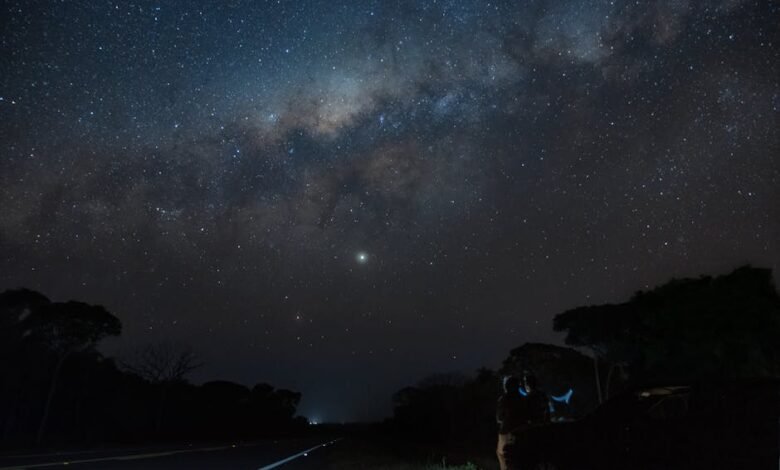
It’s 3am, you’re staring at the sky, and somewhere out there a Star Explode . Some go out with the most violent explosion in the universe. Others just slowly dim, shrink, and disappear quietly into the dark. So why do some stars explode and others just fade? The answer comes down to one simple thing — size. But the full story is way more dramatic than that. Stars are essentially giant balancing acts between two forces: gravity pulling inward and pressure pushing outward.
What Determines How a Star Dies
Not all stars are created equal, and they definitely don’t all die the same way. The single biggest factor in a star’s death is its mass — how much stuff it’s made of. A star’s mass is essentially its destiny written at birth.
Our Sun, for example, is a medium-sized star. It’s been burning hydrogen in its core for about 4.6 billion years, and it’s got roughly another 5 billion to go. When it finally runs out of fuel, it won’t explode. Instead, it will swell up into a red giant, puff out its outer layers into a beautiful cloud called a planetary nebula, and leave behind a tiny, dense core called a white dwarf. That white dwarf will slowly cool over trillions of years. No bang. Just a long, quiet fade.
Stars that are much more massive — roughly eight times the mass of our Sun or greater — have a very different fate waiting for them. They burn hotter, brighter, and burn through their fuel far faster. Furthermore, they go through multiple stages of nuclear burning, fusing heavier and heavier elements until they reach iron. And iron is where everything falls apart. You can learn more about stellar evolution on [NASA’s official website](https://www.nasa.gov/universe/stars/), which breaks down the life cycles of stars in remarkable detail.
The Iron Problem — Why Massive Stars Explode
Here’s the thing about iron: it’s a dead end for a star. Every element a star fuses up to that point — hydrogen, helium, carbon, oxygen — releases energy when it’s fused together. That energy is what keeps the star from collapsing under its own gravity. However, iron is different. Fusing iron actually *absorbs* energy instead of releasing it. When a massive star builds up an iron core, it’s essentially running out of road.
Once the iron core reaches a critical mass — about 1.4 times the mass of our Sun, known as the Chandrasekhar limit — gravity wins. The core collapses in less than a second. We’re talking about a collapse that happens faster than you can blink. The outer layers come crashing inward, hit the now-incredibly-dense core, and bounce back outward in a catastrophic shockwave.
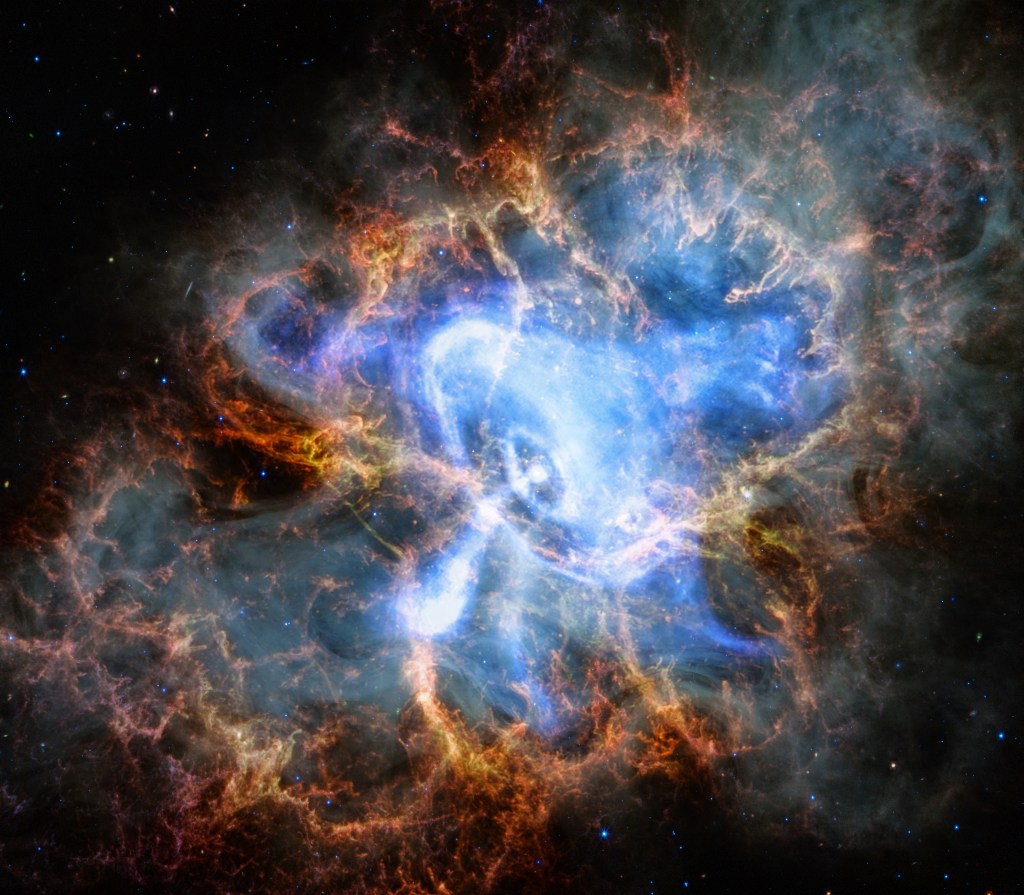
That shockwave is the supernova. It’s one of the most energetic events in the entire universe. In just a few seconds, a supernova releases more energy than our Sun will emit over its entire 10-billion-year lifetime. As a result, the explosion can outshine an entire galaxy for weeks. What’s left behind is either a neutron star — an object so dense that a teaspoon of it would weigh a billion tons — or, if the original star was massive enough, a black hole.
You can read more about the physics of supernovae on Wikipedia’s detailed supernova article, which covers the mechanics in excellent depth.
The Quiet Deaths — White Dwarfs and Planetary Nebulae
Meanwhile, smaller stars like our Sun get a much gentler exit. When a Sun-like star exhausts its hydrogen fuel, the core contracts but the outer layers expand dramatically. The star becomes a red giant — so large that if our Sun became one, it would swallow Mercury, Venus, and possibly Earth.
Eventually, the outer layers drift away entirely, forming a glowing shell of gas and dust called a planetary nebula. Despite the name, it has nothing to do with planets — early astronomers just thought they looked like planetary discs through telescopes. These nebulae are actually some of the most beautiful objects in the universe, glowing in vivid colors as the gas is energized by the remaining hot core at the center.
That core is the white dwarf — a dense, Earth-sized remnant that slowly radiates its leftover heat into space. It no longer generates energy through fusion. It’s just cooling down, very slowly, over an almost incomprehensible timescale. Additionally, white dwarfs can have a second act: if one is in a binary system and slowly steals mass from a companion star, it can eventually trigger a different kind of explosion called a Type Ia supernova. So even the quiet deaths aren’t always completely quiet.
The [European Space Agency](https://www.esa.int/Science_Exploration/Space_Science/What_is_a_nebula) has stunning images and explanations of planetary nebulae if you want to see what these cosmic farewells actually look like.
What Happens to the Stuff Stars Leave Behind
Here’s something that might genuinely keep you up at night: you are made of star stuff. The iron in your blood, the calcium in your bones, the oxygen you’re breathing right now — all of it was forged inside stars that exploded billions of years ago. Supernovae are literally how the universe spreads the heavy elements needed for life.
When a massive star explodes, it scatters elements across light-years of space. Those elements eventually get pulled together by gravity into new clouds of gas and dust, which collapse to form new stars — and sometimes, new solar systems with planets. Our own solar system formed from the recycled remnants of at least one previous supergiant star.
Therefore, stellar death isn’t really the end. It’s more like a cosmic recycling program. The quiet deaths of smaller stars contribute too — planetary nebulae seed the surrounding space with carbon, nitrogen, and oxygen. Every type of stellar death feeds the next generation of stars and, eventually, life.
If you’ve ever wondered about other strange cosmic questions, check out our post on [why black holes are invisible yet detectable](https://atthreeam.com) — it dives into the weird physics happening at the edge of what we can observe.
And if you’re curious about other fundamental science mysteries, our article on [how the universe began from almost nothing](https://atthreeam.com) is a great companion read to this one.
—
Frequently Asked Questions
1. Why do some stars explode and others just fade away?
It comes down to mass. Stars with more than about eight times the Sun’s mass build iron cores that collapse catastrophically, causing a supernova explosion. Smaller stars run out of fuel more gently, expanding into red giants before slowly fading as white dwarfs.
2. Will our Sun ever explode in a supernova?
No. Our Sun is not massive enough to go supernova. In about 5 billion years, it will expand into a red giant, shed its outer layers as a planetary nebula, and leave behind a white dwarf that will cool for trillions of years.
3. How long does a supernova explosion last?
The actual core collapse takes less than a second. However, the resulting explosion and brightness peak can last days to weeks. The expanding remnant cloud of gas and debris can remain visible and detectable for thousands of years afterward.
4. What is a neutron star and how does it form?
A neutron star forms when a massive star’s core collapses during a supernova but isn’t quite heavy enough to become a black hole. The result is an incredibly dense object about 20 kilometers across, where protons and electrons are crushed together into neutrons.
5. Are supernovae dangerous to Earth?
A supernova would need to be within about 25-50 light-years of Earth to pose a serious threat through radiation. Fortunately, no known stars that close are candidates for supernova. The nearest supernova candidate, Betelgeuse, is about 700 light-years away — safely distant.
Conclusion
So there it is — why stars explode and others just fade away really does come down to mass. Big stars burn fast, hit an iron wall, and go out in the most spectacular explosions the universe has to offer. Smaller stars take the slow road, drifting apart gently like a campfire burning down to embers. Either way, nothing is truly wasted. The material gets recycled, new stars form, and eventually, the elements wind up in places like your body. The universe, it turns out, is incredibly good at reusing things. Even death, out there, is just the beginning of something new.
Tags: stars explode, stellar death, supernova explained, space science, astronomy facts