6 Hidden Reasons Phone Signal in Buildings Gets Weak
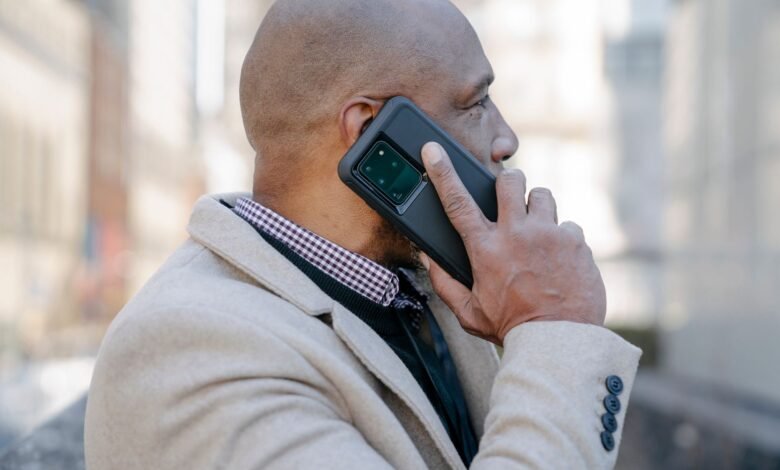
The energy-efficient “Low-E” glass coating used in modern office buildings can block up to 40 decibels of cellular signal — that’s roughly the same as putting your phone inside a metal box. You’ve been fighting physics every time you’ve walked into a new building.
Your phone signal in buildings doesn’t just get weaker — it gets ambushed. One second you’re streaming music on the sidewalk, the next you’ve walked through a glass door and your bars have vanished like they owe you money.
It feels personal. It’s not. But the reason it happens is so much stranger and more layered than “thick walls.” We’re talking metal mesh hidden inside concrete, invisible metallic coatings on windows, your own body absorbing radio waves, and buildings that are accidentally engineered to be perfect signal traps.
So if you’ve ever stood in the corner of a basement parking garage, holding your phone above your head like some kind of ritual offering to the cell tower gods — this one’s for you. Here’s what’s actually happening, and why modern architecture is basically waging a quiet war against your reception.
🎯 Key Takeaways
- Phone signal in buildings weakens primarily because building materials absorb and reflect radio frequency waves before they reach your phone.
- Reinforced concrete can reduce signal strength by 10–20 dB on its own — enough to drop you from full bars to nothing.
- Modern energy-efficient windows with Low-E metallic coatings are one of the worst offenders for blocking indoor cell coverage.
- Signal penetration through walls depends heavily on the frequency band your carrier uses — lower frequencies travel farther and penetrate better.
- Your own body absorbs cellular signals, meaning something as simple as how you’re holding your phone can affect reception.
Why Phone Signal in Buildings Disappears: The Physics Nobody Explains
Radio Waves Are Not Magic — They’re Just Light You Can’t See
Your cell phone communicates using radio frequency (RF) waves — electromagnetic waves that travel through the air at the speed of light. That sounds impressive, and it is, right up until those waves meet something solid. When RF waves hit a material, three things can happen: they pass through it (transmission), bounce off it (reflection), or get absorbed by it (attenuation). Most building materials do all three at once, just in different proportions.
The key measurement here is signal loss in decibels (dB). Every 3 dB of loss cuts your signal power in half. So a wall that causes 10 dB of loss has reduced your signal to just one-tenth of its original strength before it even reaches you. That’s not a small inconvenience — that’s a catastrophic reduction in what your phone has to work with.
What makes phone signal in buildings such a specific problem is that buildings are intentionally designed to keep the outside world out. That’s great for temperature, noise, and weather. It turns out it’s terrible for invisible electromagnetic waves that your phone desperately needs to function. The very features that make a building a good building — insulation, structural integrity, energy efficiency — also make it a signal graveyard.
It’s Not One Wall. It’s Twenty Walls.
Here’s the part that really stings. Each material a signal passes through adds another layer of loss. A single office building might require a signal to pass through an exterior wall, several interior partition walls, a ceiling or floor, and various internal structures before it reaches you in your favorite dead-zone corner. By that point, even a strong signal from a nearby tower has been nibbled down to almost nothing.
Signal penetration through walls is cumulative. Every barrier is another tax on your bars. And in multi-story buildings, going underground — like into a basement or parking structure — adds the worst barrier of all: literal earth and reinforced concrete above your head.
The Building Materials That Destroy Indoor Cell Coverage
Not all walls are created equal. Some materials are almost transparent to radio waves. Others are basically Faraday cages in disguise. Understanding which is which explains why your signal is perfect in one coffee shop and completely dead in the one next door.
Concrete and reinforced concrete are among the worst culprits. Plain concrete causes around 10–15 dB of signal loss. Add the steel rebar mesh used in reinforced concrete — which is standard in any modern structure — and you’re looking at signal losses of 20–30 dB. That steel mesh essentially acts like a metallic grid that reflects and absorbs RF waves rather than letting them through. It’s not quite a Faraday cage, but it’s trying hard to be one.
Metal is the absolute champion of signal destruction. Metal roofing, metal studs in partition walls, metal ducting — all of it reflects and absorbs radio waves with spectacular efficiency. A solid metal surface can cause 25–50 dB of loss, which is enough to kill your signal entirely. This is why elevators and server rooms are legendary dead zones. You’re literally standing inside a metal box.
Low-E glass deserves special mention because it’s the sneaky villain most people never see coming. Low-emissivity glass — the kind used in virtually every energy-efficient modern office building and upscale apartment — is coated with an ultra-thin layer of metallic oxide. This coating is there to reflect heat and reduce energy costs. It does that brilliantly. It also reflects cellular radio waves with nearly the same enthusiasm. According to research into telecommunications technology and RF propagation, this coating can cause signal losses of up to 40 dB — meaning the beautiful floor-to-ceiling windows in your open-plan office are actually one of the main reasons your indoor cell coverage is a disaster.
Brick typically causes 5–15 dB of loss, making it bad but not catastrophic. Drywall and plasterboard are relatively transparent to signals, causing just 2–5 dB of loss each. Wood is similar — it barely slows a signal down. The lesson? Old brick Victorian buildings often have better signal inside than gleaming modern glass-and-steel towers, despite looking far less technologically impressive.
The human body itself absorbs cellular radio waves in the 700 MHz–2.6 GHz range that phones commonly use. In a crowded room, dozens of people can collectively absorb enough signal to noticeably degrade indoor cell coverage for everyone. Yes, other people at the concert are part of why your signal is dead at the concert.
How Signal Penetration Through Walls Depends on Frequency
Lower Frequencies Are Better at Getting Through Solid Objects
Here’s a fact that completely changes how you think about mobile networks: not all cellular frequencies behave the same way inside buildings. The frequency of a radio wave directly affects its ability to penetrate obstacles. Lower frequency waves have longer wavelengths, which means they interact differently with physical barriers — they diffract (bend around obstacles) more easily and lose less energy passing through solid materials.
This is why the old 700 MHz and 850 MHz “low-band” frequencies used by carriers like AT&T and T-Mobile are specifically valuable for indoor coverage and rural areas. A 700 MHz signal can punch through walls, floors, and building materials that would completely stop a 2.4 GHz or 5 GHz signal in its tracks. It doesn’t travel as much data as fast, but it gets to you.
On the opposite end, 5G millimeter wave (mmWave) signals — operating at frequencies of 24 GHz and above — are almost comically bad at getting through anything. They can be blocked by a single pane of standard glass. A human hand can interrupt them. They’re extraordinary at delivering speed outdoors, but signal penetration through walls at those frequencies is essentially zero. This is a major challenge for 5G rollout that carriers are still solving through small indoor antennas called distributed antenna systems (DAS).
Why Your Carrier’s Network Architecture Matters Indoors
The specific frequency mix your carrier uses in your area plays a massive role in your indoor cell coverage. If your carrier is heavily invested in mid-band and high-band spectrum for speed, you might find that stepping into any substantial building causes your signal to plummet. Carriers that have maintained robust low-band coverage tend to perform far better inside buildings, even if their peak outdoor speeds aren’t as flashy.
Building materials blocking signal is a known, quantified problem in the telecommunications industry. Network planners literally calculate “building penetration loss” as part of their coverage modeling. When a carrier says their network covers 99% of the population, they typically mean outdoor coverage. Indoor coverage is a separate, harder problem that they’re still actively working to solve.
The Strange Secondary Factors That Make Indoor Signal Worse
Beyond the obvious physical barriers, there’s a whole constellation of weird secondary reasons your phone signal in buildings tanks in ways that seem random and unpredictable.
Multipath interference is one of the most counterintuitive. Inside a building, signals don’t travel in a straight line — they bounce off walls, floors, ceilings, and metal objects, arriving at your phone from multiple directions at slightly different times. When these reflected waves combine, they can actually cancel each other out through a phenomenon called destructive interference. This is why moving just two feet to the left can sometimes dramatically improve your signal — you’ve shifted out of a destructive interference zone into a constructive one. Your phone isn’t broken. Physics is just being rude.
Wireless interference from other devices adds another layer of chaos. Wi-Fi routers, Bluetooth devices, microwave ovens, cordless phones, and even some fluorescent lighting systems all radiate electromagnetic energy that can interfere with cellular signals in nearby frequency bands. In a densely occupied office building, the sheer density of wireless devices creates a noisy electromagnetic environment that degrades signal quality even when signal strength looks acceptable.
Network congestion is technically different from signal loss but produces the same frustrating result. In buildings where many people are simultaneously using cellular data — think office towers at lunch, stadiums, shopping malls — the local cell tower can become overwhelmed. Your bars may show strong signal, but your data crawls because the tower’s capacity is saturated. This is why the signal attenuation problem and the capacity problem can look identical from where you’re standing, staring at your phone in helpless rage.
Distance and tower geometry matter more inside buildings than outside. Outdoor, you generally have line-of-sight to a tower. Indoors, your signal arrives at an oblique angle through multiple walls. If the nearest tower is positioned such that its signal has to pass through the maximum thickness of a building to reach you, you’ll get significantly worse performance than someone on the opposite side of the same floor facing the tower directly. This is why one side of an office floor gets decent reception and the other is a wasteland.
Frequently Asked Questions
Why does my phone signal in buildings get weaker on higher floors sometimes?
You’d expect higher floors to have better signal since they’re closer to tower height — and often they do. But in very tall buildings, upper floors can actually end up above the optimal transmission angle of nearby towers, which are designed to broadcast slightly downward. Add in the fact that the building’s own structure still blocks signals from some directions, and you can end up in a surprisingly poor signal zone despite being sixty stories up.
Does building size affect how much signal I lose?
Absolutely. The larger and deeper a building, the further you can get from any exterior wall, and the more layers of material a signal has to penetrate to reach you. The center of a large warehouse or a hospital complex can be hundreds of feet from the nearest exterior surface — each layer of wall, partition, and flooring adding its own tax on signal strength. This is why massive buildings almost always have dedicated indoor cellular infrastructure installed.
Why does my signal drop in elevators specifically?
Elevator shafts are surrounded by concrete and steel, and the elevator car itself is typically a metal enclosure — which, as we’ve covered, is about the worst possible combination for radio frequency waves. You’re essentially climbing into a mobile Faraday cage. Some modern elevators in high-end buildings have cellular repeaters built in, which is why you might get signal in some elevators and absolutely nothing in others.
Can anything actually improve indoor cell coverage?
Yes — and the technology exists and works. Cell signal boosters (also called repeaters or amplifiers) capture a weak outdoor signal via an external antenna, amplify it, and rebroadcast it indoors. They’re legal, effective, and widely available. For larger buildings, distributed antenna systems (DAS) and small cells installed throughout the building solve the problem at scale. Wi-Fi Calling — where your phone routes calls over Wi-Fi instead of cellular — is the easiest free solution for most people.
Why is hospital signal so notoriously bad?
Hospitals are practically engineered to kill your signal. They use thick reinforced concrete construction, have extensive lead-lined rooms (for X-ray and radiation areas), contain massive amounts of metal medical equipment, and often have deliberate RF shielding in certain areas to prevent wireless interference with sensitive medical devices. The combination makes hospitals some of the most signal-hostile environments you’ll regularly enter, even when they’re located right next to cell towers.
✅ The Bottom Line
Your phone signal in buildings is being quietly murdered by a coalition of concrete, steel rebar, Low-E glass coatings, multipath interference, and sometimes just the laws of physics being difficult. Every building material takes a cut of your signal before it reaches your antenna, and modern energy-efficient architecture is ironically some of the worst offending. The good news is that the problem is understood, solvable with boosters and Wi-Fi Calling, and not actually a sign that your phone is broken — the universe is just temporarily inconvenient.
Final Thoughts
There’s something almost poetic about it. We’ve built these extraordinary structures — towering, gleaming, energy-efficient monuments to human ingenuity — and in doing so, accidentally created spaces where our wireless technology refuses to work. Phone signal in buildings is essentially a collision between two different kinds of progress, fighting each other through walls you can’t see. The next time you watch someone do a slow pirouette in a lobby, holding their phone aloft, looking for signal — you’ll know exactly what invisible battle they’re fighting. Does knowing all this change how you think about the buildings you spend most of your life inside?