7 World Cup Coverage Standings Facts Every True Fan Should Know
Published: June 13, 2026 · Category: Randoms & Weirds · 8 min read
I’ll be completely honest with you — I opened the world cup coverage standings page three times before I actually understood what I was looking at. Twelve groups. Forty-eight teams. A new knockout round that didn’t exist four years ago. A third-place rule that means teams aren’t even eliminated when you think they are. This tournament is genuinely the most complex World Cup ever built, and the coverage hasn’t done a great job of explaining the mechanics behind the tables everyone is staring at every morning.
So I did the reading. I watched the first games. I went through every group, every result, every rule — and I’m going to give you everything right here in a way that actually makes sense. After this, you’ll watch every group stage match differently. And you’ll read every standings table knowing exactly what you’re looking for.
Let’s get into it.
What Even Is the 2026 World Cup Standings Format? (Read This First)
Before anything else — this needs a proper explanation because the format genuinely changed and most people skipped this part.
48 teams. 12 groups of 4. Each team plays 3 group games. 3 points for a win, 1 for a draw, 0 for a loss — that part hasn’t changed.
What changed is what happens after.
In previous World Cups with 32 teams and 8 groups, top 2 go through, everyone else goes home. Simple. In 2026, the top 2 from each group still advance automatically — that’s 24 teams. But 24 teams cannot form a knockout bracket. So FIFA takes the 8 best third-placed teams from across all 12 groups and adds them to make 32 — hence the new Round of 32.
This single change affects how you read every standings table in the tournament. A team in third is not necessarily going home. They might be better placed than third-place teams in four other groups. Which means nothing is truly over until the final group game of the final matchday is played.
Now. The seven things.
Fact 1: The Standings Have a Tiebreaker Nobody Talks About
If two teams finish level on points, goal difference, and goals scored — the next tiebreaker is their team conduct score. Fewer yellow and red cards wins. This is real. It’s in the official FIFA regulations for 2026.
And if that’s still level, it comes down to FIFA ranking from June 2026.
I’m telling you this because it matters in practice. Late in the group stage, when multiple third-place teams are separated by a single goal or a single card — the team that kept discipline in a match they’d already won could be the reason they go through and another team goes home. Every yellow card pulled in a “dead” group game is potentially a tiebreaker that eliminates someone.
Watch the discipline. It’s part of the standings whether the commentary mentions it or not.
Fact 2: The Opening Day Already Told Us a Lot
Let me give you the results so far because context matters when you’re reading any standings table.
June 11 — Group A:
- Mexico 2–0 South Africa
- South Korea 2–1 Czechia
June 12 — Group B & D:
- Canada 1–1 Bosnia and Herzegovina
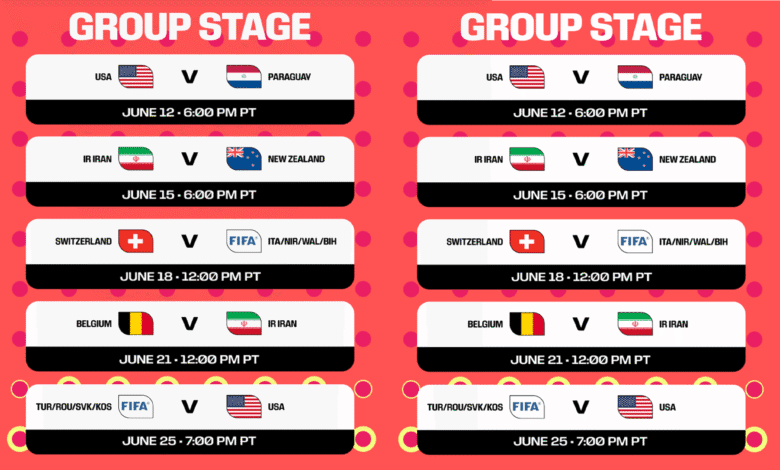
- USA 4–1 Paraguay
June 13 — In progress today:
- Qatar vs Switzerland (Group B)
- Brazil vs Morocco (Group C)
- Australia vs Türkiye (Group D)
- Haiti vs Scotland (Group C)
The scoreline everyone is talking about is the USA beating Paraguay 4–1 at SoFi Stadium in Los Angeles. That is not a flattering scoreline for the host nation — that is a dominant performance. The pressing was relentless and the finishing was composed. If that’s the level they play at consistently, Group D is theirs to lose.
Mexico did exactly what a host needs to do — opened the tournament at Azteca, controlled the game, won 2–0. South Korea quietly put in one of the more impressive performances of matchday one, coming from behind to beat Czechia 2–1. Remember that result when people start talking about dark horses.
Fact 3: Here Are the Current Standings for Every Played Group
Group A — Mexico, South Africa, South Korea, Czechia
| Position | Team | P | W | D | L | GF | GA | GD | Pts |
|---|---|---|---|---|---|---|---|---|---|
| 1st | Mexico | 1 | 1 | 0 | 0 | 2 | 0 | +2 | 3 |
| 2nd | South Korea | 1 | 1 | 0 | 0 | 2 | 1 | +1 | 3 |
| 3rd | Czechia | 1 | 0 | 0 | 1 | 1 | 2 | -1 | 0 |
| 4th | South Africa | 1 | 0 | 0 | 1 | 0 | 2 | -2 | 0 |
Mexico and South Korea are level on points — separated only by goal difference after one game. South Africa sit bottom after a difficult opening at Azteca. Czechia lost but kept it to a one-goal margin, which matters for goal difference if this group gets complicated.
Group B — Canada, Bosnia and Herzegovina, Qatar, Switzerland
| Position | Team | P | W | D | L | GF | GA | GD | Pts |
|---|---|---|---|---|---|---|---|---|---|
| 1st | Bosnia & Herz. | 1 | 0 | 1 | 0 | 1 | 1 | 0 | 1 |
| 2nd | Canada | 1 | 0 | 1 | 0 | 1 | 1 | 0 | 1 |
| 3rd | Qatar | 0 | — | — | — | — | — | — | — |
| 4th | Switzerland | 0 | — | — | — | — | — | — | — |
Canada drew 1–1 with Bosnia at home in Toronto. A result that’s fine on paper but will concern Canadian fans expecting more on home soil. Qatar and Switzerland play today — whoever wins goes straight to the top.
Group D — USA, Paraguay, Australia, Türkiye
| Position | Team | P | W | D | L | GF | GA | GD | Pts |
|---|---|---|---|---|---|---|---|---|---|
| 1st | USA | 1 | 1 | 0 | 0 | 4 | 1 | +3 | 3 |
| 2nd | Paraguay | 1 | 0 | 0 | 1 | 1 | 4 | -3 | 0 |
| 3rd | Australia | 0 | — | — | — | — | — | — | — |
| 4th | Türkiye | 0 | — | — | — | — | — | — | — |
USA leads emphatically. Paraguay’s -3 goal difference after one game is already damaging if they end up fighting for a third-place qualification spot later. Australia and Türkiye play today with second place in Group D immediately up for grabs.
Fact 4: Third Place Is Not a Death Sentence in 2026
This is the one that changes everything about how you watch the group stage.
Of the 36 teams that will finish third across 12 groups, 8 of them go through. Only 4 third-place teams are fully eliminated at this stage. That means if you’re watching a team lose their second group game and thinking “they’re done” — you might be completely wrong.
A team can finish on 4 points in third place — a win and a draw — and advance comfortably if that 4-point performance ranks among the best third-place finishes across all groups. We’ve seen this play out at Euros before and the same logic now applies to the World Cup.
What it means practically: goal difference in a “meaningless” game is never meaningless. A team that’s already locked in second place going into their final match still has reason to press for more goals — because doing so could help the third-place team in their group leapfrog a third-place team in another group and go through.
Every goal. Every game. Even the ones that look decided.
Fact 5: The Two Best Teams Were Deliberately Kept Apart Until the Final
This one reads like a conspiracy theory and it’s completely true.
Spain, ranked first in the world, and Argentina, defending champions ranked second — were placed in opposite bracket pathways at the draw. By design. FIFA structured the 2026 format specifically so that if both teams win their groups and keep winning, the earliest they can face each other is July 19 in the final at MetLife Stadium.
France, ranked third, and England, ranked fourth, were also separated into different pathways. The top four teams in world football cannot meet until the semi-finals at the absolute earliest, and the top two cannot meet at all until the final.
This is not random. This is the World Cup standings and bracket being used as a storytelling device — building toward the maximum possible final if the tournament plays out the way the rankings suggest it should. Whether that’s genius scheduling or corporate manipulation of the sport’s greatest prize is a question worth sitting with.
Fact 6: Four Teams Are at Their First-Ever World Cup and That Affects the Standings
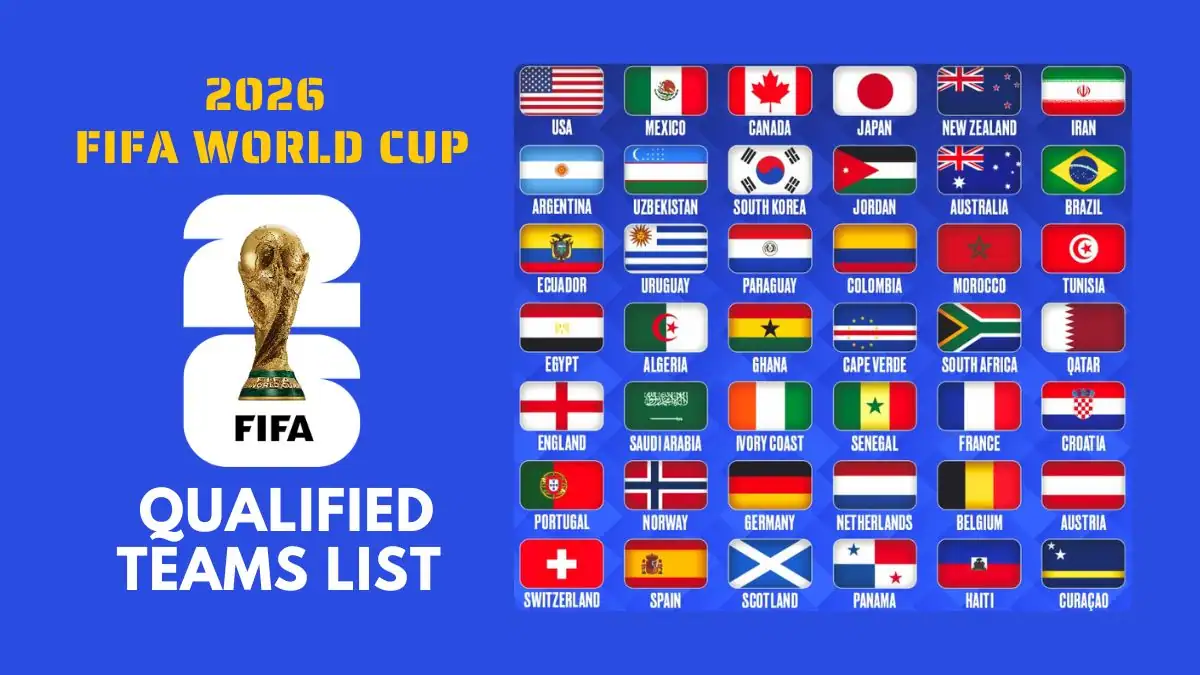
Cabo Verde, Curaçao, Jordan, and Uzbekistan are all making their World Cup debuts in 2026. That matters to the standings in ways that don’t get discussed.
Debutant teams have no World Cup form data. No experience playing in this environment in front of these crowds under this pressure. Statistically, first-time World Cup teams tend to concede more goals and collect more yellow cards simply from inexperience and nervousness — which affects both goal difference and the disciplinary tiebreaker in the third-place standings race.
Curaçao, an island of around 150,000 people, is sharing a group table with nations that have played in World Cups for decades. Whatever happens to them in the standings, just being there is the result.
Fact 7: The Most Historically Significant Absence in Any Standings Table Is Italy
Every former World Cup champion qualified for 2026 — except Italy. The Azzurri failed to qualify, meaning the nation that has reached the World Cup final seven times simply doesn’t appear anywhere in any group standings. No fixture. No table. No result. Just absence.
For a tournament that calls itself the greatest sporting event on earth, having Italy missing from the world cup coverage standings is genuinely strange. It would be like organising the world’s biggest film festival and having one of cinema’s most decorated directors not make the cut. The table feels complete on paper. But anyone who has watched football long enough knows something is off.
Where to Follow the Live World Cup Coverage & Standings
Three sources worth actually bookmarking:
- FIFA official standings — fifa.com — updated in real time after every match, the source of record for all 12 group tables
- CBS Sports World Cup hub — cbssports.com — clean group tables with Eastern Time kickoffs and live score tracking
- NBC Sports standings page — nbcsports.com — full bracket view with streaming information for every upcoming match on Peacock and Telemundo
For TV: all 104 matches air on FOX and FS1 in English, streaming on FOX One. Spanish coverage on Telemundo and Peacock en Español.
Frequently Asked Questions
How does the 2026 World Cup standings system work?
Teams earn 3 points for a win, 1 for a draw, 0 for a loss across 12 groups of 4. Top 2 from each group qualify automatically. The 8 best third-placed teams across all 12 groups also advance to the Round of 32, ranked by points, goal difference, goals scored, disciplinary record, and FIFA ranking.
Who is leading the 2026 World Cup Group A standings?
Mexico leads Group A with 3 points and a +2 goal difference after beating South Africa 2–0 on June 11. South Korea sits second also on 3 points after defeating Czechia 2–1. Mexico separates on goal difference.
Where can I follow live World Cup coverage and standings?
The official FIFA website updates standings in real time. CBS Sports and NBC Sports carry live scores and group tables. In the US, all 104 games air on FOX and FS1 with streaming on FOX One.
Do third-place teams get eliminated at the 2026 World Cup group stage?
Not all of them. The 8 best third-placed teams from across all 12 groups advance to the Round of 32. Only 4 third-place finishers are eliminated at the group stage — which means goal difference and discipline matter in every single match.
How many teams are in the 2026 World Cup?
48 teams — the biggest field in World Cup history — split into 12 groups of 4, playing 72 group-stage matches before the new Round of 32 begins.
This article is updated as the tournament progresses. Last updated: June 13, 2026.