Why Do Onions Make You Cry? The Science and 8 Tricks That Work
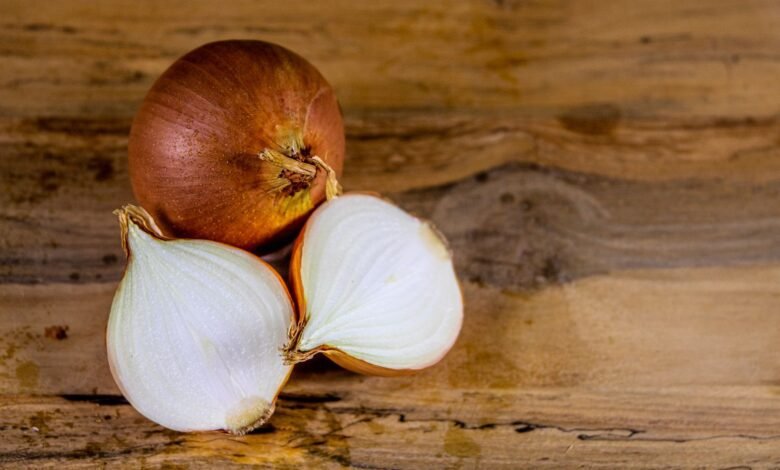
Why do onions make you cry? When you cut an onion, you break open its cells and start a fast chemical reaction. Two enzymes turn harmless sulfur compounds into a gas called syn-propanethial-S-oxide. That gas floats up into your eyes, irritates the nerves on their surface, and your tear glands respond by washing it away.
In other words, the tears are your body’s defense against the onion’s defense. Below is the simple science of onion tears, why some onions are worse than others, and eight easy tricks to cut onions without crying.
Key Takeaways
- Cutting onions starts a chain reaction that makes an eye-irritating gas.
- The key irritant is syn-propanethial-S-oxide, made by an enzyme discovered in 2002.
- The reaction is the onion’s way of protecting itself from animals and pests.
- Cooked onions don’t make you cry, because heat destroys the enzymes.
- Chilling the onion, using a sharp knife and good airflow are the easiest ways to cut down on tears.
Why Do Onions Make You Cry? The Chain Reaction
A whole onion doesn’t make you cry. You can hold one up to your face all day. The trouble starts only when you cut or crush it, because the ingredients for the reaction are kept apart inside the onion’s cells until they break.
Here’s what happens, step by step, as described by food scientists in The Conversation:
- The onion stores sulfur. Onions absorb sulfur from the soil and keep it in compounds called amino acid sulfoxides.
- Cutting releases an enzyme. When you slice through the cells, an enzyme called alliinase mixes with those sulfur compounds and turns them into sulfenic acids.
- A second enzyme makes the irritant. Another enzyme, called lachrymatory factor synthase, quickly turns the sulfenic acid into syn-propanethial-S-oxide.
- The gas reaches your eyes. This compound evaporates easily, so it drifts up from the cutting board into your eyes within seconds.
- Your eyes fight back. The gas irritates nerve endings on the surface of your eyes, and your tear glands pump out tears to flush it away.
The “lachrymatory factor” in the enzyme’s name simply means “tear-making substance” (from the Latin lacrima, meaning tear). Scientists used to think one enzyme did all the work. Then in 2002, a team of Japanese researchers reported in the journal Nature that a separate enzyme is needed to make the tear-causing gas.
Why Do Onions Do This?
It’s self-defense. Onions grow underground, where hungry animals, insects and fungi would love to eat them. Damaging the bulb releases a gas that stings and smells strong, which makes the onion much less appealing. Your tears are just a side effect of a chemical weapon meant for pests.
Why Some Onions Make You Cry More Than Others
Not every onion is equally fierce. How much an onion makes you cry depends mostly on how much sulfur it holds, which depends on the variety, the soil and the growing conditions.
| Type | Tear factor | Why |
|---|---|---|
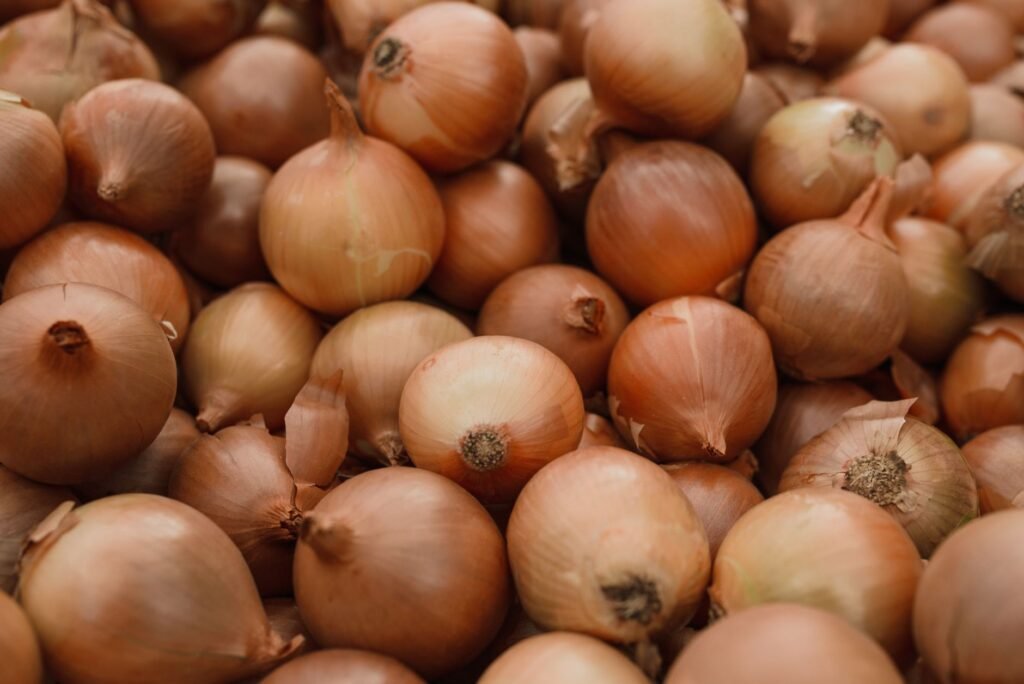
| Yellow and brown onions | High | Usually rich in sulfur compounds |
| Red onions | Medium to high | Varies a lot from onion to onion |
| Sweet onions (like Vidalia) | Low | Grown in low-sulfur soil and have fewer sulfur compounds |
| Green onions and chives | Low | Much less of the tear-making compounds |
| Garlic | Very low | Makes a different compound (allicin) instead of the tear gas |
Even onions from the same bag can be different, so sometimes the only way to know is to start cutting.
Why Garlic Doesn’t Make You Cry
Garlic is a close relative of the onion, but its chemistry takes a different path. Garlic contains a slightly different sulfur compound called alliin. When garlic is crushed, alliin is turned into allicin, which gives garlic its strong smell and taste, but doesn’t break down into the eye-stinging gas. So garlic can make your kitchen smell, but it won’t make you cry.
Why Cooked Onions Don’t Make You Cry
Heat destroys the enzymes that start the reaction. Once onions are cooking in a pan, they can no longer make the tear gas, which is why frying onions smells wonderful but doesn’t sting your eyes. Cooking also turns the sharp sulfur flavors softer and sweeter.
Smell and taste work closely together, which is one reason cooked onions taste so different from raw ones. We explore that connection in our article on why coffee smells better than it tastes.
8 Easy Tricks for Cutting Onions Without Crying
You can’t stop the chemistry completely, but you can slow it down and keep the gas away from your eyes:
- Chill the onion first. Put it in the fridge for 30 minutes before cutting. Cold slows the enzymes and makes the gas evaporate less.
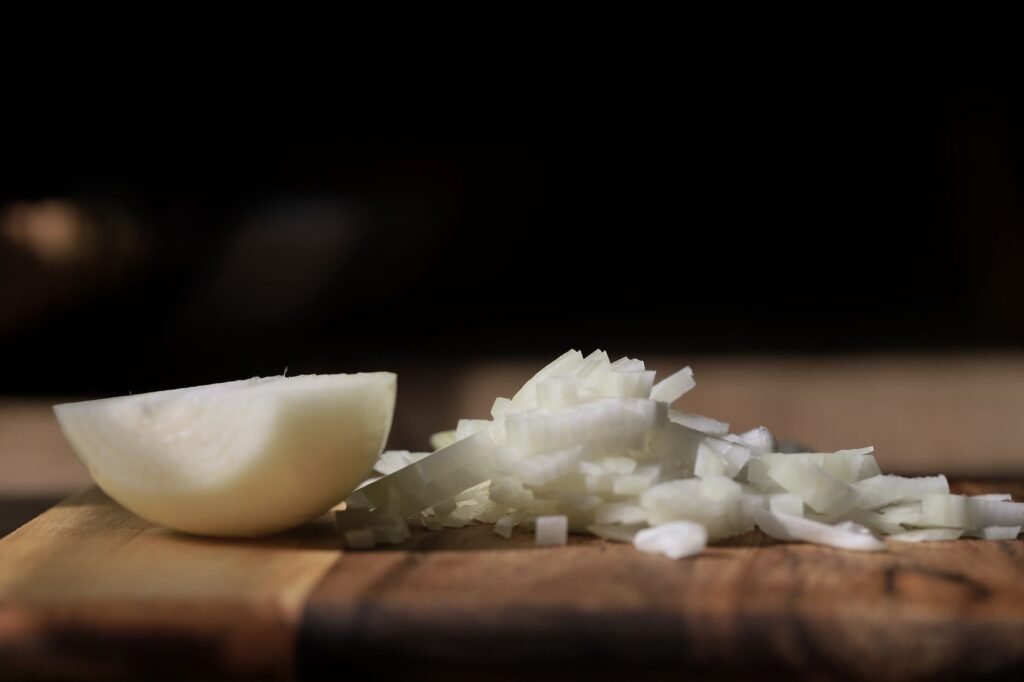
- Use a sharp knife. A sharp blade slices cleanly through cells instead of crushing them, so less of the irritant is released.
- Cut the root end last. Many cooks leave the root end until the end, which keeps the onion together while you chop and limits how many cells you damage at once.
- Add airflow. Cut near an open window, under a kitchen fan, or with a small fan blowing the gas away from your face.
- Work quickly and step back. The less time your face spends over the cutting board, the less gas reaches your eyes.
- Cover cut pieces. Put chopped onion in a bowl with a lid, or move it into the hot pan, so it stops releasing gas near you.
- Protect your eyes. Tight-fitting kitchen goggles work very well. People who wear contact lenses often notice fewer tears too.
- Choose milder onions. Sweet onions, and newer “tearless” varieties sold in some countries, have far fewer tear-making compounds.
Some popular tips, like holding bread in your mouth or chewing gum, have little evidence behind them. If they work for you, it’s probably because they make you breathe through your mouth and keep your face further from the board.
Are Onion Tears Bad for Your Eyes?
No. The amount of irritant is tiny, and your tears wash it away quickly. The stinging stops soon after you finish cutting. Don’t rub your eyes with onion juice on your hands, though, since that can make the stinging worse. Wash your hands first.
Frequently Asked Questions
What chemical in onions makes you cry?
The main irritant is syn-propanethial-S-oxide, a sulfur-containing gas. It forms when enzymes released by cutting act on sulfur compounds stored in the onion.
Why do onions make some people cry more than others?
People differ in how sensitive their eyes are, and contact lenses or glasses can give some protection. How close you stand, how fast you cut and how strong the onion is also make a big difference.
Does putting onions in water stop tears?
It can help. Cutting an onion under water or rinsing the cut pieces stops some of the gas from reaching the air. However, it can make the onion slippery and wash away some flavor.
Why don’t onions make you cry when they’re cooked?
Cooking heat destroys the enzymes that produce the tear-making gas, so cooked onions can’t create it anymore.
Are there onions that don’t make you cry?
Yes. Plant breeders have developed low-tear onion varieties that are sold in some countries. Sweet onions are also much milder because they contain fewer sulfur compounds.
The Bottom Line
Onions make you cry because cutting them starts a chemical chain reaction. Enzymes turn the onion’s stored sulfur into syn-propanethial-S-oxide, a gas that irritates your eyes and triggers tears. It’s the onion’s defense against animals, and it’s harmless to you. To cry less, chill the onion, use a sharp knife, get some airflow and keep your face back from the board.
Onions and garlic are part of a healthy diet. See which everyday foods supply an important trace mineral in our guide to foods high in chromium, or browse more questions in our Food & Body section.