Why Coffee Smells Better Than It Tastes: The Science Explained

The main reason why coffee smells better than it tastes is simple: your nose can pick up hundreds of aroma compounds in coffee, while your tongue only detects five basic tastes. When you sniff a fresh cup, you get the full, rich aroma. When you sip, your tongue mostly reports bitterness and acidity, and many of the best-smelling compounds have already drifted into the air.
So you’re not imagining it, and your taste buds aren’t broken. Here’s what’s happening, plus a few easy ways to make your coffee taste more like it smells.
Why Coffee Smells Better Than It Tastes: The Science
Your Nose Detects Hundreds of Compounds; Your Tongue Detects Five Tastes
Roasted coffee contains hundreds of volatile aroma compounds. The number most often quoted is around 800 or more. Your nose blends them into one complex smell: chocolatey, nutty, smoky, fruity or caramel-like, depending on the beans.
Your tongue works with a much smaller toolkit. Taste buds detect only five basic tastes:
- sweet
- salty
- sour
- bitter
- umami (savory)
Coffee is mostly bitter with some sourness. Neither is naturally pleasant on its own, so the taste can feel flat next to the rich smell that came before it.
Two Ways of Smelling: Through the Nose and Through the Mouth
You actually smell food in two ways:
| Type of smell | How it works | When it happens |
|---|---|---|
| Orthonasal | Aroma goes in through your nostrils | Sniffing the cup |
| Retronasal | Aroma travels from the back of your mouth up into your nose | While you sip and swallow |
Most of what we call “flavor” is actually retronasal smell. When you sniff coffee, you get a strong, concentrated burst of aroma. When you drink it, the retronasal signal is weaker and mixed with the strong bitter taste, so the experience doesn’t match what your nose promised.
Roasting Creates the Smell, and the Smell Escapes
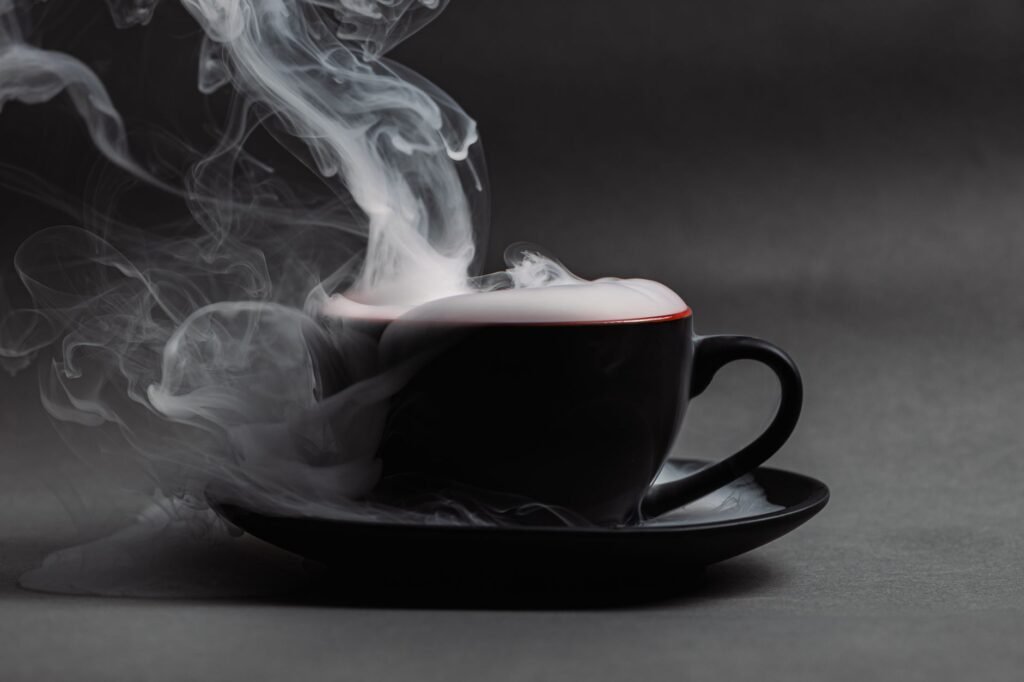
Coffee’s aroma is created during roasting through the Maillard reaction, the same browning reaction that gives toast, seared steak and cookies their smell. It produces a huge range of new aroma compounds.
Many of these are volatile, meaning they easily turn into gas. That’s why you can smell coffee from the next room. It also means a lot of the best-smelling compounds are leaving the cup instead of staying in the liquid for you to taste.
Some key coffee aromas are powerful even in tiny amounts. One compound, 2-furfurylthiol, is a major part of that classic “roasted coffee” smell. Your nose can detect it at extremely low levels, far below what your tongue could notice.
Your Brain Treats Smell and Taste Differently
Smell Is Closely Linked to Memory and Emotion
Smell signals travel very directly to brain areas involved in emotion and memory. For many people, coffee’s smell is tied to years of good associations: slow mornings, cafés, the start of a productive day. That’s part of why the smell feels so comforting. Smells can shift your mood in seconds, which is also one reason your mood can change for no obvious reason.
Your Brain Is Wary of Bitterness
Bitterness is one of the body’s warning signals. Many poisonous plants taste bitter, so humans evolved to be cautious about bitter flavors. Even when you love coffee, part of your brain still treats that bitterness with suspicion, and that makes the taste harder to enjoy than the smell.
Temperature and Expectations Make the Gap Bigger
Too hot: most people smell coffee when it’s freshly brewed and very hot, when the aroma is strongest. Very hot drinks are harder to taste properly, because heat and mild pain get in the way of flavor.
Too cold: as coffee cools, bitterness and sourness tend to stand out more. The window where coffee tastes its best is fairly short.
The expectation gap: the smell sets a very high bar. Your brain expects something rich and sweet, and the bitter sip feels disappointing by comparison. The disappointment comes from the gap between what you expected and what you got.
Why Some People Find Coffee More Bitter
Genetics affects how strongly you taste bitterness. Some people, often called “supertasters,” are especially sensitive to bitter compounds. Estimates commonly put this at around a quarter of people. For them, the gap between coffee’s smell and taste can feel much bigger. Others are far less sensitive and may find black coffee perfectly pleasant.
Your sense of smell also matters. If smell is reduced by a cold, allergies or age, coffee tends to taste flatter and more bitter, because so much of its flavor comes from aroma.
How to Make Coffee Taste More Like It Smells
- Use freshly roasted beans and use them within a few weeks of roasting.
- Grind just before brewing. Ground coffee loses aroma quickly.
- Let it cool slightly before your first sip instead of drinking it scalding hot.
- Breathe out through your nose while you sip. This pushes more aroma into your nose from the back of your mouth.
- Try a lighter or different roast. Darker roasts are usually more bitter; lighter roasts can taste fruitier.
- Add a little milk or sugar if you like. Both soften bitterness and narrow the gap.
- Check your water. Coffee is mostly water, so off-tasting water means off-tasting coffee.
Frequently Asked Questions
Is it normal for coffee to smell better than it tastes?
Yes, completely. Most people notice it, including regular coffee drinkers who enjoy the taste. Your nose simply gets more of coffee’s complexity than your tongue does.
Why does fresh-ground coffee smell so much stronger?
Grinding breaks open the beans and releases aroma compounds that were trapped inside since roasting. Pre-ground coffee has already lost many of them to the air, which is also why it goes stale faster.
Does milk or sugar change how coffee tastes?
Yes. Sugar makes bitterness less noticeable, and milk softens the harsh edges. Neither makes coffee taste exactly like it smells, but both shrink the difference.
Does this happen with other foods?
Yes. Dark chocolate, wine, some cheeses and freshly baked bread often smell more exciting than they taste. They’re usually foods with lots of aroma compounds and some bitterness or sharpness. Coffee is just the example most people notice every day.
The Bottom Line
Coffee smells better than it tastes because your nose gets hundreds of delicate aromas while your tongue mostly gets bitterness and acidity. Roasting creates the smell, and much of it escapes into the air before you sip. Fresh beans, fresh grinding and a slightly cooler cup will bring the taste closer to the smell.
For more food-and-body puzzles, read why you might be still hungry after eating, or how your body uses chromium from everyday foods. If you find the senses fascinating, you’ll also like our piece on what would happen if humans developed a new sense.