10 Bizarre Facts About Ocean Plastic After 100 Years
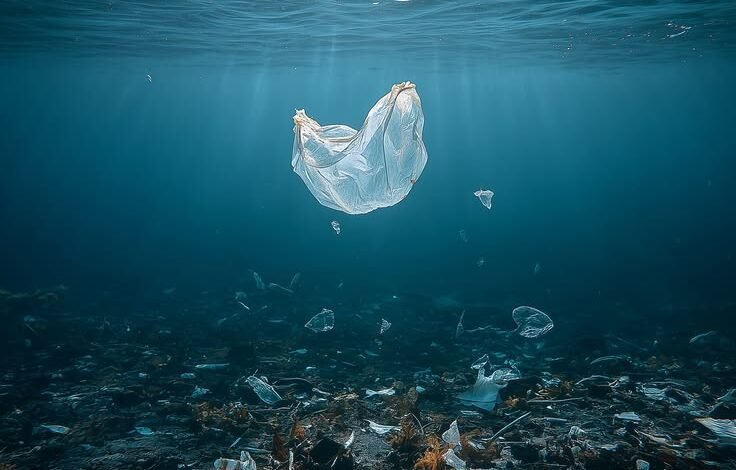
A single plastic bottle tossed into the ocean today will still exist in some form in the year 2125 — and scientists estimate that by then, it will have shed over 1.5 million microscopic plastic fragments into surrounding seawater, each one small enough to enter a fish’s bloodstream.
Ocean plastic after 100 years doesn’t disappear — it just gets weirder. Most people picture a plastic bag slowly dissolving like a sugar cube in warm tea. What actually happens is far stranger, far more insidious, and honestly a little unsettling to think about at 3am.
Here’s the thing nobody tells you: plastic in the ocean doesn’t break down — it breaks apart. It transforms. It infiltrates. It becomes something almost invisible, yet somehow everywhere at once. The ocean doesn’t digest plastic. It just chews it into smaller and smaller pieces until those pieces are too tiny to see, but not too tiny to cause damage.
A century from now, the plastic straw you used in 2019 won’t be gone. It will be a ghost — distributed across millions of water molecules, inside the bodies of creatures that haven’t evolved yet, buried in sediment layers future geologists will use to mark our era. That’s the real story. Let’s tell it properly.
🎯 Key Takeaways
- Ocean plastic after 100 years doesn’t vanish — it physically fragments into millions of micro and nanoplastic particles.
- Sunlight (UV radiation) is the primary driver of plastic degradation in surface water, a process called photodegradation.
- Plastic that sinks to the ocean floor degrades up to 10 times slower than surface plastic due to cold, dark conditions.
- Microplastic pollution from a single item can spread across entire ocean basins within decades due to current systems.
- Nanoplastics — the final degradation stage — are small enough to cross cell membranes, including those in the human brain.
What Ocean Plastic After 100 Years Actually Looks Like
The Illusion of Disappearance
When people imagine ocean plastic after 100 years, they tend to picture empty water. Clean waves. A problem solved by time. This is one of the most comforting — and most completely wrong — ideas in popular environmental thinking. Plastic does not biodegrade in any meaningful sense in the ocean. It has no natural predator that consumes it entirely. No ocean microbe that fully breaks its polymer chains back into harmless carbon dioxide and water within a human lifetime — at least not at scale.
What actually happens is a process called photodegradation. Ultraviolet radiation from sunlight hammers the long molecular chains that give plastic its strength. Those chains crack. The plastic becomes brittle. It fractures into smaller pieces, then smaller pieces still, each fragment retaining the same fundamental chemical identity as the original object. A plastic bottle at the 100-year mark isn’t a bottle anymore — it’s a vast, dispersed cloud of particles ranging from millimeters down to nanometers.
Think of it like this: if you ground a marble into dust, you’d still have marble. Just in a form that gets everywhere and is almost impossible to collect. That’s precisely what ocean plastic after 100 years becomes — a planetary-scale dust problem hiding inside the world’s largest body of water.
The Role of Depth and Temperature
Not all ocean plastic ages the same way. Plastic floating at the surface degrades significantly faster than plastic that sinks. Surface plastic gets constant UV bombardment, mechanical abrasion from waves, and thermal stress from temperature swings. Plastic that makes it to the deep ocean floor — and roughly 70% of ocean plastic eventually sinks — enters a world of near-freezing temperatures, zero sunlight, and crushing pressure. In those conditions, plastic degradation slows to a geological crawl. Some deep-sea plastic may persist structurally intact for thousands of years, not just hundreds.
The Science of Plastic Degradation in the Ocean
Plastic degradation in the ocean is not a single process — it’s a chaotic symphony of physical, chemical, and biological forces all working simultaneously, usually at cross-purposes. Understanding it requires thinking at multiple scales: molecular, ecological, and geological.
At the molecular level, polymer chains in plastic are extraordinarily stable by design. Plastics were engineered to resist heat, moisture, and biological attack. That’s why your Tupperware survives the dishwasher. In seawater, those same properties mean plastic resists the enzymes that microbes would normally use to break organic matter down. While researchers have discovered a handful of bacterial species — most famously Ideonella sakaiensis, found in 2016 — that can metabolize certain plastics like PET, these organisms work at pitifully slow rates compared to the volume of plastic entering the ocean.
At the ecological level, plastic degradation in the ocean creates what scientists call a “plastisphere” — a novel ecosystem of microbial communities that colonize plastic surfaces and hitch rides across ocean basins. NOAA’s ocean research division has documented dozens of invasive species spreading to new regions by colonizing floating plastic debris, turning our pollution into an unintentional biological transport network.
At the geological level, plastic’s legacy is already being written in sediment cores. Scientists have identified a distinct layer of plastic-containing sediment that begins in the 1950s and grows thicker each decade. Geologists have proposed naming a new epoch — the Plasticene — partly on the basis of this permanent stratigraphic record. The plastic we’re putting in the ocean right now will be readable in rock layers millions of years from now.
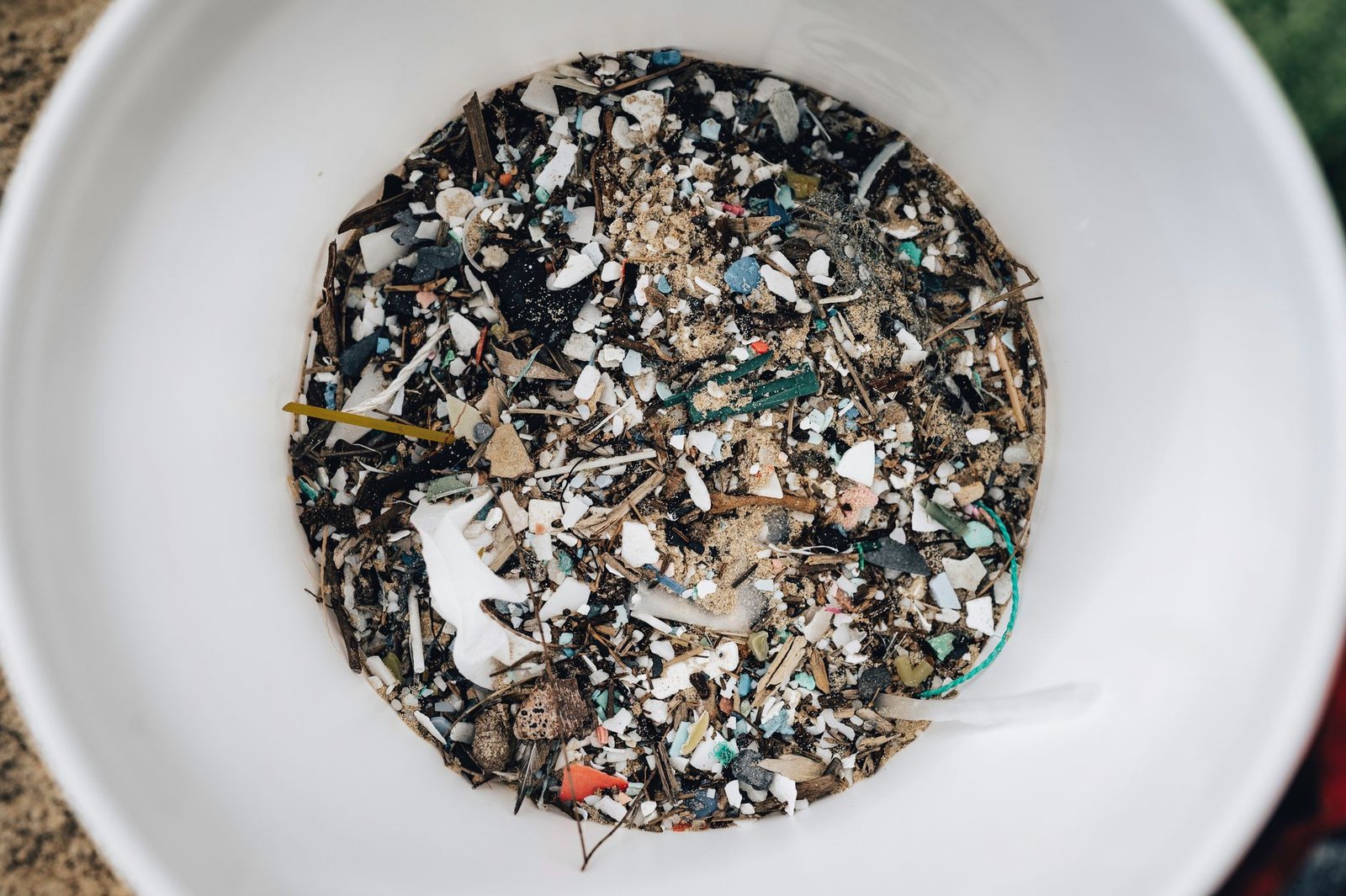
🤔 Wait, Really? Scientists have found plastic microfibers in the Mariana Trench — the deepest point on Earth, nearly 11 kilometers below the surface — and in the ice cores of Antarctica, meaning plastic contamination has reached literally every corner of the planet, including places humans have never physically visited.
Where Microplastic Pollution Goes Over a Century
The Ocean’s Invisible Plastic Rivers
Microplastic pollution doesn’t sit still. The ocean is a dynamic system of powerful currents — the Gulf Stream, the North Pacific Gyre, the Antarctic Circumpolar Current — and these act like conveyor belts for plastic fragments. Within just a few years, a piece of plastic can travel from the coast of Japan to the beaches of California. Over a century, the same fragment — by now in microscopic form — may have circulated through multiple ocean basins, descended to depth, resurfaced, been ingested and excreted by marine animals, and ended up in a hundred different geographic locations.
The five major ocean garbage patches — the Great Pacific Garbage Patch being the most infamous — are not floating islands of solid plastic as often depicted. They’re zones of high microplastic concentration, more like a soup than a solid mass. You could sail through the Great Pacific Garbage Patch without seeing anything unusual with the naked eye. It’s the water itself that’s wrong. One study found concentrations of over 1.9 million microplastic pieces per square mile in garbage patch zones.
The Nanoplastic Endgame
After prolonged photodegradation and mechanical fragmentation, microplastics eventually reach their smallest measurable state: nanoplastics, particles smaller than one micrometer. These are so tiny they behave more like dissolved chemicals than solid particles. They pass through filtration systems. They cross cell membranes. They’ve been detected in human blood, placentas, and most recently, in brain tissue. The plastic lifespan in seawater ultimately ends not with vanishing, but with becoming something too small to remove and too pervasive to ignore. Microplastic pollution at the nano scale is, by many measures, the most concerning long-term consequence of plastic ocean contamination — because we have almost no tools to address it once it’s there.
Chemical Leaching, Marine Debris, and the Hidden Toxic Legacy
Here’s what often gets overlooked in conversations about plastic fragments in the ocean: the physical presence of plastic isn’t the only problem. As plastic degrades, it doesn’t just break apart — it releases the chemical additives that were baked into it during manufacturing. Plasticizers like phthalates, flame retardants, UV stabilizers, colorants, and stabilizers all leach into surrounding seawater as the polymer structure breaks down.
These chemicals are not benign. Many are known endocrine disruptors, meaning they interfere with hormone systems in marine animals — and in humans who eat those animals. Bisphenol A (BPA), one of the most studied plastic additives, has been shown to cause reproductive disruption in fish at concentrations already found in some coastal waters. And BPA is just one of thousands of compounds involved.
There’s another layer to this chemical story. Plastic surfaces in the ocean act like chemical sponges. Through a process called sorption, floating plastic fragments attract and concentrate persistent organic pollutants (POPs) — compounds like DDT and PCBs that have been banned for decades but still circulate in ocean water at low concentrations. A plastic fragment can accumulate these pollutants at concentrations up to one million times higher than the surrounding water. When a fish eats that fragment, it’s getting a highly concentrated toxic dose — and so is whatever eats that fish.
Marine debris that looked like a simple litter problem in 1970 has become a century-long chemical contamination event. The plastic lifespan in seawater is also the lifespan of its toxic payload — and in many cases, the chemicals outlast even the plastic structure they came from, bonding to sediment and entering food webs through pathways we’re still mapping.
Frequently Asked Questions
Does ocean plastic after 100 years ever fully disappear?
No — not within any timeframe meaningful to human civilization. Ocean plastic after 100 years exists as billions of micro and nanoplastic fragments dispersed throughout the water column, seafloor sediment, and marine organisms. Some plastics theoretically take between 450 and 1,000 years to fully break their polymer chains, and even then, chemical residues remain. “Gone” is not really a concept that applies to ocean plastic on any human timescale.
What is the plastic lifespan in seawater for common items?
It varies enormously by plastic type and ocean zone. A plastic bag may structurally degrade in 10–20 years at the surface, while a plastic bottle takes 450 years and fishing line can last up to 600 years. Deep-sea plastic degrades up to 10 times slower due to cold and darkness. But structural degradation doesn’t mean the plastic is gone — it means it’s entered the microplastic phase, which lasts indefinitely longer.
How does microplastic pollution affect marine life over time?
The effects are cascading and multigenerational. Marine animals ingest microplastics mistaking them for food, causing physical blockages, false satiation (starving while appearing full), and chemical toxicity from leached additives. Studies show microplastics accumulate up the food chain — a process called biomagnification. Animals at higher trophic levels, including marine mammals and seabirds, end up with the highest concentrations. Long-term population effects are still being studied, but early data suggests reproductive and developmental harm.
Are there bacteria that actually break down ocean plastic?
Yes, but the process is agonizingly slow at current scales. Ideonella sakaiensis, discovered in 2016, can break down PET plastic but takes weeks to consume a tiny sample under lab conditions. Other bacteria found in the plastisphere community can degrade polyethylene and polystyrene partially. Scientists are actively engineering faster-acting enzymes based on these natural organisms, but no biological solution currently operates at the scale needed to meaningfully reduce existing ocean plastic pollution.
Can nanoplastics from the ocean end up in humans?
Yes — and this is one of the most alarming recent findings in environmental health research. Nanoplastics have been detected in human blood samples, lung tissue, placentas, and as of 2024, in human brain tissue. The primary exposure routes are consuming seafood, drinking water (including bottled water), and breathing air containing plastic fibers. The long-term health consequences of nanoplastic accumulation in human tissue are not yet fully understood, making it one of the most pressing open questions in environmental medicine.
✅ The Bottom Line
Ocean plastic after 100 years doesn’t go away — it transforms into something smaller, more dispersed, and in many ways more dangerous than the original object. Through photodegradation, mechanical fragmentation, and chemical leaching, today’s plastic waste becomes tomorrow’s invisible contamination event: nanoplastics in ocean sediment, in marine food webs, in our own bloodstreams. The plastic lifespan in seawater is effectively permanent on human timescales, and the microplastic pollution it generates will outlast every person alive today by centuries. Understanding this is the first step toward taking it seriously.
Final Thoughts
There’s something genuinely haunting about ocean plastic after 100 years — the idea that our throwaway convenience culture is writing a chemical signature into the planet’s sediment layers that will be legible millions of years from now. Every fragment of plastic degradation in the ocean is a tiny monument to the gap between how long we use something and how long it persists. The plastic lifespan in seawater makes our entire relationship with disposable materials look almost absurdly short-sighted. So here’s the question worth sitting with at 3am: if the things we throw away never truly leave — does that change how you think about what “away” even means?