6 Surprising Reasons Geese Honk While Flying
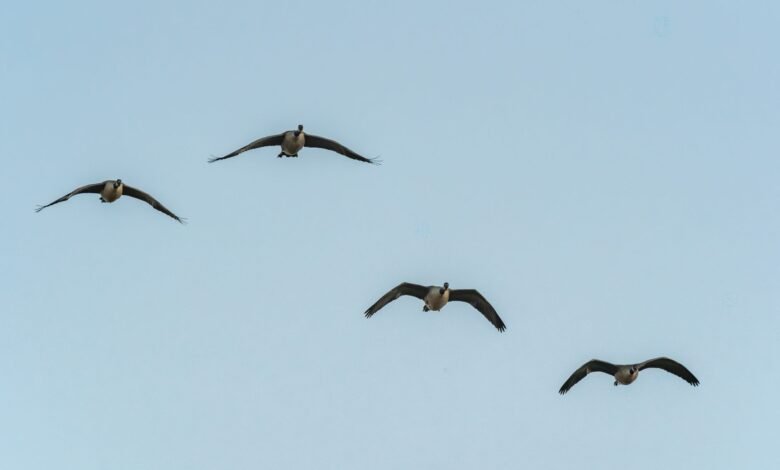
A single Canada goose can produce over 13 distinct call types — and when an entire flock honks together in flight, the noise can reach 85 decibels, roughly as loud as a lawnmower running five feet from your face.
The reason geese honk while flying is not just noise for the sake of noise — it turns out those birds are running a surprisingly sophisticated airborne communication system at 3,000 feet, and most people have no idea how complex it really is.
Think about the last time a V-shaped flock screamed across the sky overhead. You probably looked up, maybe winced a little, and went back to whatever you were doing. What you actually witnessed was a highly coordinated biological operation involving real-time feedback, motivational calls, navigational cues, and social bonding — all packed into that relentless honking.
It sounds chaotic. It is anything but.
From aerodynamic teamwork to long-distance mate signaling, the reasons geese keep their beaks busy mid-flight will genuinely change the way you hear that sound the next time it cuts through a quiet autumn morning.
🎯 Key Takeaways
- Geese honk while flying primarily to maintain flock cohesion and prevent mid-air collisions during migration.
- Rear geese honk to encourage the lead goose, which is doing the hardest aerodynamic work at the front of the V.
- Different honk types serve distinct functions — alarm calls, contact calls, and assembly calls all sound different.
- Honking helps geese stay oriented in low-visibility conditions like fog, darkness, and storms.
- The V-formation and its associated vocalizations together save the flock up to 70% of the energy it would take to fly solo.
Why Geese Honk While Flying: The Real Science Behind the Noise
It’s Not Random — It’s a Real-Time Communication Network
When you hear a flock overhead, what sounds like undisciplined racket is actually a highly structured vocal exchange. Geese honk while flying for the same reason a crew team calls cadence on the water — it keeps everyone synchronized, motivated, and moving in the same direction at the same speed.
Canada geese, the species most people picture when they hear that familiar honk, are intensely social animals. They form long-term pair bonds, remember individual flock members across seasons, and make group decisions about when to land, feed, and take off. All of that social complexity doesn’t just pause when they go airborne. If anything, it intensifies.
In flight, the stakes of miscommunication are much higher. A bird that veers the wrong direction or slows unexpectedly can disrupt the entire aerodynamic formation the flock depends on. Goose communication in flight serves as the connective tissue that holds hundreds of birds together in a shape that would otherwise collapse almost immediately.
Researchers studying avian vocalization have identified that geese increase their call rate significantly during altitude changes, turns, and weather disruptions — exactly the moments when coordination matters most. This isn’t background noise. It’s active signal traffic.
The Encouragement Theory — Yes, Geese Actually Cheer Each Other On
Here’s one of the most unexpectedly charming facts in all of animal behavior: the geese flying behind the lead bird honk specifically to encourage the bird up front to keep going.
The lead goose has the hardest job in the formation. It cuts through undisturbed air and creates the aerodynamic draft that every other bird behind it exploits. Flying at the tip of a V costs significantly more energy than flying in the slipstream positions behind it. The honking from the rear is thought to function as a motivational signal — essentially, avian cheerleading at altitude.
The flock rotates the lead position periodically so no single bird carries the burden too long. The honking may also help signal when it’s time for that rotation to happen, cuing the front bird to peel off and drop back while a fresher individual takes point. It’s a beautifully efficient system wrapped inside what sounds, to human ears, like absolute mayhem.
V-Formation Honking and the Aerodynamics of Sound
The V-formation isn’t just visually striking — it is one of the most energy-efficient flight strategies ever documented in nature. Each bird, except the leader, flies slightly above and behind the bird in front, exploiting the upwash created by the wingtip vortices of the bird ahead. Studies have measured energy savings of up to 70% for birds in the trailing positions compared to solo flight. That’s not a small efficiency gain. That’s the difference between a flock reaching its destination and a flock that crashes into a cornfield halfway through Pennsylvania.
But maintaining that precise geometric formation over hundreds of miles requires constant micro-adjustments. Birds can’t tap each other on the shoulder. They can’t send a text. What they can do is honk — and the timing, frequency, and tone of those honks carry information about speed, spacing, and direction that the whole flock processes in real time.
V-formation honking appears to function as an acoustic positioning system. When a bird drifts out of its optimal drafting position, the call pattern it hears from surrounding birds changes — and it adjusts accordingly. The flock essentially self-corrects through sound, which is extraordinary when you consider it’s happening at 50 miles per hour, hundreds of feet in the air, across a group of dozens or sometimes hundreds of birds. As Wikipedia Science broadly documents, animal behavior research continues to reveal that many species we once considered simple are operating with layers of complexity we’re only beginning to understand.
The honking also helps birds avoid drafting in downwash zones — the pockets of turbulent air that create drag rather than lift. Getting caught in a downwash pocket wastes energy and destabilizes flight. The flock’s vocal chatter, combined with visual cues, helps each bird stay in the aerodynamic sweet spot.
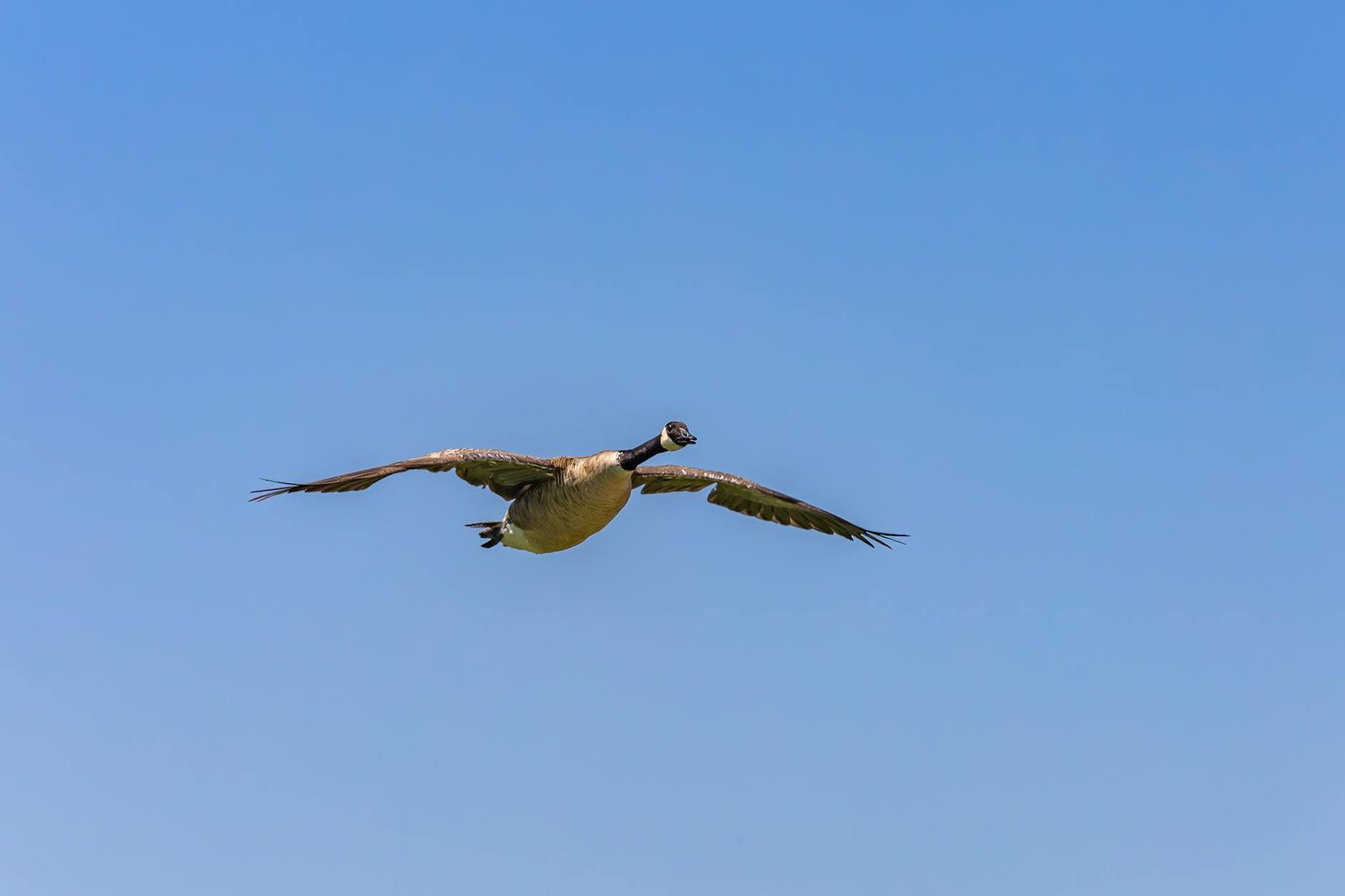
Geese have been recorded honking during flight in complete darkness — including overcast nights with zero moonlight. This strongly suggests their calls serve a navigational function that operates entirely independently of vision, acting almost like biological sonar among flock members.
Bird Vocalization During Migration: More Than Just Location Calls
Contact Calls, Alarm Calls, and the Language Nobody Translated Until Recently
For a long time, ornithologists lumped all goose flight sounds under a vague category of “contact calls” — the avian equivalent of “I’m here, you’re there, we’re all still alive.” That category wasn’t wrong, but it severely undersold what was actually happening.
Modern acoustic analysis has revealed that bird vocalization during migration in geese includes at least several functionally distinct call types. There are contact calls that maintain spacing within the flock. There are assembly calls that signal landing or regrouping. There are alarm calls that differ acoustically from contact calls in ways even human ears can detect with a little practice. And there are subtle variations in pitch and cadence that appear to carry individual identity — meaning geese may recognize specific flock members by the unique sound of their honk.
That last part is particularly fascinating. Mate pairs have been observed responding differently to each other’s calls versus the calls of other flock members, suggesting the honk isn’t just a broadcast signal but a personalized channel of communication between bonded birds. Goose communication in flight may carry the equivalent of names.
This matters during migration especially because flocks sometimes merge with other flocks mid-flight, particularly at traditional rest stops and staging areas. The ability to sort through a suddenly larger crowd of honking birds and find your specific mate or offspring is a survival-level skill. The vocal signature of individual geese makes that possible.
Geese migrate at night with impressive frequency — not because they enjoy the nocturnal aesthetic, but because nighttime air is typically calmer and cooler, making flight more efficient. At night, visual cues for formation maintenance drop dramatically. The honking picks up the slack.
During fog, storms, and overcast skies, flocks that go quiet tend to lose cohesion. The sound literally holds the group together when eyes can’t. This is perhaps the starkest illustration of how geese honk while flying not as a quirky habit but as a biological necessity baked into millions of years of migratory evolution.
The Social and Emotional Dimensions of Flock Honking
Geese are not emotionally simple animals. They grieve. They celebrate. They hold long-term grudges — ask anyone who has accidentally walked between a Canada goose and its nest. The emotional and social dimensions of their honking during flight go beyond pure logistics.
When a flock takes off after a successful rest and feeding period, the call intensity spikes dramatically in the seconds before and immediately after liftoff. Behavioral researchers interpret this as a form of excitement or arousal — the avian equivalent of a crowd roaring when a team takes the field. The flock coordination aspect of these takeoff vocalizations appears to also reduce individual hesitation. A lone goose is far more vulnerable than a goose surrounded by dozens of honking, moving companions. The noise itself may trigger a departure instinct that benefits the whole group.
Lost birds are another revealing case. When a goose becomes separated from its flock — due to injury, weather, or disorientation — it produces a distinctly different call pattern. The honking becomes slower, lower in pitch, and more repetitive. Other geese have been documented altering course in response to these distress calls, sometimes reuniting with separated individuals mid-flight. Migratory birds operating this way are demonstrating something that looks, functionally, a lot like empathy.
Pair bonding adds yet another layer. Mated pairs in flight tend to honk in coordinated patterns — calls and responses that keep them acoustically tethered to each other even in the noise of a large flock. Lose track of that vocal thread, and you risk losing your mate in a mass of identical-looking grey-brown birds. The Canada goose calls exchanged between bonded pairs during flight are one of the more quietly remarkable things happening in the skies above your head on any given October afternoon.
Frequently Asked Questions
Why do geese honk while flying in a V-formation specifically?
The V-formation creates an aerodynamic challenge — each bird must stay in a precise position to benefit from the upwash of the bird ahead. Geese honk while flying in formation to signal their position, speed, and spacing to the birds around them. The calls function as a real-time acoustic coordination system that helps the flock maintain the shape that saves every member up to 70% of their solo flight energy expenditure.
Do all geese honk the same way, or do they have individual voices?
Research suggests individual geese have recognizably distinct vocalizations. Mate pairs have been shown to respond differently to their partner’s specific call versus calls from other flock members. This acoustic individuality is especially important in large flocks or when multiple flocks merge at stopover sites. It’s essentially the same principle as recognizing a friend’s voice in a noisy crowd — except the stakes involve not losing your partner mid-migration.
Why do geese seem to honk more at night?
Geese frequently migrate at night when the air is cooler and calmer, improving flight efficiency. Without reliable visual cues for maintaining formation, their honking takes on a more critical navigational and cohesion-maintaining role. Studies observing nighttime migrating flocks have noted increased call rates during the darkest hours and in overcast conditions, supporting the theory that honking partially substitutes for visual positional cues when visibility drops.
Is the honking ever a sign of distress or danger?
Yes — and experienced birders can actually tell the difference. Alarm calls are acoustically distinct from normal contact calls, typically sharper, more staccato, and often triggering immediate directional changes in the flock. A separated or injured goose produces a slower, lower, more repetitive call pattern that other geese sometimes respond to by altering course. Context and pattern matter enormously in avian vocalization during migration, and goose calls are no exception.
Do geese ever fly silently, and if so, when?
Geese can and do fly in near-silence under certain conditions — primarily during short local flights in familiar, low-threat environments, such as moving between a pond and a nearby field. The longer the flight, the less familiar the route, and the larger the flock, the more vocal they tend to become. Full migratory flights almost always involve sustained honking. Think of the silence as a sign of a relaxed, undemanding journey rather than a notable behavior in its own right.
✅ The Bottom Line
When geese honk while flying, they are running a full-scale airborne communication operation — coordinating position, encouraging the lead bird, maintaining mate contact, navigating in darkness, and binding the flock together through pure sound. The honking isn’t background noise or animal chaos; it’s one of nature’s most elegantly functional communication systems, refined over millions of years of evolution. Next time a V-formation screams across your sky, you’re not being annoyed by geese — you’re eavesdropping on a masterclass in collective intelligence.
Final Thoughts
The fact that geese honk while flying has a deeply satisfying answer — not just “because they’re birds” but because they’ve evolved an acoustic language precise enough to hold a formation together in pitch darkness over hundreds of miles. There’s something almost humbling about realizing the noisy flock that interrupted your Sunday morning coffee was, in fact, more organized than most corporate team meetings. Every honk had a purpose. Every call had an audience. The sky was louder and smarter than it looked. So — does knowing all this change the way you’ll listen the next time geese fly overhead?