7 Frustrating Reasons About Undelivered Text Messages
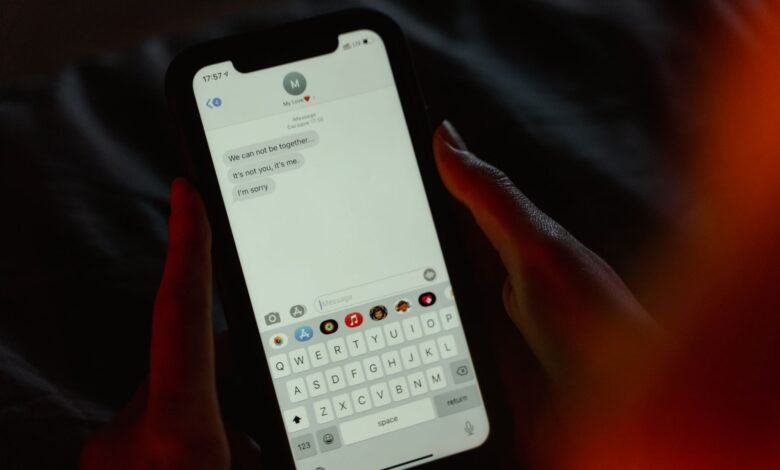
Most mobile carriers hold undelivered text messages in a queue for a maximum of 72 hours before permanently discarding them — and your phone never gets a single notification that the message died quietly on a server somewhere.
Undelivered text messages don’t just vanish into thin air — they go through a surprisingly dramatic journey before they give up and die.
You’ve been there. You send a text, see that little clock icon or a haunting “Not Delivered” badge, and wonder what exactly is happening on the other end. Did it leave your phone? Is it floating in some digital purgatory? Will it show up at 3am as a ghost message from six hours ago?
The answer is way more interesting than “the network dropped it.” There are servers involved. Timers. Retry systems. Carrier decisions. And in some cases, your unread “I miss you” text is sitting on a computer in a data center right now, patiently waiting for the recipient’s phone to wake up and accept it.
Let’s pull back the curtain on one of the most overlooked mysteries of modern communication.
🎯 Key Takeaways
- Undelivered text messages are stored in a carrier system called the SMSC — not on your phone.
- Most carriers retry delivery every few minutes for up to 24–72 hours before deleting the message.
- SMS delivery failure can happen for dozens of reasons, including full inboxes, airplane mode, and network congestion.
- iMessage and RCS handle failed messages very differently than traditional SMS.
- Carriers are legally not required to notify you when a text message is permanently deleted after failing to deliver.
Where Undelivered Text Messages Actually Go
The Hidden Middleman: Your Carrier’s SMSC
When you hit send on a text message, most people assume it travels directly from their phone to the recipient’s phone like a digital paper airplane. That’s not even close to what happens. Your message immediately goes to something called an SMSC — a Short Message Service Center. Think of it as a postal sorting facility for text messages, except it exists entirely in software, runs at the speed of light, and never sleeps.
The SMSC is operated by your mobile carrier — AT&T, Verizon, T-Mobile, or whoever your provider is. The moment your message arrives there, the SMSC attempts to forward it to the recipient’s carrier, which then tries to push it to the recipient’s actual device. When everything goes smoothly, this whole process takes less than a second. You’ve never noticed it because you’ve never had to.
But when something goes wrong — and things go wrong more often than the industry likes to admit — the SMSC doesn’t shrug and delete your message. It holds it. It files it away in a temporary queue and starts a timer. This is where undelivered text messages live in limbo, waiting for a second chance at delivery.
The SMSC is the unsung hero of mobile communication. It’s the reason texts that were sent while someone was on a plane still land in their inbox when they touch down. Without it, SMS would be about as reliable as shouting across a crowded room and hoping for the best.
The Retry Mechanism Most People Never Know About
Here’s where it gets genuinely fascinating. The SMSC doesn’t just hold your message — it actively retries delivery on a schedule. Depending on the carrier and network configuration, this retry cycle can kick in every few minutes to every half hour. Each time the recipient’s device becomes momentarily reachable, the system makes another attempt.
This is why you sometimes send a text to someone who was out of range, and it delivers the moment they get back to civilization. That wasn’t magic. That was a server doing its job quietly in the background, refusing to give up on your message.
The Real Reasons SMS Delivery Failure Happens
Most people assume SMS delivery failure is just a network issue — bad signal, end of story. But the actual list of causes is surprisingly long, and some of them are genuinely strange.
The recipient’s phone is off or in airplane mode. This is the obvious one. No connection, no delivery. The SMSC holds the message and waits. Simple.
The recipient’s SMS inbox is full. Yes, this is still a thing. Traditional SMS has a storage limit on older phones and certain SIM configurations. If that inbox is maxed out, incoming messages literally cannot land. This is a relic of the early mobile era that still haunts modern texting in 2024.
Network congestion. During major events — New Year’s Eve, natural disasters, major sporting events — mobile networks get absolutely hammered. Carriers prioritize voice calls, and SMS traffic can back up significantly. Those “Happy New Year!” texts that arrived at 12:47am? Classic SMS delivery failure caused by sheer volume.
The recipient changed phone numbers or carriers. If someone ported their number and the routing tables haven’t fully updated, your message can end up knocking on the door of an address that no longer exists in the same way.
Spam filters and content blocking. Carriers run automated systems that flag and occasionally block messages containing certain keywords, URLs, or patterns associated with spam. Your innocent text message can get caught in a filter and quietly fail to deliver — no explanation given.
As Wired Magazine has covered extensively over the years, the underlying infrastructure of SMS is remarkably old and carries a mountain of technical debt — which explains why failures happen in ways that feel completely random from the user’s perspective.
The SMS standard was originally designed in 1985, and the maximum size of a single SMS message — 160 characters — was determined by a researcher who analyzed postcards and telexes to find the average length of a meaningful short message. Your undelivered “k” technically has the same infrastructure behind it as a masterpiece of compression engineering.
What Happens When the Text Message Queue Expires
The Validity Period Nobody Talks About
Every SMS message that enters the carrier network has something called a validity period — a built-in expiration timer. This is baked into the SMS protocol itself and is typically set by the sending carrier. Once this timer runs out and the message still hasn’t been delivered, the SMSC permanently deletes it.
The default validity period varies by carrier, but the industry standard sits somewhere between 24 and 72 hours. Some carriers are more generous — a few allow up to 7 days for certain message types. Others are more aggressive and start deleting failed messages after just a few hours to manage server load.
Here’s the part that might genuinely annoy you: in most cases, neither you nor the recipient is notified when this deletion happens. The message doesn’t bounce back with an error. You don’t get a final “Message Permanently Deleted” notification. It just ceases to exist. The conversation thread on your phone will still show the undelivered indicator, quietly frozen in time, but the actual message data is gone from the carrier’s servers.
The SMS delivery report — that delivery confirmation some phones and apps display — only triggers when the message reaches the recipient’s device. There is no corresponding notification for permanent deletion. From a legal standpoint, carriers aren’t required to provide one. Your message vanished, and the system moved on without ceremony.
How the Text Message Queue Differs Across Networks
Not all failed message queues are created equal. Traditional SMS operates through the SMSC model described above. But iMessage, WhatsApp, and RCS (Google’s modern SMS replacement) each handle the text message queue in their own way.
iMessage stores undelivered messages on Apple’s servers and retries delivery for up to 30 days. If delivery still fails after 30 days, Apple deletes the message from its servers — but notably, iMessage will often fall back to regular SMS before that point if it detects the recipient is reachable via the traditional network.
WhatsApp holds undelivered messages for 30 days as well, with one important caveat — if the message is encrypted media like a photo or video, it may only be stored for a shorter window before the encryption keys expire and the media becomes permanently unrecoverable, even if the message shell still exists.
Why Failed Text Messages Reveal a Lot About How Fragile Our Networks Really Are
There’s something almost philosophical about undelivered text messages. They exist as data, they were sent with intent, they carry meaning — and yet they can evaporate without a trace because of a full inbox, a server timeout, or a spam filter that got overzealous on a Tuesday afternoon.
The reality is that SMS was never designed for the scale at which we use it today. The protocol was built in an era of limited bandwidth and feature phones, and while carriers have layered enormous amounts of modern infrastructure on top of it, the fundamental bones of the system are decades old. The SMSC model, the 160-character limit, the validity period mechanism — all of these are legacy features from a different age of communication.
RCS (Rich Communication Services) was supposed to fix this. It’s designed to replace SMS with something smarter, more reliable, and more transparent — with better delivery reporting, read receipts, and more robust retry logic. But adoption has been slow and fragmented, and billions of messages still travel through the old SMS infrastructure every single day.
The delivery report feature — when it works — gives you a green checkmark or a “Delivered” timestamp. But that report itself travels as a separate SMS-like signal back through the network, which means it can also fail. You can receive a “Delivered” confirmation for a message that technically never made it, or fail to receive a confirmation for one that did. The system reporting on itself has all the same vulnerabilities as the system itself.
What’s remarkable is that given all of this complexity, all of these moving parts, all of this inherited technical debt — the vast majority of text messages do get delivered, usually in under a second. That’s either a testament to incredible engineering or a sign that we’ve all just gotten very lucky for a very long time.
Frequently Asked Questions
What exactly happens to undelivered text messages after 72 hours?
After the validity period expires — typically 24 to 72 hours depending on your carrier — undelivered text messages are permanently deleted from the carrier’s SMSC servers. The message is gone. No backup, no bounce-back, no notification to either party. Your phone’s message thread will still show the failed delivery indicator, but the underlying data no longer exists anywhere in the carrier’s network infrastructure.
Can undelivered text messages ever arrive late?
Yes, absolutely. If the recipient’s phone was off, in airplane mode, or out of coverage, the SMSC holds the message and retries delivery periodically. The moment their device reconnects, the message delivers — sometimes hours later. This is why you occasionally get texts that seem to arrive out of nowhere. They weren’t late so much as they were patiently queued, waiting for the right moment to complete their journey.
Does SMS delivery failure mean the recipient blocked you?
Not necessarily, though it’s a common fear. SMS delivery failure has dozens of causes — poor signal, full inbox, carrier issues, network congestion, and yes, sometimes blocking. On iMessage, a blocked contact’s messages are silently discarded rather than delivered, but regular SMS blocking behavior varies by carrier. A single failed text usually isn’t a block. A persistent pattern of failures on a previously reliable number might warrant a different conversation.
Do carriers store the content of undelivered text messages?
During the retry window, yes — the content of your undelivered text is stored on the carrier’s SMSC server in order to attempt redelivery. This is one of the lesser-known privacy implications of SMS. Traditional SMS is not end-to-end encrypted, which means during that storage period, the message content exists in readable form on carrier infrastructure. This is one of the primary reasons security researchers recommend encrypted messaging apps for sensitive communication.
Why does my phone say “Delivered” but the person never got my text?
Delivery confirmation in SMS means the message reached the recipient’s device — not that they read it, not that they saw it, and not that it landed in the right app. There’s also a known issue where delivery receipts can be generated incorrectly due to network errors or carrier misreporting. In some cases, a message can be flagged as “delivered” by a network node that received it temporarily, even if the final handoff to the device never fully completed.
✅ The Bottom Line
Undelivered text messages don’t just disappear — they enter a carrier-operated holding system called the SMSC, where they’re retried on a schedule for up to 72 hours before being permanently deleted with no notification to anyone. SMS delivery failure can happen for a surprising range of reasons, from full inboxes and spam filters to network congestion and expired routing data. Modern platforms like iMessage and WhatsApp handle the text message queue more generously, but even they have hard limits. The infrastructure carrying your most mundane “on my way” texts is older, more fragile, and more fascinating than most people ever stop to consider.
Final Thoughts
There’s something quietly unsettling about knowing that undelivered text messages can simply expire and vanish — carrying their little parcels of meaning into digital oblivion with zero fanfare. No bounce-back. No notification. Just gone. The whole system is a remarkable patchwork of decades-old protocol and modern engineering, somehow holding together under the weight of trillions of messages a year. Next time you see that “Not Delivered” badge, you’ll know your message isn’t lost in space — it’s sitting in a queue on a server somewhere, stubbornly trying one more time. Does knowing all this change how much you trust a text over a call?