9 Surprising Facts About Bee Dance Communication
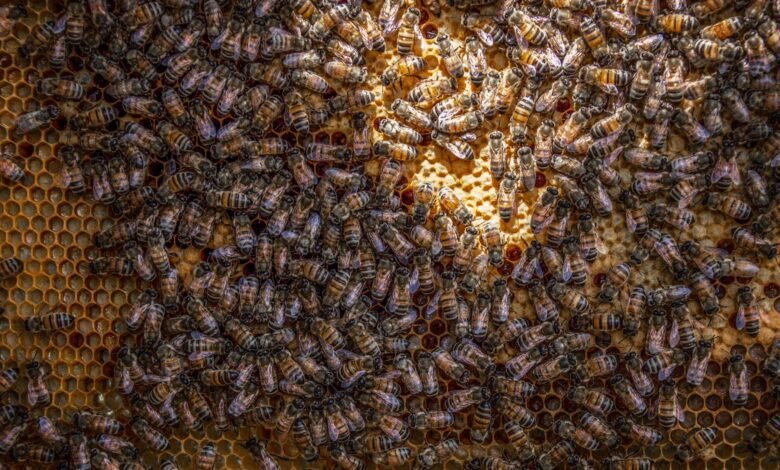
A honeybee’s waggle dance is so mathematically precise that it can direct fellow bees to a flower patch located over 5 kilometers away — with an angular accuracy of just 2 degrees. That’s better navigation than most people achieve with GPS.
Bee dance communication is, without question, one of the most gloriously weird things happening on this planet right now — and it’s going on inside a wooden box in someone’s backyard while you’re trying to fall asleep.
Bees don’t talk. They don’t text. They don’t drop a pin on Google Maps. Instead, they choreograph a tiny, furious, incredibly specific dance routine on a vertical wax surface in complete darkness, and somehow their colleagues understand exactly where to fly to find food.
This isn’t a metaphor. This isn’t poetic shorthand for “bees communicate somehow.” This is a literal, measurable, decodable language written entirely in movement — and it took humans until 1967 to figure out what it meant.
If that doesn’t make you want to cancel your sleep plans and keep reading, nothing will.
🎯 Key Takeaways
- Bee dance communication encodes both distance and direction to food sources with remarkable precision.
- The waggle dance’s duration directly corresponds to distance — each second of waggling represents roughly 1 kilometer.
- Bees perform their dances on vertical combs in total darkness, using gravity as a stand-in for the sun’s position.
- Karl von Frisch won the Nobel Prize in 1973 for decoding the bee dance language — one of the most astonishing scientific discoveries of the 20th century.
- Different bee species have distinct “dialects,” meaning the same dance can encode different distances depending on the species performing it.
What Is Bee Dance Communication, Really?
Not Just Wiggling — A Full Symbolic Language
When we say bee dance communication, we’re not talking about random movement. We’re talking about a symbolic, abstract language — one of only a tiny handful confirmed to exist outside of human communication. A scout bee returns to the hive after discovering a promising food source, and instead of simply leading the others there, she performs a dance that contains encoded information about direction, distance, and quality of the food. Her audience reads that information and flies out to the exact location. No escort. No second trip. Just geometry encoded in movement.
The system works through two main dance types. The round dance is used for food sources close to the hive — within about 50 to 100 meters. It’s a simple circular pattern that says, essentially, “there’s something good nearby, go search around the hive.” It doesn’t give direction. It just activates the colony’s foraging instinct for short-range targets.
Then there’s the big one. The dance that won a Nobel Prize. The one that rewired how scientists think about animal intelligence. The waggle dance — used for food sources farther than 100 meters — is a figure-eight pattern with a straight central “waggle run” that encodes both the compass direction to the food and the exact flying distance. It is, by every reasonable definition, a language.
The Waggle Dance Explained Step by Step
During the waggle dance, the scout bee runs in a straight line while vigorously waggling her abdomen, then circles back and repeats — alternating left and right loops to form the figure-eight. The straight waggle run is where all the information lives.
Direction is encoded by the angle of the waggle run relative to vertical. Because bees dance on a vertical comb surface inside the dark hive, they use gravity to represent the sun. A waggle run straight up means “fly directly toward the sun.” An angle of 40 degrees to the left of vertical means “fly 40 degrees to the left of the sun.” The bee is, essentially, transposing a solar compass bearing onto a gravitational reference point. In the dark. On a bouncing wax comb. While dancing.
Distance is encoded in the duration of the waggle run. The longer she waggles, the farther away the food is. Roughly speaking, one second of waggling equals about one kilometer of flying distance. Bees also adjust their dances over time to account for the sun’s movement across the sky — meaning they’re doing real-time solar navigation calculations and correcting their choreography accordingly.
The Karl von Frisch Discovery That Changed Everything
For most of human history, the bee dance was just… a bee thing. Something bees did. Scientists noticed it. Nobody understood it. Austrian ethologist Karl von Frisch spent decades — literally decades — running painstaking experiments to crack the code. His method was elegantly simple and brutally tedious: he trained bees to food sources at known distances and directions, then filmed their dances and mapped the correlations between movement and geography.
What he found was so strange that many of his colleagues refused to believe it. The claim that an insect — an insect with a brain roughly the size of a sesame seed — was encoding abstract spatial information using a symbolic movement system? That wasn’t just surprising. That was, to mid-20th century biology, borderline heretical.
Von Frisch published his full findings in 1967, and in 1973, he was awarded the Nobel Prize in Physiology or Medicine — sharing it with Nikolaas Tinbergen and Konrad Lorenz for their collective work on animal behavior. It remains one of the most remarkable Nobel recognitions in history, honoring a discovery that fundamentally expanded the definition of what counts as language and intelligence. Research institutions like Smithsonian Magazine have called it one of the great biological discoveries of the 20th century, and it’s hard to argue otherwise.
What makes the Karl von Frisch discovery especially mind-bending is what it implies: bee dance communication isn’t instinctive improvisation. It’s a learned, culturally transmitted behavior. Young bees watch experienced foragers dance before they ever leave the hive. They are, in every meaningful sense, being taught a language.
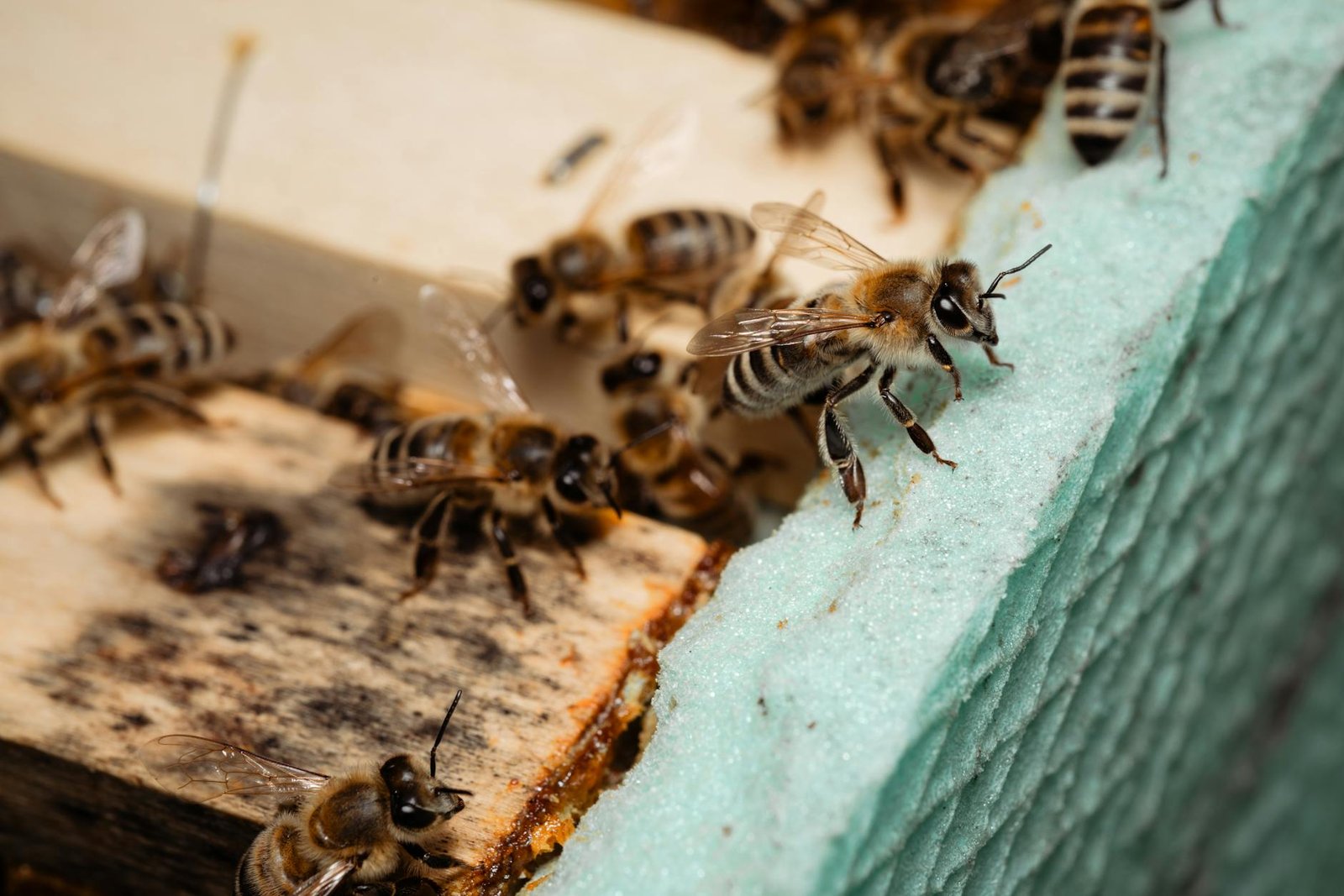
🤔 Wait, Really? Bees can lie. Well, sort of — when a scout bee has personally explored a new nest site (rather than a food source), she’ll dance to “advertise” it to the colony. If a better option is found, competing scouts will actually headbutt the first bee mid-dance to interrupt her performance and suppress her vote. Democracy, insect-style.
Honeybee Foraging Behavior: The Hive as a Collective Brain
How Scout Bees Decide What’s Worth Dancing About
Not every bee that finds a flower rushes home to dance. The dance threshold is a quality filter. Scout bees evaluate food sources based on several factors — nectar concentration, flower density, flying distance, and even the energetic cost of the trip. Only sources that exceed a certain quality threshold trigger a full waggle dance. Mediocre finds get a shorter, less enthusiastic performance. The intensity of the dance — how many circuits the bee completes, how vigorously she waggles — communicates the enthusiasm level, which other bees interpret as a quality signal.
This creates a surprisingly democratic system. Multiple scouts may return simultaneously with information about different food sources, each dancing to recruit helpers. The better the source, the more vigorous the dance, the more recruits it attracts. Over time, the colony’s foraging effort naturally concentrates on the best available options — not because any individual bee is in charge, but because the collective behavior of thousands of dancers and observers produces an optimal allocation of resources.
Honeybee foraging behavior also involves a fascinating feedback loop. As a food source becomes depleted, returning foragers dance less enthusiastically — or stop dancing entirely. This automatically reduces recruitment to that source without any central coordination. The hive self-regulates through a kind of distributed, embodied data system. Pheromones also play a role, with returning foragers sometimes releasing chemical signals that reinforce or modify the dance information, adding another layer to the communication stack.
Bee Dialects: Not All Dances Are Equal
Here’s where it gets genuinely weird: different species of Apis bees speak different dialects. The same waggle run duration encodes different distances in different species. Asian honeybees (Apis cerana) use a faster waggle run that covers shorter distances per second compared to the European honeybee (Apis mellifera). This makes sense ecologically — Asian bees evolved in denser forested environments where food sources are generally closer together.
Researchers have even conducted cross-species translation experiments, placing bees from one species inside the hive of another and watching them attempt to decode each other’s dances. The results? Confusion, miscommunication, and recruits flying to completely wrong locations. Colony navigation, it turns out, is as species-specific as any spoken language. You can recognize the grammar without understanding the meaning.
Why This Makes Bees Genuinely Terrifying (In a Good Way)
Let’s pause and really sit with what’s happening here. A bee — an insect — is computing the angle between the current position of the sun and a food source. She’s converting that solar angle into a gravitational angle. She’s encoding it in dance movements. She’s accounting for the sun’s movement over time and updating her performance accordingly. She’s broadcasting this information to dozens of nestmates who decode it, internalize it, and use it to navigate kilometers of open landscape to a specific patch of flowers they have never seen.
All of this is happening in a creature with roughly one million neurons. Humans have about 86 billion. And yet, there is no human behavior that is qualitatively more impressive than what scout bees do every single day of their brief lives.
The hive mind concept gets thrown around carelessly, but in the case of bees, it’s almost literally true. The colony behaves like a single intelligent organism — using bee dance communication as its neural signaling system, pheromones as its hormonal system, and the collective behavior of thousands of individuals as its decision-making apparatus. Individual bees are less like independent animals and more like neurons in a brain. They don’t think. But together, they do.
This has enormous implications beyond bee biology. Researchers studying swarm intelligence — the science of how simple local rules produce complex collective behaviors — use bee colonies as a model system for everything from traffic optimization algorithms to drone swarm coordination. The waggle dance isn’t just a biological curiosity. It’s a blueprint for distributed intelligence that engineers are actively trying to replicate in artificial systems.
And while all of this was being figured out by incredibly smart humans with expensive equipment and decades of research time, the bees were just… doing it. In the dark. On a wax comb. Since before Homo sapiens existed.
Frequently Asked Questions
Why do bees use dance for bee dance communication instead of sounds or smells?
It’s not either/or — bees actually use all three simultaneously. The waggle dance produces specific buzzing sounds that reinforce the movement signals, and pheromones mark the dancer and returning scouts to help others recognize which foragers to follow. But dance encodes spatial information — direction and distance — in a way that sound or chemical signals alone cannot. Movement in space maps onto space in the environment, making it the ideal medium for navigational data.
Can bees tell the difference between a good food source and a bad one from the dance?
Absolutely. The intensity and duration of the waggle dance correlates directly with food quality. A scout who found a dense, sugar-rich nectar source will dance longer, more vigorously, and complete more circuits than one who found something mediocre. Observer bees pick up on these enthusiasm signals and calibrate their response accordingly — more recruits chase enthusiastic dances. It’s essentially a live-action quality review performed in movement.
How did the Karl von Frisch discovery get verified?
Von Frisch’s findings were initially controversial because they were so unexpected. Verification came through several approaches: other researchers replicated his experiments, and crucially, scientists eventually built robotic bee models that could perform artificial waggle dances inside real hives. When live bees followed the robot’s encoded directions and flew to the correct locations, that was essentially definitive proof that the dance language was real, decodable, and functional — not coincidence or observer bias.
Do all bee species perform the waggle dance?
No — and the variation is fascinating. The waggle dance appears to be a trait of the genus Apis (true honeybees). Many other bee species, like bumblebees and solitary bees, don’t dance at all. Within Apis, all species dance but with different “dialects” — the same movement encodes different distances depending on the species. Some researchers believe the waggle dance evolved from simpler round dances as honeybee colonies grew larger and began foraging over greater distances.
Could bee dance communication ever be fully translated in real time?
We’re actually getting there. Scientists have developed computer vision systems that can track and decode waggle dances from video footage in near-real time, extracting the encoded coordinates and mapping them onto satellite imagery. This technology is being used to study colony health, foraging patterns, and landscape ecology. In the future, automated dance-decoding systems could serve as environmental monitoring tools — essentially using bees as living sensors of ecosystem health.
✅ The Bottom Line
Bee dance communication is a genuine symbolic language — one of only a few confirmed to exist outside of human society — that encodes direction, distance, and food quality through precise, mathematically structured movement. The waggle dance uses gravity as a stand-in for the sun, duration as a measure of distance, and vigor as a quality rating, all performed in total darkness by an insect with a brain smaller than a grain of rice. Karl von Frisch spent decades decoding it and won a Nobel Prize for the effort. Next time you see a bee, know that it is potentially carrying navigational data more precise than most people bother to generate.
Final Thoughts
Bee dance communication has been quietly happening for millions of years — long before humans developed writing, mathematics, or GPS. And the fact that it took our entire scientific establishment until the second half of the 20th century to decode it says something worth sitting with. Not just about bees, but about how much intelligence we’ve been walking past, stepping on, and swatting out of the air without ever noticing. The world is full of languages we haven’t learned yet. Bees just happen to be the ones who danced until we finally paid attention. What do you think — does knowing bees have their own symbolic language change the way you see the natural world around you?