7 Surprising Things That Happen to Snow on Mountain Tops
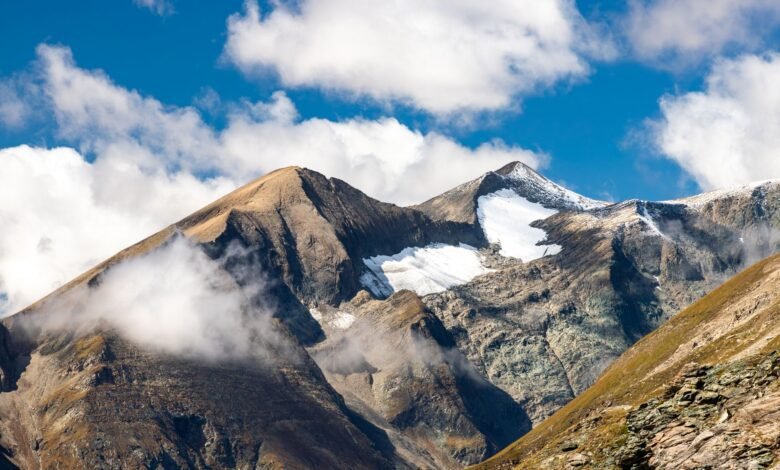
Some snow on mountain tops is over 100,000 years old. Deep within glaciers like those in Greenland and the Himalayas, ancient snowflakes have been compressed into ice that predates modern human civilization — and scientists drill into it to read Earth’s climate history like a book.
The snow on mountain tops doesn’t just sit there looking pretty until summer forces it to melt — what actually happens is far stranger, more violent, and more scientifically dramatic than most people ever imagine.
Some of it evaporates without ever becoming liquid. Some turns into a grainy, sugar-like substance that takes decades to become ice. Some slides, shifts, cracks, and cascades. And some — the snow at extreme altitude — barely changes at all, stubbornly defying the summer heat while the world below bakes.
Summer doesn’t just attack mountain snow. It negotiates with it. And the mountain doesn’t always lose.
Whether you’re lying awake wondering about the physics of a glacier or just curious why some peaks are white year-round while others go bare by July, buckle up — because the life cycle of mountain snow is one of the most fascinating stories in all of nature.
🎯 Key Takeaways
- Snow on mountain tops can disappear through sublimation — turning directly into vapor without ever melting into liquid water.
- The snowline elevation rises in summer, exposing rock that may not have seen sunlight in months or even years.
- Old snow transforms into a dense intermediate substance called firn before eventually becoming glacial ice over decades.
- Alpine snowpack stores massive amounts of freshwater — roughly one-sixth of the world’s population depends on it.
- Some high-altitude peaks retain permanent snow year-round due to altitude, latitude, and the physics of the atmosphere above them.
What Really Happens to Snow on Mountain Tops When Summer Arrives
It’s Not Just Melting — It’s a Full Transformation
When most people picture summer hitting a mountain, they imagine a slow, peaceful drip — snow quietly melting into rivers and streams. And sure, that happens. But the full story of snow on mountain tops in summer is a lot more complex and, honestly, a lot more interesting.
The process starts with something called the snowline elevation — the altitude above which snow remains year-round. In summer, this line creeps upward as temperatures rise. The snow below the line melts relatively quickly, feeding rivers and aquifers with what hydrologists call snowmelt runoff. For billions of people worldwide, this is where their drinking water comes from.
But above that line, things get weird. The alpine snowpack at extreme altitudes doesn’t simply melt. It compresses, shifts, recrystallizes, and sometimes just vanishes into thin air — literally. The combination of low air pressure, high UV radiation, and dry mountain winds creates conditions where snow behaves in ways you wouldn’t expect at sea level.
One of the most mind-bending processes is mountain snow sublimation — where snow converts directly from a solid into water vapor, skipping the liquid phase entirely. On a cold, dry, sunny day at high altitude, a snowfield can visibly shrink without producing a single drop of meltwater. It just disappears, molecule by molecule, into the air.
This isn’t rare. In dry mountain ranges like the Andes and parts of the Rockies, sublimation accounts for anywhere from 10% to 90% of total snow water loss, depending on conditions. The snow doesn’t melt. It ghosts you.
The Science of Glacial Melt in Summer and Why It Matters
Glaciers are essentially the slow-motion long game of snow on mountain tops. They form when more snow accumulates in winter than melts in summer — year after year, century after century. But in summer, the balance tips, and glacial melt becomes the dominant story.
Glaciers have two zones: the accumulation zone (high up, where snow is added) and the ablation zone (lower down, where ice and snow are lost to melting, calving, and sublimation). In summer, the ablation zone expands aggressively. The glacier’s tongue — the lowest, most exposed part — retreats. This is what scientists mean when they say a glacier is “shrinking.” It’s not getting thinner uniformly; it’s pulling back from its edges like a tide going out.
The meltwater that pours off glaciers in summer isn’t just scenic. It’s critical. According to National Geographic, roughly 2 billion people — about one-sixth of the global population — depend on glaciers and seasonal snowpack for their freshwater supply. When summer melt outpaces winter snowfall year after year, that supply starts to shrink in ways that are very difficult to reverse.
The speed of glacial melt in summer has accelerated dramatically in recent decades. Some Alpine glaciers in Europe have lost more than half their volume since 1900. The Rhône Glacier in Switzerland, once a tourist attraction people could walk into, now requires an insulating blanket to slow its summer retreat. People are literally tucking glaciers in for the night.
But here’s a detail most people miss: glaciers don’t just melt from the top down. They also melt from the bottom up. Geothermal heat from the Earth and the friction of the glacier’s own weight moving over bedrock generates enough heat to create a thin film of liquid water at the base. This basal melt acts like a lubricant, allowing glaciers to slide — sometimes dramatically.
🤔 Wait, Really? The penitentes of the Andes — those bizarre, blade-like spikes of snow and ice that can grow taller than a human — are formed entirely by differential sublimation in summer sunlight. The curved shapes focus UV radiation into the hollows between spikes, melting those areas while the tips remain, creating a field of frozen daggers. Astronauts studying Pluto think the same process may form similar structures on its surface.
Alpine Snowpack: The Hidden Life of Mountain Snow Through Summer
From Fresh Snow to Firn to Ice — A Decades-Long Journey
Here’s something that rarely comes up in casual conversation: not all snow on mountain tops is created equal, and the snow you see in summer photos of high peaks might actually be years — or even decades — old.
Fresh snow is light, fluffy, and mostly air. But in the alpine snowpack, successive layers of snow compress the layers beneath. Over time, the delicate snowflake crystals break down and recrystallize into rounded grains. This grainy, dense, intermediate substance is called firn — a German word that just means “last year’s snow.” Firn is the awkward teenager phase between snow and glacier ice.
It takes roughly 25 to 100 years for firn to fully compress into glacial ice, depending on the weight of snow above it and the local temperature. At that point, all the air has been squeezed out, the ice becomes visibly blue (because blue light penetrates deeper into dense ice before bouncing back), and it’s essentially a time capsule of ancient atmosphere.
In summer, the firn layer on high peaks goes through a process called firn compaction. The surface warms slightly, meltwater percolates down through the firn, refreezes at depth, and gradually transforms the structure of the snowpack. It’s like a slow-motion metamorphosis happening silently inside the mountain.
What’s particularly fascinating about the alpine snowpack is how sensitive it is to temperature. A warming of just 1-2°C can push the snowline elevation significantly higher, shrinking the accumulation zone and throwing off the entire balance that keeps glaciers alive. In a very literal sense, the fate of mountain glaciers is being decided right now, one summer at a time.
Why Some Mountain Tops Stay Snowy All Summer
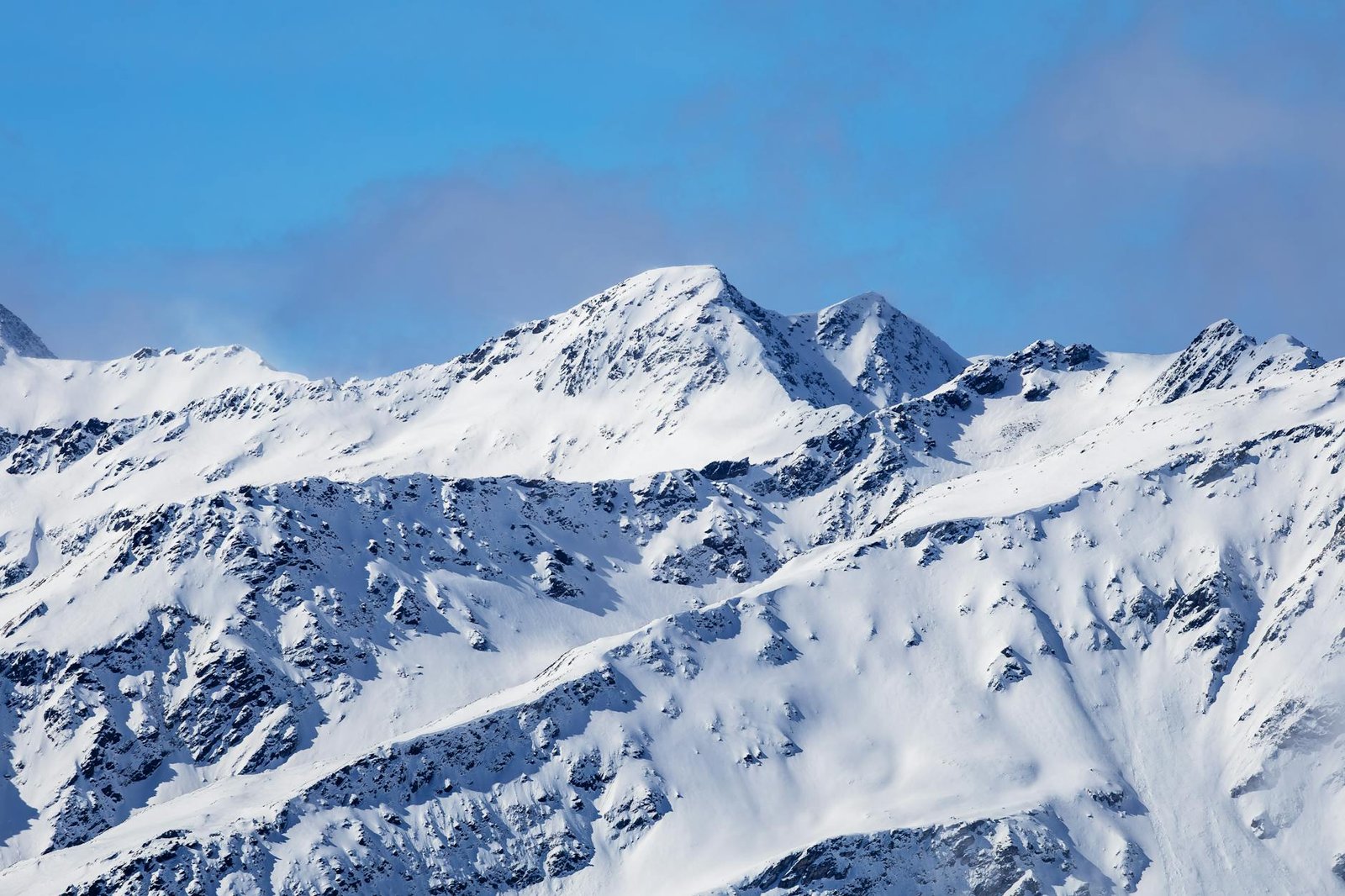
The highest peaks on Earth — Everest, K2, Denali, Kilimanjaro’s summit — retain their snow year-round. This isn’t magic. It’s altitude. Above approximately 5,000 to 6,000 meters, summer temperatures rarely climb above freezing even in July. The air is too thin, the UV radiation too intense, and the weather too extreme for sustained melting.
These periglacial environments at extreme altitude exist in a kind of eternal winter punctuated by violent summer storms. The snow doesn’t melt so much as it constantly cycles — sublimating, redistributing, compressing — in a relentless, ancient rhythm.
Mountain Snow Sublimation and the Invisible Disappearing Act
Let’s spend more time on sublimation, because it’s genuinely one of the most counterintuitive things in all of atmospheric science, and it plays a massive role in what happens to snow on mountain tops every summer.
At high altitude, three factors conspire to make sublimation extraordinarily efficient. First, the air is extremely dry — low humidity creates a steep vapor pressure gradient that essentially sucks moisture off the snow surface like a sponge. Second, UV radiation at altitude is intense, providing the energy needed to break hydrogen bonds in ice crystals without raising the overall temperature enough to melt them. Third, katabatic winds — cold, dense air that drains downslope off glaciers and snowfields — constantly sweep away the humid air near the snow surface, preventing it from becoming saturated and replacing it with fresh, dry air that can absorb more vapor.
The result is a snow surface that loses mass constantly, visibly, and without producing a single drop of liquid water. On particularly dry and windy days in ranges like the Patagonian Andes or the Central Asian Tian Shan, snowfields can lose several centimeters of depth to sublimation in a single afternoon.
Mountain snow sublimation creates some of the most visually spectacular features in alpine landscapes. The penitentes mentioned earlier are one example. Snow bridges over crevasses thin from above through sublimation until they’re dangerously hollow — a hazard that mountaineers learn to fear. Even the glittering shimmer you see rising off a sunlit snowfield is sublimation in action: water molecules leaving the solid surface and becoming gas right before your eyes.
Climate scientists tracking the water budget of mountain watersheds have to account carefully for sublimation losses, because any model that ignores it will dramatically overestimate how much meltwater will reach the valley below. In some high, dry ranges, over half of the winter snowpack simply evaporates into the sky before it ever flows downhill. It’s water that existed, that fell as snow, and that never once became a river.
Frequently Asked Questions
Does snow on mountain tops ever completely disappear in summer?
It depends entirely on the altitude and latitude. Low to mid-elevation peaks in temperate regions typically lose all their snow by late summer — their snowline elevation rises until it exceeds the mountain’s actual height. But peaks above roughly 5,000–6,000 meters, and mountains at high latitudes like in Alaska or Norway, retain permanent snowfields and glaciers year-round. The summit of Mont Blanc, for example, keeps its snow cap even in August.
Where does the meltwater from mountain snow actually go?
Most meltwater from alpine snowpack flows into streams and rivers that eventually reach valleys and lowlands. Some percolates into the ground, recharging aquifers that communities rely on for drinking water. A portion evaporates back into the atmosphere. Glacial meltwater is particularly important — it often sustains rivers during dry late-summer months when rain is scarce, acting as a kind of natural reservoir that releases water slowly over the warm season.
What is firn snow and why does it matter?
Firn is the intermediate stage between fresh snow and glacial ice — essentially snow that has survived at least one full summer without melting, compressed into dense rounded grains. It matters because it’s the raw material that builds glaciers. The depth of a glacier’s firn layer tells scientists how quickly ice is being produced versus lost. Declining firn depths on major glaciers worldwide are one of the clearest early warning signs of long-term glacial retreat and climate change.
Why do some mountains keep snow on top year-round while nearby mountains don’t?
It comes down to altitude, aspect, and local climate. Higher peaks simply stay colder. North-facing slopes in the Northern Hemisphere receive far less direct sunlight and retain snow much longer than south-facing ones. Mountains that intercept moisture-rich air masses get more winter snowfall, giving them more to work with come summer. Some peaks also funnel wind in ways that pile snow into deep, protected hollows where it’s shielded from summer sublimation and direct solar radiation.
Is mountain snow sublimation the same as evaporation?
They’re similar but technically different. Evaporation is when liquid water turns into vapor. Sublimation is when a solid — in this case snow or ice — converts directly into vapor without passing through the liquid phase first. Both involve water molecules escaping into the atmosphere, but sublimation skips the melt step entirely. At high altitude, where low air pressure and dry air are constants, sublimation can be more significant than melting as a way that snow on mountain tops loses mass in summer.
✅ The Bottom Line
Snow on mountain tops in summer doesn’t just melt — it sublimates, compresses, recrystallizes, slides, and transforms through processes that have been quietly shaping Earth’s landscapes for millions of years. The alpine snowpack is essentially a living system, and the firn layers deep inside glaciers hold records of ancient atmospheres no laboratory could recreate. As climate change accelerates glacial melt in summer, understanding these processes has never been more urgent — because the water frozen inside those peaks feeds rivers, fills reservoirs, and sustains billions of lives around the world.
Final Thoughts
There’s something deeply humbling about realizing that the snow on mountain tops you see in a photograph might be older than your grandparents, compressed into ice by the weight of a hundred winters, slowly making its way downhill at a pace too slow for any human to observe. Mountains aren’t frozen in time — they’re in constant, quiet motion, inhaling winter and exhaling summer, feeding the world with water that fell as snowflakes centuries ago. Next time you see a snow-capped peak, ask yourself: is that snow melting, sublimating, or turning into a glacier right now — and does knowing the answer change how magnificent it looks to you?