Where Do Vanished Cultures Go? 10 Places They Still Survive
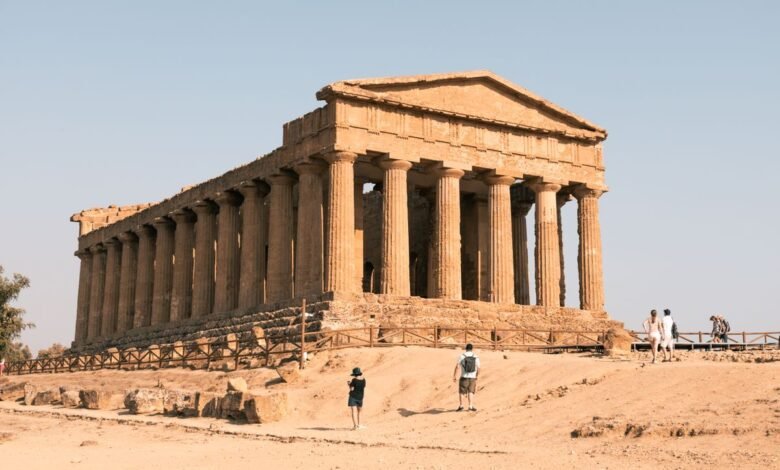
Vanished cultures rarely disappear completely. When a culture fades through war, conquest, disease, climate change or slow assimilation, pieces of it survive in other places: in the languages we speak, the food we eat, our laws, our religions, our DNA, and the objects archaeologists dig up. The culture’s original form is gone, but much of what it created lives on.
Here’s how cultures disappear, why so many lost civilizations still shape our lives, and the 10 places vanished cultures go afterwards.
How Cultures Disappear
There are two main ways a culture can vanish.
Sudden collapse. Around 1200 BCE, several powerful societies around the eastern Mediterranean fell within a few decades, an event known as the Late Bronze Age collapse. Palaces were destroyed, trade networks broke down, and some writing systems fell out of use. Historians still debate the causes, which likely included drought, earthquakes, invasions and internal unrest happening together.
Slow fading. More often, a culture fades gradually. People adopt the language and customs of a more powerful neighbor. Children grow up bilingual, then their own children speak only the dominant language. Within a few generations, a distinct way of life can become a memory. This is called assimilation.
Where Vanished Cultures Go: 10 Places They Survive
1. In Language
Languages absorb words from the cultures they meet. English, for example, contains words from Old Norse, like “sky” and “egg,” brought by Viking settlers. It also has many words from Norman French, like “beef” and “pork,” introduced after 1066. The Norse settlers and Norman rulers are long gone, but their words are used every day.
2. In DNA
Ancient DNA research has transformed how we understand vanished peoples. Studies have found, for example, that people linked to the “Beaker culture” spread into Britain around 4,500 years ago and largely replaced the earlier population’s ancestry. Yet traces of older groups often remain in modern populations. People can vanish as a culture while their genes continue.

3. In Law
Roman law didn’t end with the Western Roman Empire in 476 CE. It strongly shaped the civil law systems used across much of continental Europe and Latin America. Concepts developed by Roman jurists still influence legal systems today.
4. In Buildings and Engineering
Roman arches, domes and concrete inspired later builders in the Byzantine and Islamic worlds and in Renaissance Europe. Many styles of architecture today still borrow ideas from civilizations that no longer exist.
5. In Religion and Festivals
Religions and festivals often absorb older traditions. Several winter customs in Europe, such as evergreen decorations and midwinter feasts, are linked to pre-Christian celebrations. Ancient myths survive in stories, art and even in names, like the planets named after Roman gods.
6. In Food
Recipes and cooking methods are some of the most durable parts of culture. Families pass them on even when languages and religions change. Many dishes eaten today have roots far older than the countries where they’re now served.
7. In Music and Instruments
Instruments travel between cultures and change along the way. The European lute, for example, developed from the oud of the Middle East, which belongs to a family of lute-like instruments going back thousands of years in the region.
8. In Writing and Sacred Texts
The Sumerian language stopped being spoken thousands of years ago, yet scribes kept writing it for religious and scholarly purposes for many centuries afterwards. Latin played a similar role in medieval Europe. A language can stay in use long after its everyday speakers are gone.
9. In Museums and Archaeology
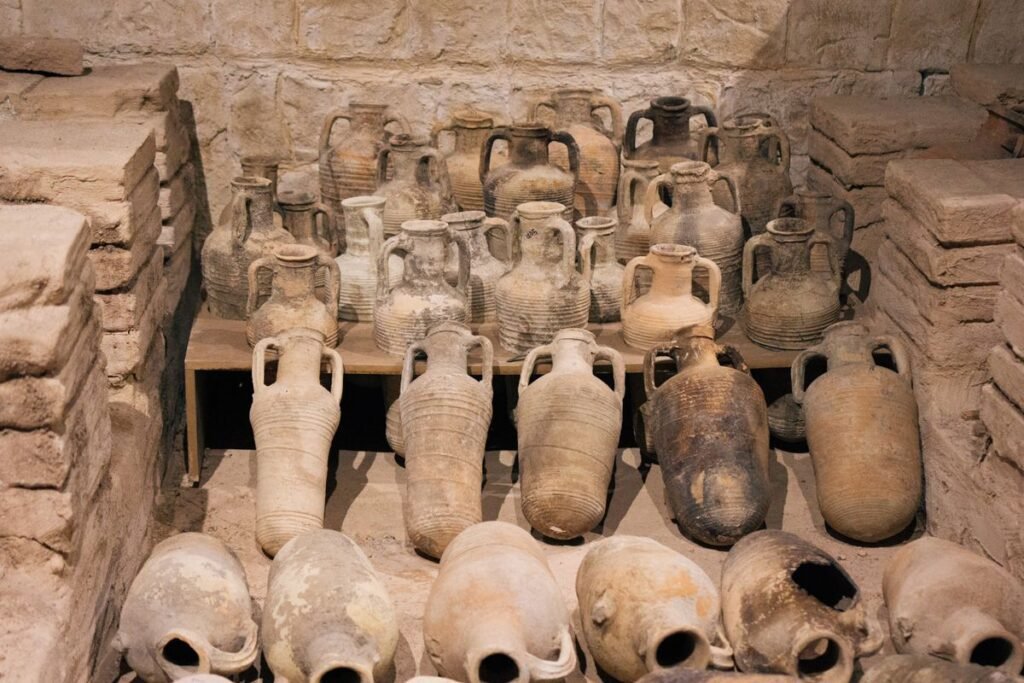
Archaeology recovers what vanished cultures left behind. At Herculaneum, buried by Mount Vesuvius in 79 CE, archaeologists found carbonized loaves of bread and everyday objects. Göbekli Tepe in Turkey, excavated from the 1990s onwards, revealed huge carved stone pillars built more than 11,000 years ago, earlier than many experts thought such structures were possible.
Who should keep these objects is a heated debate. Famous examples include the Parthenon Marbles and the Benin Bronzes.
10. In Living Descendants
Some cultures described as “vanished” in old history books never actually disappeared. Many Indigenous peoples were wrongly labeled as extinct or assimilated by colonial governments, yet kept their identities, languages and traditions alive, sometimes in private.
Today, revival movements are bringing languages back into daily use. Hawaiian language immersion schools, Welsh-language education and efforts to teach endangered Native American languages such as Cherokee are examples.
Why Languages Matter So Much
Languages are often where cultures are most vulnerable. It’s often said that a language disappears roughly every few weeks, and many of the world’s roughly 7,000 languages are endangered. When the last fluent speakers of a language die, unique words, stories and ways of describing the world can be lost with them. Researchers call this language death.
That’s why linguists and communities work to record endangered languages, and why revival efforts matter.
Why Some Cultures Vanish Faster Than Others
- Size and isolation: small, isolated groups can be more vulnerable to disease, conquest or disaster.
- Writing: cultures with written records leave more for later generations to recover.
- Trade and contact: cultures with wide trade networks spread their ideas, so their influence outlasts them.
- Political power: dominant groups often impose their language and customs on others.
- Climate and environment: droughts, floods and other environmental changes have contributed to several collapses.
Digital culture faces its own version of this problem. Websites and online communities can vanish too, as you can read in our article on what happens to abandoned websites, and game communities try to save old game save files before they’re lost.
Frequently Asked Questions
Can a vanished culture come back?
Not in exactly its original form, but parts of it can. Languages, ceremonies, crafts and art have been revived using records, oral history and the knowledge of descendants. The revived culture is both connected to the past and new at the same time.
What’s the difference between a culture changing and a culture vanishing?
All cultures change over time. A culture is usually described as vanished when the people who carried it no longer share its language, practices or identity as a group. In practice, the line between change and disappearance is often blurry.
How do we learn about cultures that left no writing?
Through archaeology, ancient DNA, the study of languages, oral traditions, and objects like tools, pottery and buildings. Combining these gives a surprisingly detailed picture of how people lived.
Are there cultures disappearing today?
Many cultures are under pressure from globalization, conflict, climate change and the loss of their languages. Many communities are also working hard to protect and revive their traditions.
The Bottom Line
Vanished cultures leave pieces of themselves behind: in our words, laws, food, beliefs, buildings and genes. Their original form may be gone, but much of the world we live in was built from what they left. Even stars work in a similar way, scattering their material to form new ones when they die, as explained in why stars explode.