Why Do Stars Explode While Others Just Fade Away?
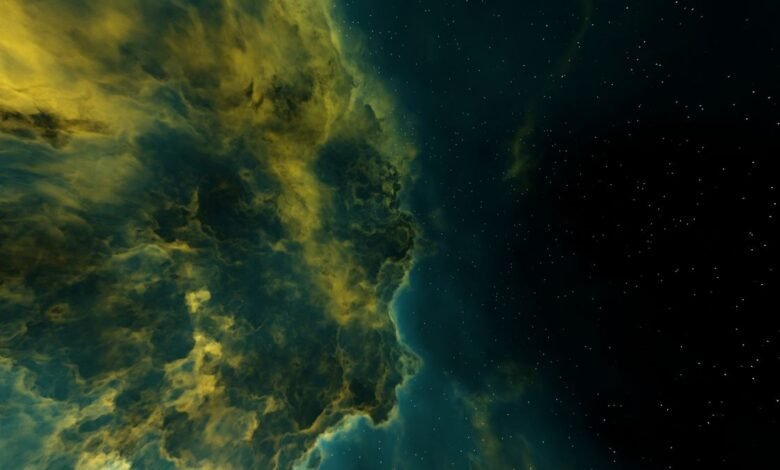
Why do stars explode while others quietly fade away? It comes down to one thing: mass. Stars born with more than about eight times the mass of our Sun end their lives in a supernova explosion. Smaller stars, including the Sun, swell into red giants, gently shed their outer layers, and leave behind a slowly cooling core called a white dwarf.
Every star spends its life balancing two forces: gravity pulling inward and the pressure from nuclear fusion pushing outward. How that balance finally breaks decides whether the ending is a bang or a fade.
How a Star’s Mass Decides Its Fate
| Starting mass (compared with the Sun) | How it dies | What’s left behind |
|---|---|---|
| Less than about half | Burns very slowly for an extremely long time, then fades | White dwarf (in the far future) |
| About half to 8 times | Red giant, then sheds its outer layers as a planetary nebula | White dwarf |
| More than about 8 times | Core collapses, then a supernova | Neutron star |
| Much larger (very massive stars) | Core collapse, sometimes a supernova | Black hole |
The exact cut-off points vary with each star’s makeup, but the pattern holds: the heavier the star, the more violent its death.
Mass also controls how long a star lives. Heavy stars burn their fuel much faster, so the biggest stars live only a few million years. The Sun has been shining for about 4.6 billion years and has roughly 5 billion years to go.
Why Do Stars Explode? The Iron Problem
Stars make energy by fusing light elements into heavier ones. A massive star starts with hydrogen, then moves on to helium, carbon, oxygen and other elements, building up layers like an onion.
Each of those fusion steps releases energy, and that energy holds the star up against gravity. Iron is where it stops. Fusing iron doesn’t release energy; it uses energy up. Once a massive star has built an iron core, it has no fuel left that can support it.
When the iron core grows past about 1.4 times the mass of the Sun, known as the Chandrasekhar limit, gravity wins. The core collapses in less than a second. The outer layers fall inward, rebound off the incredibly dense core, and are blasted outward in an enormous shockwave.
That explosion is a core-collapse supernova. For a few weeks it can shine as brightly as an entire galaxy of billions of stars.
What remains depends on how much mass is left:
- Neutron star: a city-sized ball of matter so dense that a teaspoon of it would weigh about a billion tons on Earth.
- Black hole: if the leftover core is heavy enough, nothing can stop the collapse.
How Smaller Stars Fade Away
Stars like the Sun have a much gentler ending.
- Red giant. When the hydrogen in the core runs out, the core shrinks and heats up while the outer layers swell enormously. When the Sun becomes a red giant, it will grow large enough to swallow Mercury and Venus, and possibly Earth.
- Planetary nebula. The outer layers drift off into space, forming a glowing shell of gas. Despite the name, it has nothing to do with planets; early astronomers thought these round clouds looked like planets through their small telescopes.
- White dwarf. The leftover core, about the size of Earth, no longer makes energy. It simply cools down over an extremely long time.
Even quiet deaths aren’t always quiet forever. A white dwarf in a pair with another star can pull material from its partner. If it gains enough mass, it can blow apart in a different kind of explosion called a Type Ia supernova.
Why Exploding Stars Matter to You
Here’s the part that makes this personal: apart from hydrogen, which dates back to the Big Bang, the elements in your body were made inside stars. The calcium in your bones and the oxygen you breathe were made by fusion inside stars. Many of the heavier elements, like much of the iron in your blood, were spread through space by exploding stars.
When a supernova happens, it throws those elements out across space. Over millions of years, they mix into new clouds of gas that collapse into new stars and planets. Our solar system formed from material enriched by earlier generations of stars.
Small stars help too. Planetary nebulae return carbon, nitrogen and oxygen to space, ready to be used again. Stellar death works more like recycling than an ending, a bit like how vanished cultures leave traces in the cultures that follow them.
Famous Supernovae in History
People have been watching stars explode for at least a thousand years:
- 1006: the brightest supernova in recorded history, noted by observers in China, Japan, the Middle East and Europe.
- 1054: a “guest star” recorded by Chinese astronomers. Its remains are the Crab Nebula, which still has a spinning neutron star at its center.
- 1572: Tycho Brahe’s supernova. It helped show that the sky beyond the Moon could change, which surprised people at the time.
- 1604: Kepler’s supernova, the last one in our galaxy clearly seen with the naked eye.
- 1987: Supernova 1987A in the Large Magellanic Cloud, a small galaxy near the Milky Way. It was close enough to study in great detail, and detectors on Earth caught a burst of neutrinos from the collapsing core.
Today, telescopes spot supernovae in distant galaxies all the time. Studying one type, Type Ia supernovae, helped astronomers discover that the expansion of the universe is speeding up.
Frequently Asked Questions
Will our Sun ever explode?
No. The Sun doesn’t have enough mass to become a supernova. In about 5 billion years it will become a red giant, release its outer layers as a planetary nebula, and end as a white dwarf.
How long does a supernova last?
The core collapse itself takes less than a second. The bright explosion rises and fades over weeks to months. The cloud of debris, called a supernova remnant, can be seen for thousands of years.
Are supernovae dangerous to Earth?
Only if one happened very close, within a few dozen light-years. No star that close is expected to explode. Betelgeuse, a well-known supernova candidate in the constellation Orion, is several hundred light-years away, far enough to be safe.
Can we see a supernova with the naked eye?
Occasionally. Supernovae in our own galaxy bright enough to see without a telescope are rare. Astronomers think one happens in the Milky Way roughly every few decades to a century, but many are hidden behind dust. The last one clearly seen with the naked eye in our galaxy was in 1604.
The Bottom Line
So, why do stars explode? Because big stars build up iron cores that can’t hold back gravity, and the collapse rebounds in a supernova. Smaller stars never reach that point, so they swell, shed their layers and fade.
Either way, the material goes back into space to build new stars, new planets, and eventually people asking questions about the sky. If you like thinking about things that slowly fade when no one is watching, read about what happens to abandoned websites, or about how humans would perceive the universe with a new sense.